|
|
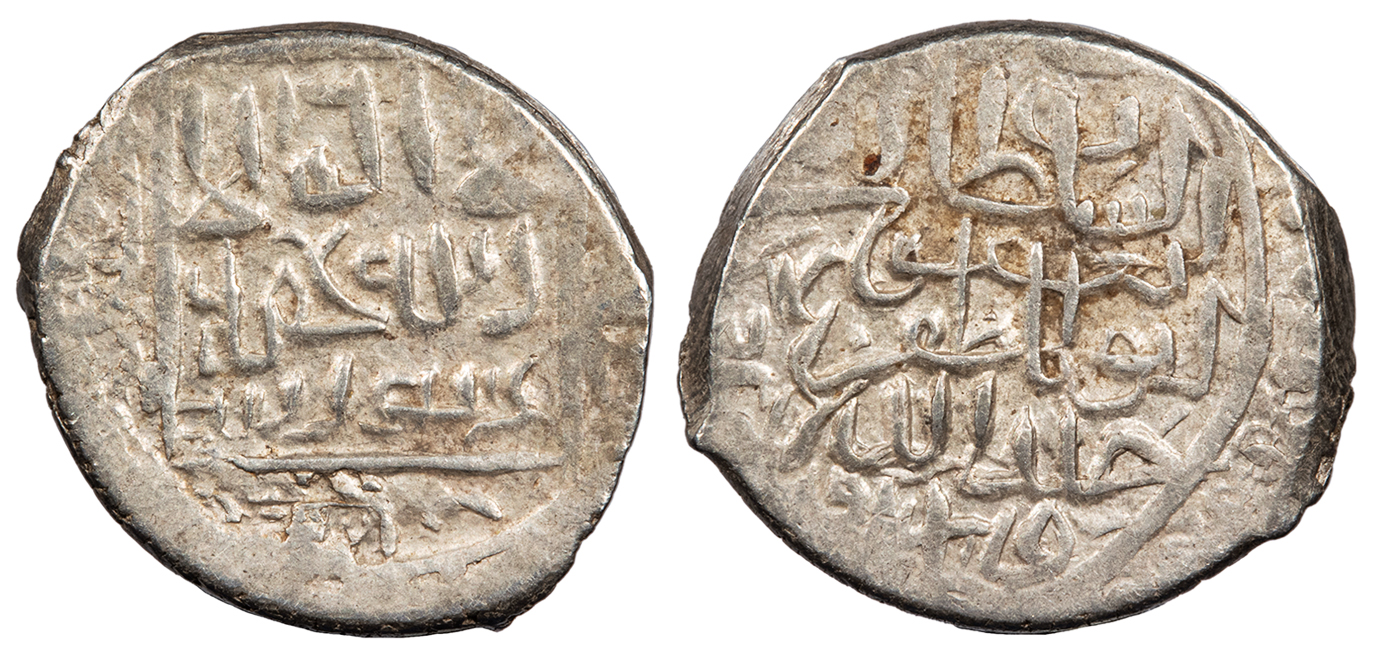
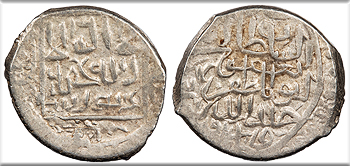
Aq Qoyunlu Ya'qub (Abu'l-Mazzaffar) AH883-896 (1478-1490 A.D.) 1/4 Tanka Near EF -- #AC107150
AR 1/4 Tanka 12mm. 1.13g. Sultaniya mint Kalima in square, names of the Rashidun around.
Name and titles, mint below.
Album A2522 Near EF. Very rare. Lightly toned and lustrous. We could find only one other example of this mint and style, see Zeno.ru #7224; seemingly very rare.
 
|
|
$ 95.00
|
|
|
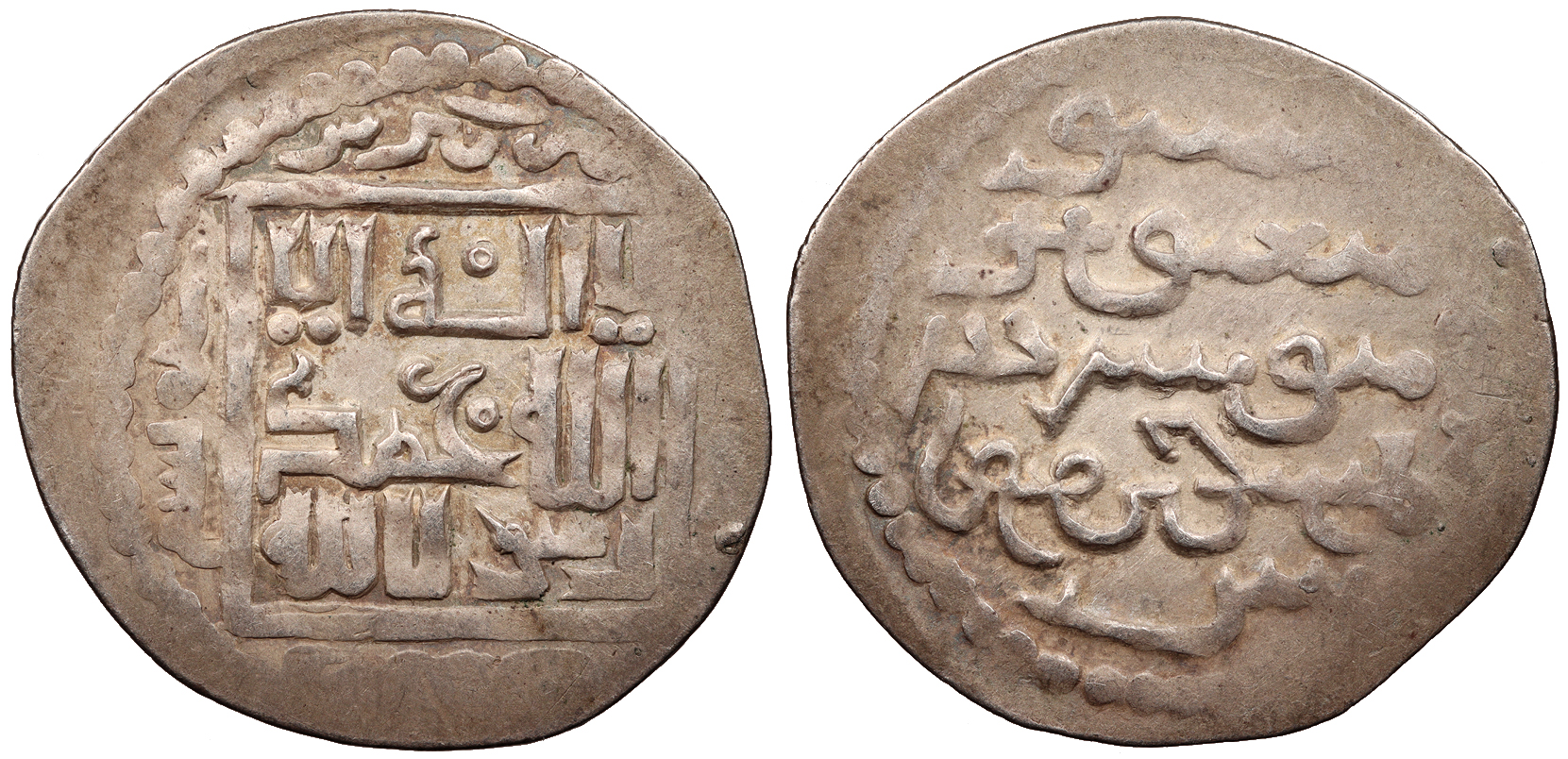
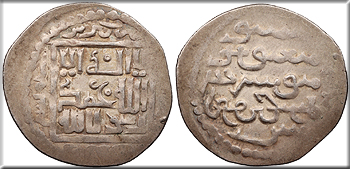
Persia Ilkhanid (Ilkhans or Hulaguid Mongols) Abaqa AH663-680 (1265-1282 A.D.) Dirham VF -- #AC87242
AR Dirham 23mm. 2.40g. Tabriz Mint AH[67]9 Arabic legend in three lines within square; date around.
Uyghur legend in five lines.
Album 2128.2 VF. Lightly toned with much lustre in central fields. Some unevenness of strike.
|
|
$ 55.00
|
|
|
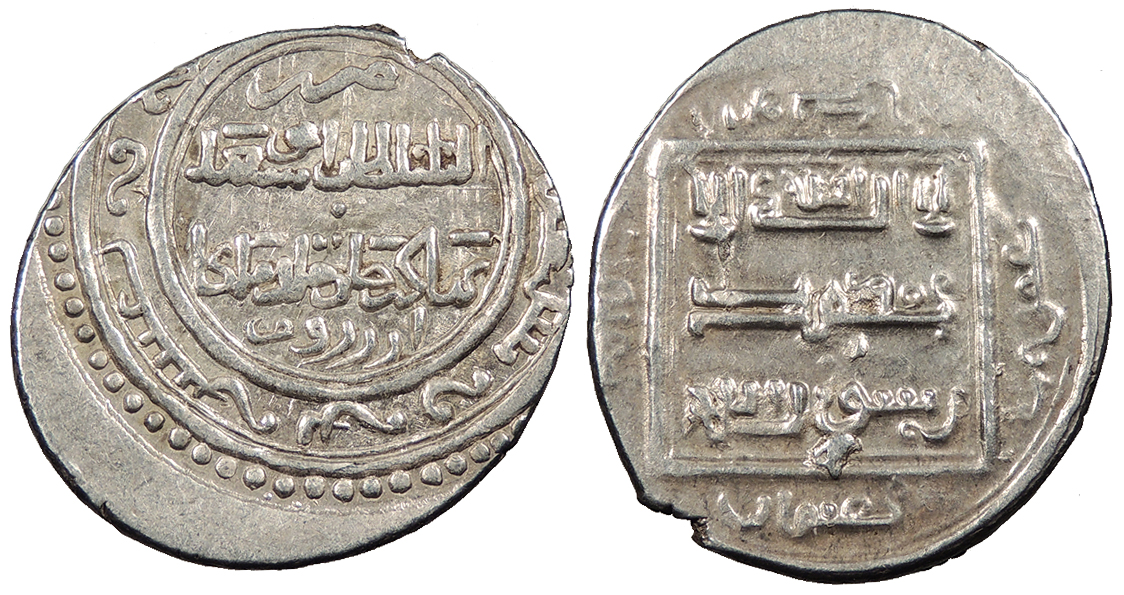
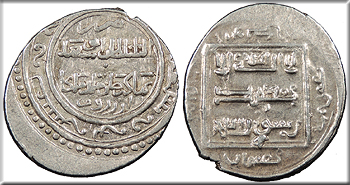
Persia Ilkhanid (Ilkhans or Hulaguid Mongols) Abu Sa'id AH716-736 (1316-1335 A.D.) 2 Dirhams EF -- #AC86274
AR 2 Dirhams 21mm. 3.40g. Arzarum mint Post-Reform coinage, AH72[?] (c.1320-1328 A.D.) Legend in two lines, mint name below, within inner circle; date around; all within circle and beaded border.
Legend in three lines within plain square; legend around.
Album-2210 EF. Lightly toned with full, bright lustre. A bit off-center, otherwise choice. A nice example of a common type.
|
|
$ 95.00
|
|
|
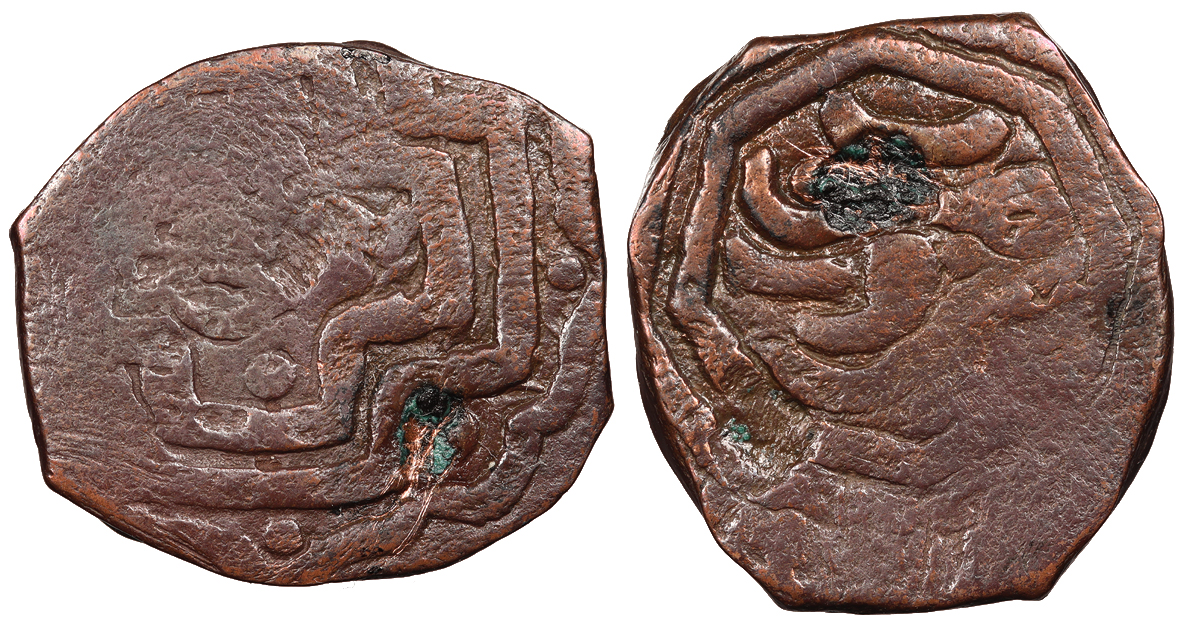
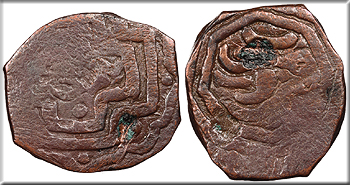
Persia Anonymous civic copper c. AH780-907 (1378-1501 A.D.) Fals Fine -- #AC87412
AE Fals 18mm. 2.10g. Nimruz mint (no date) Denomination within cross-shaped frame.
Mint name within octagonal frame.
Album B3190 Fine. Brown patina. Scarce design. A few pits. Unevenly struck. Some bright cleaning scratches. Album notes that anonymous coppers of Nimruz may be regarded as issues of Mehrabanid kings of Sistan. He also notes that they are 'always found in abysmal condition.'
|
|
$ 28.00
|
|
|
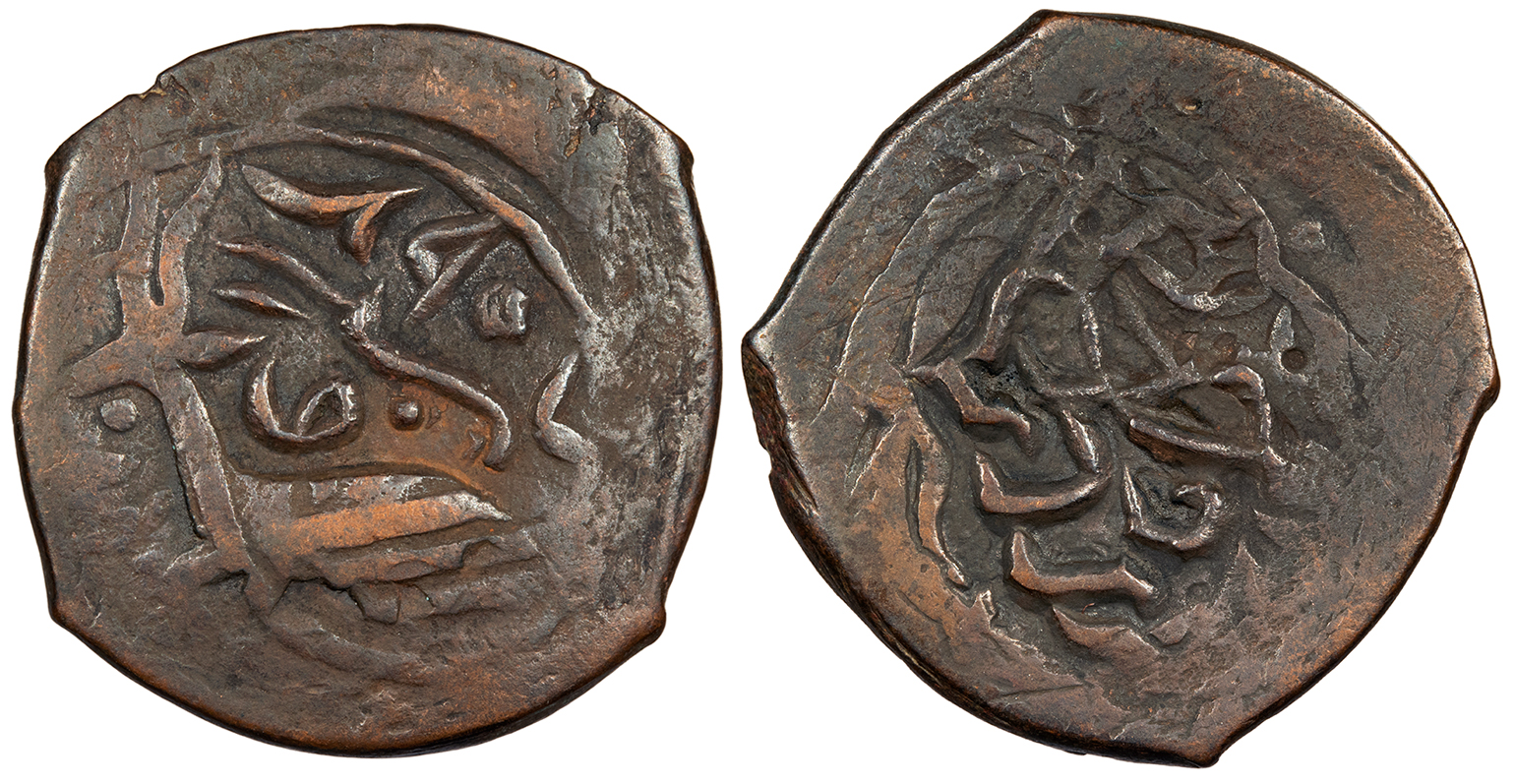
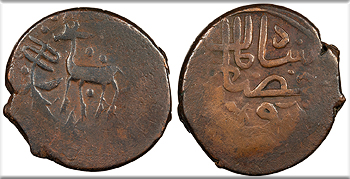
Persia Amir of Qunduz Anonymous, temp. Amir Khusro AH907 (frozen date) (1501/2 A.D.) 2 Dinars VF -- #AC102179
AE 2 Dinars 25mm. 9.47g. Hisar mint Deer l., floral elements around.
Date, mint, and denomination within ornate frame.
Album 3009 VF. Red-brown patina. Rare calligraphic style. Some strike weakness, as typical. The reverse has markedly different calligraphy than the typical example. Seemingly very rare. Amir Khusro Shah proclaimed his autonomy from the Timurids and ruled from AH902-910, but his coins are always anonymous and show a frozen date of AH907. Album notes that the 0 is written as a circle instead of a dot, therefore often being read as a 5. This type likely continued to be struck long after his death, hence the great number of varieties that can be found.
|
|
$ 65.00
|
|
|
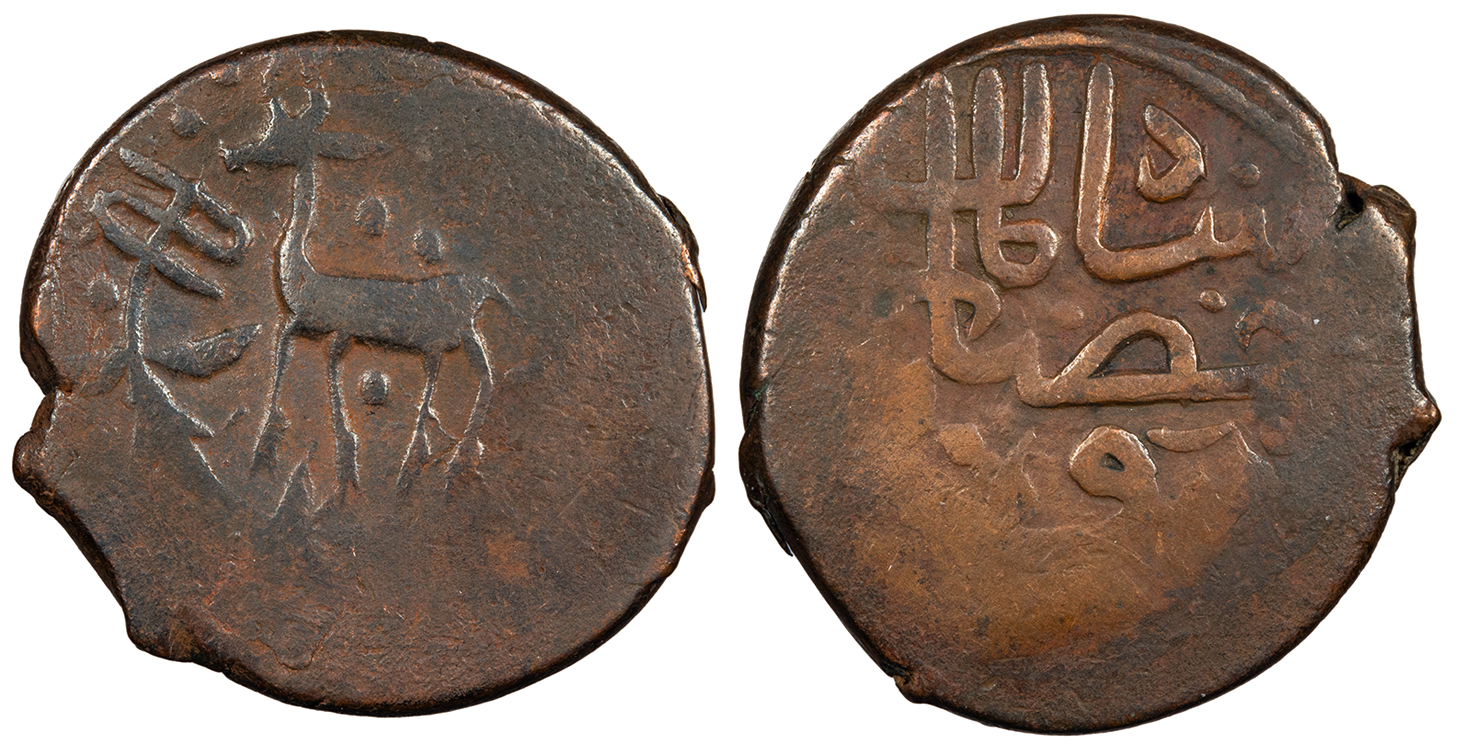
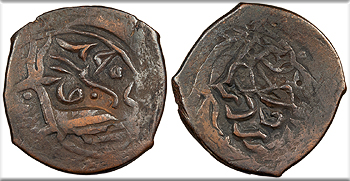
Persia Amir of Qunduz Anonymous, temp. Amir Khusro AH907 (frozen date) (1501/2 A.D.) 2 Dinars VF -- #AC102175
AE 2 Dinars 29mm. 9.16g. Hisar mint Deer l., floral elements around.
Date, mint, and denomination within ornate frame.
Album 3009 VF. Red-brown patina. Some double-striking and weakness, as typical. Amir Khusro Shah proclaimed his autonomy from the Timurids and ruled from AH902-910, but his coins are always anonymous and show a frozen date of AH907. Album notes that the 0 is written as a circle instead of a dot, therefore often being read as a 5. This type likely continued to be struck long after his death, hence the great number of varieties that can be found.
|
|
$ 45.00
|
|
|
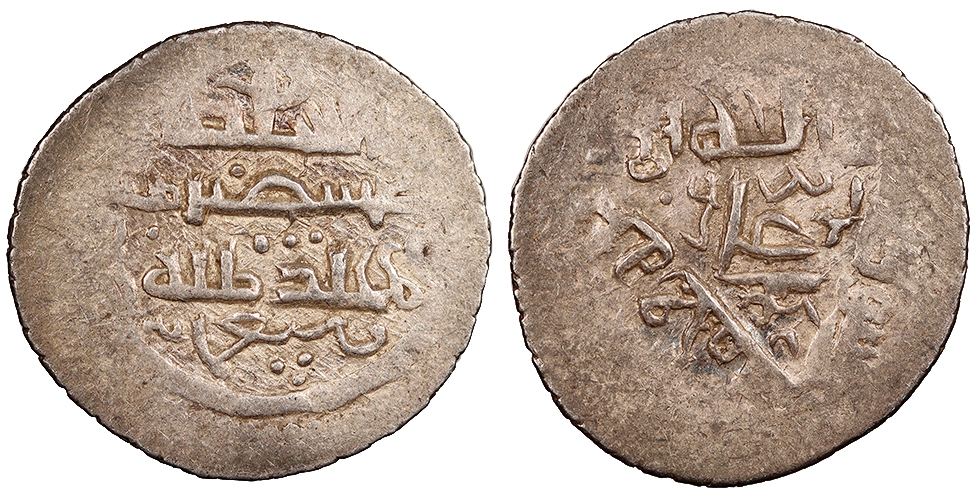
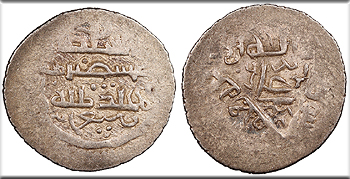
Persia Ilkhanid (Ilkhans or Hulaguid Mongols) Anushiravan AH745-757 (1344-1356 A.D.) 2 Dirhams EF -- #AC87243
AR 2 Dirhams 17mm. 1.40g. [mint illegible] AH7[46] Uyghur legend within circle.
Kalima in triangle with names of the Rashidun within.
Album 2262 EF. Lightly toned with some iridescent lustre in center fields. Uneven strike with weak margins.
|
|
$ 45.00
|
|
|
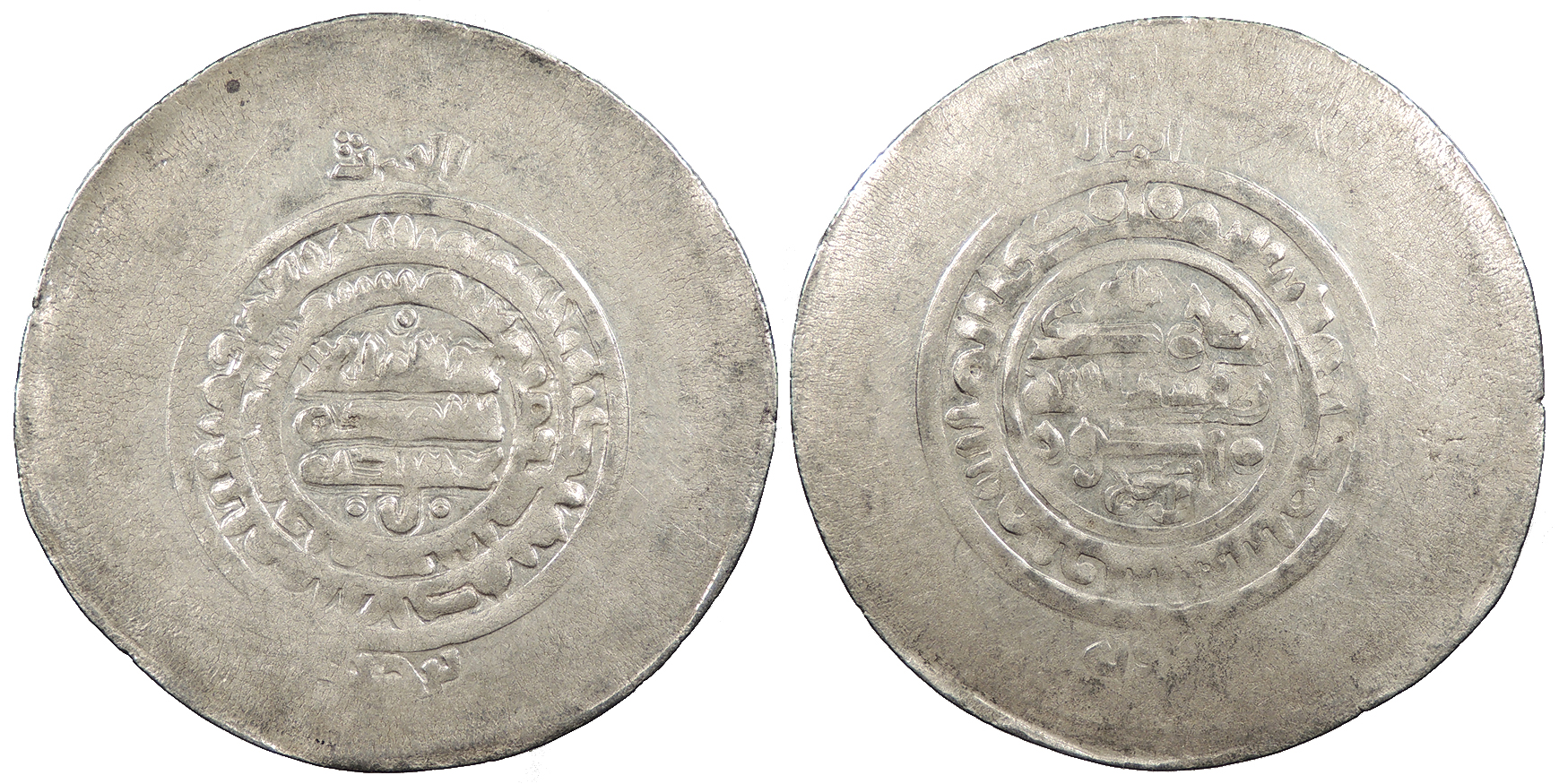
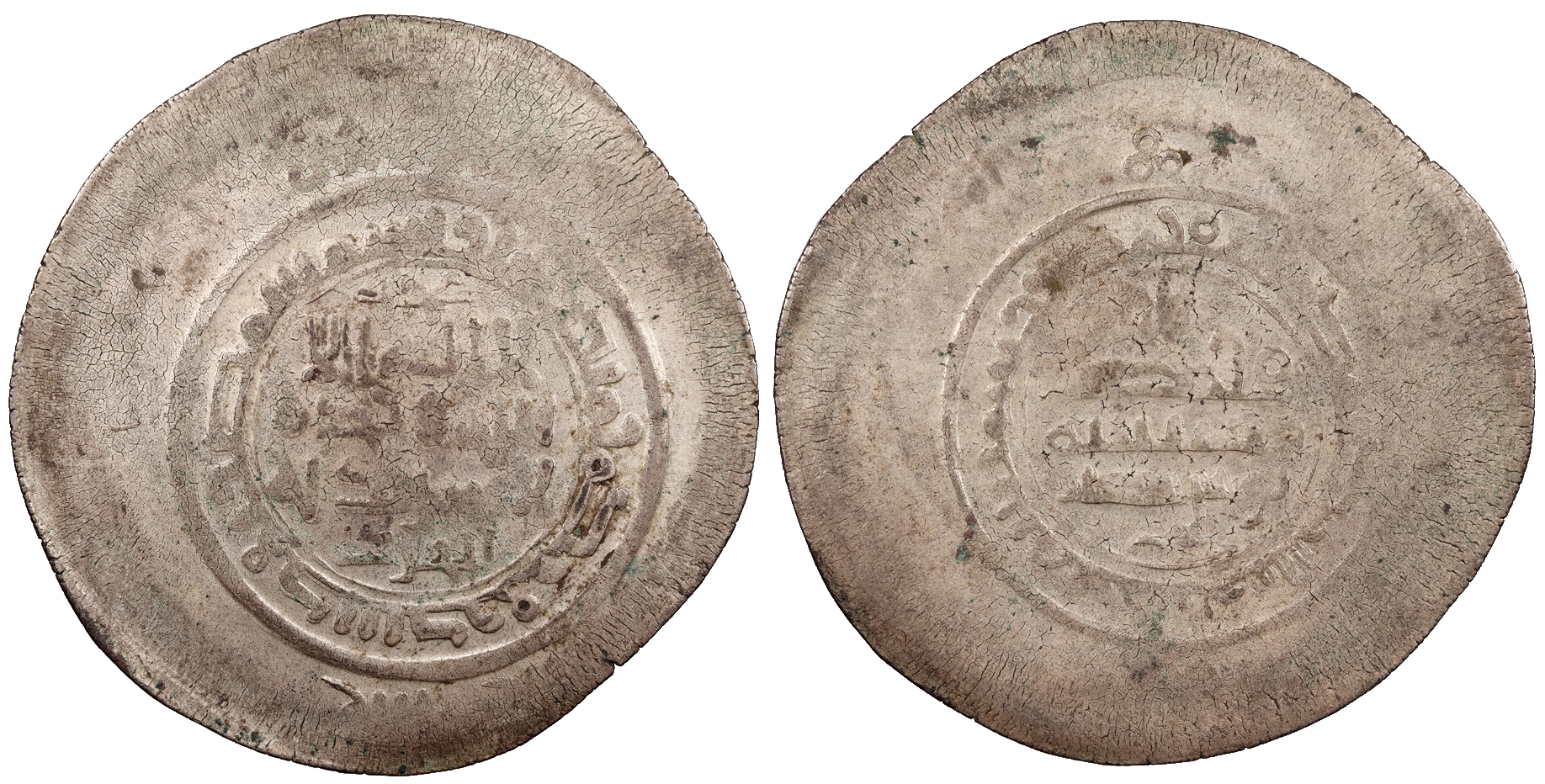
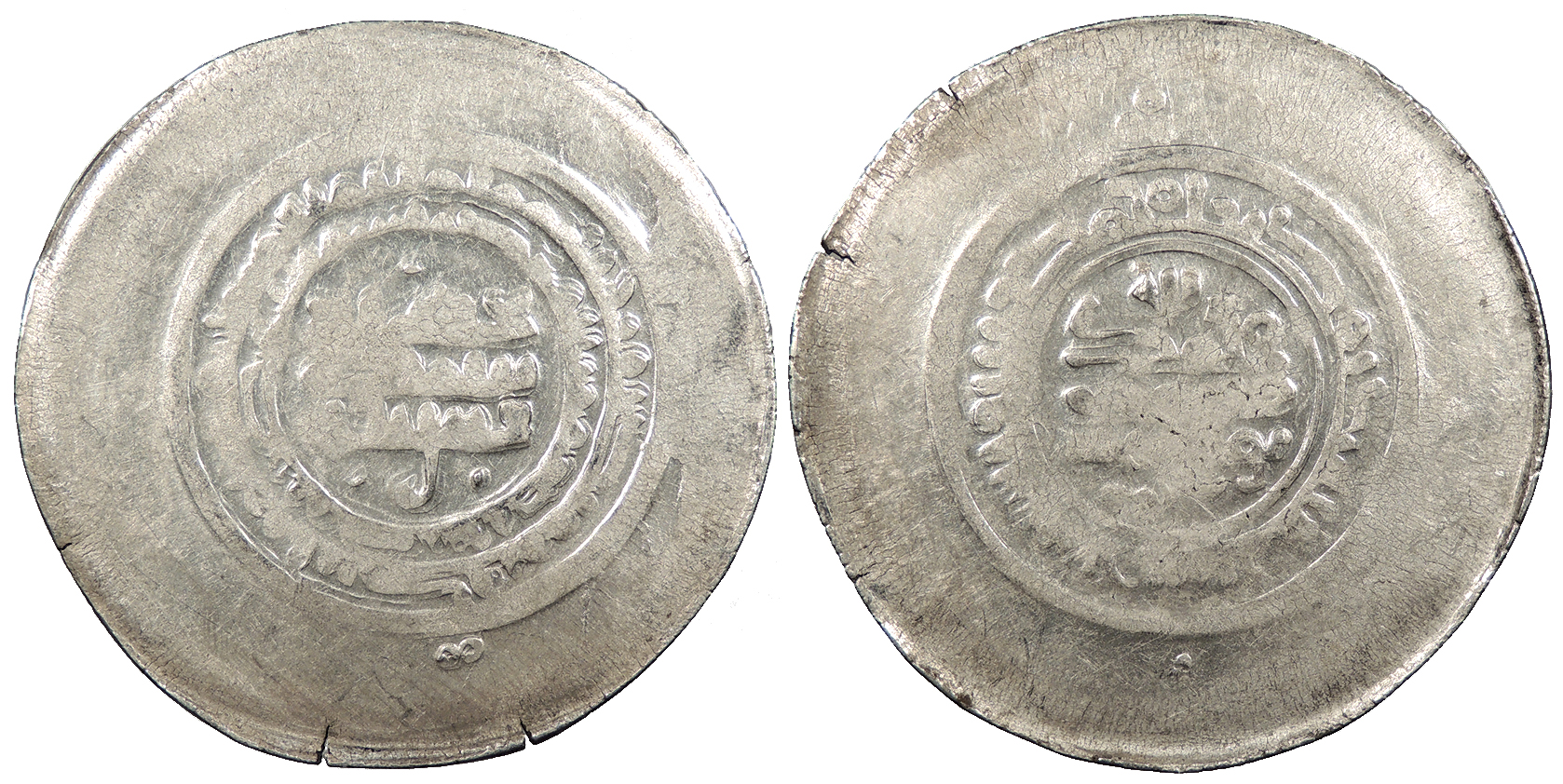
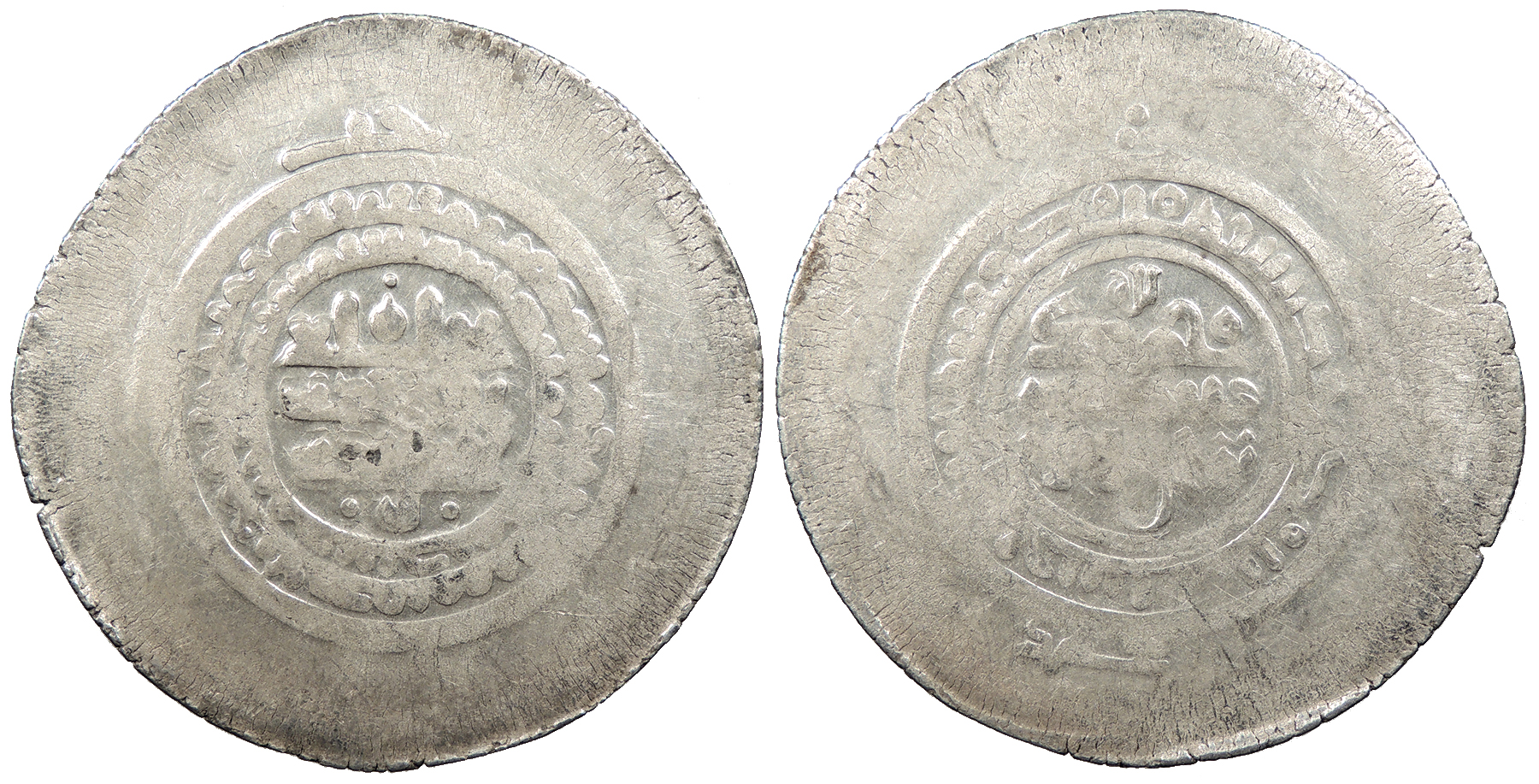
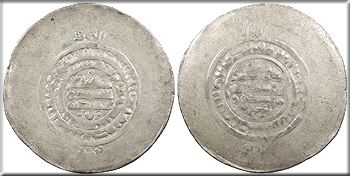
Persia Samanid Mansur I ibn Nuh II AH350-365 (961-976 A.D.) Multiple Dirham VF -- #AC85405
AR Multiple Dirham 41mm. 11.10g. After AH365 (976 A.D.) Central legend in three lines; Qur'anic legend in two lines around; governor's name (al-Harith) above.
Central legend in three lines; Qur'anic legend around.
Album-1465 VF. Lightly toned with much remaining lustre. Clear governor's name. Typical light porosity and slight unevenness of strike. Light double strike. The governor's name, al-Harith ibn Harb (shortened to al-Harith), is clear in the margin above the obverse.
|
|
$ 85.00
|
|
|
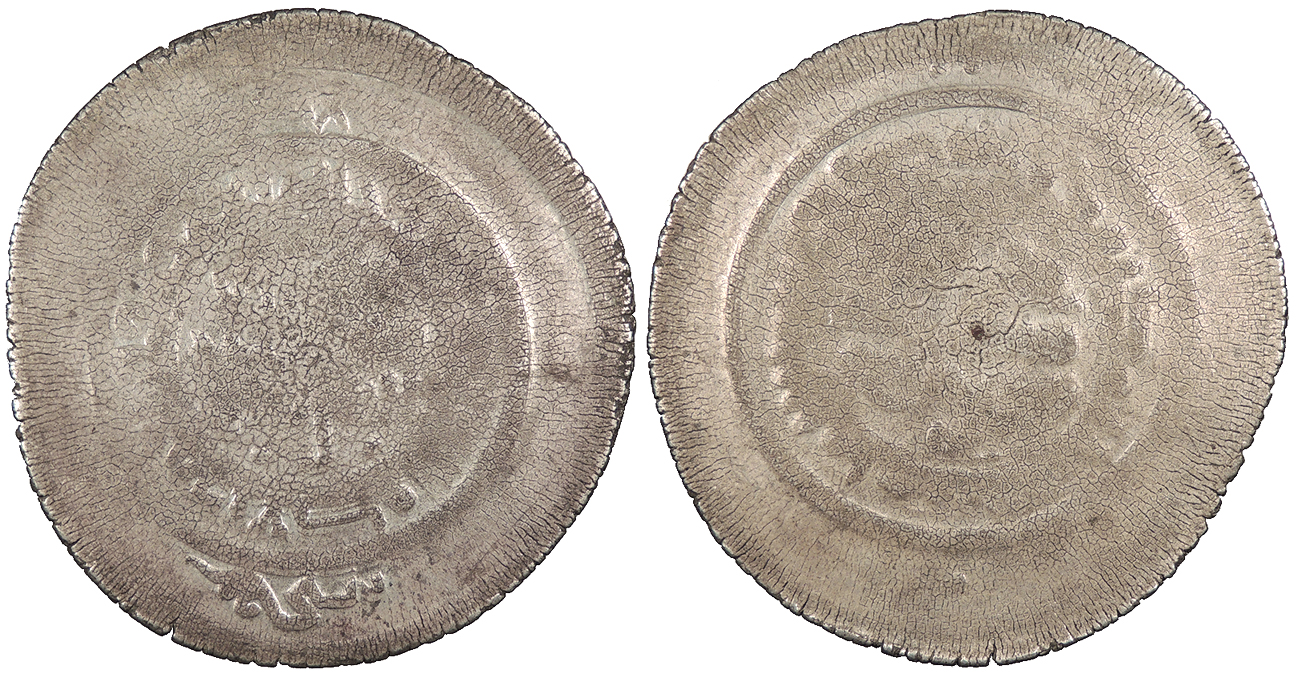
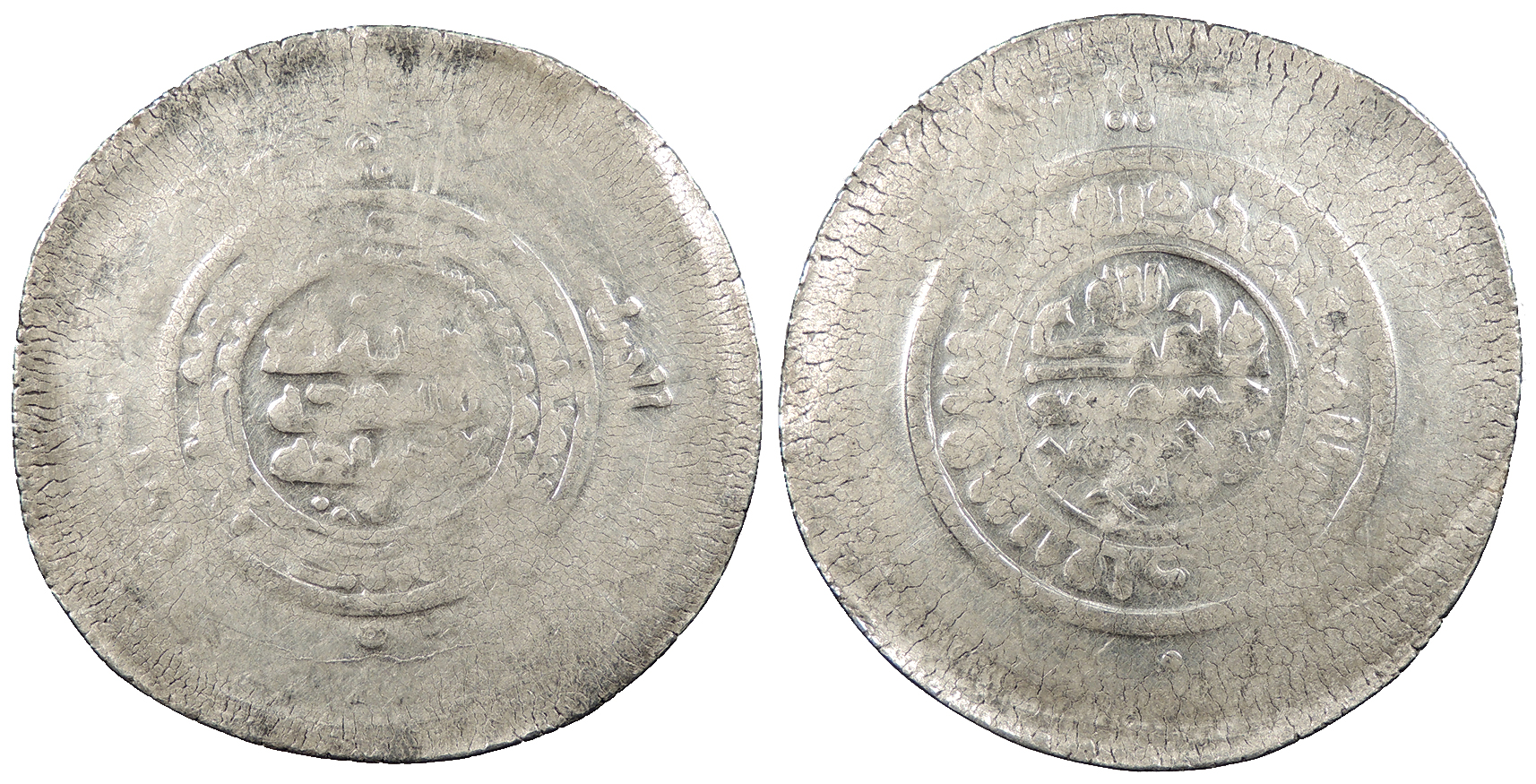
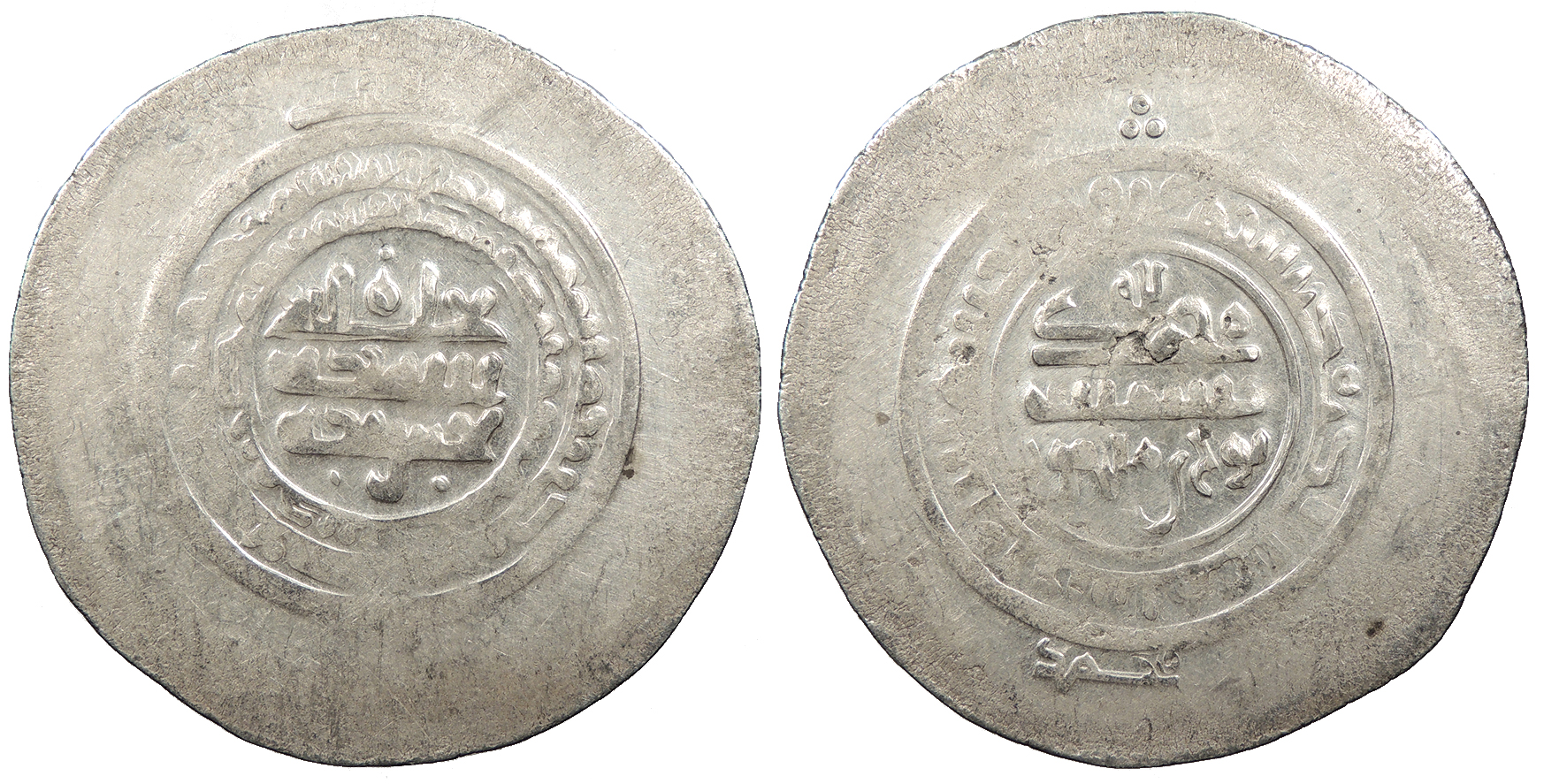
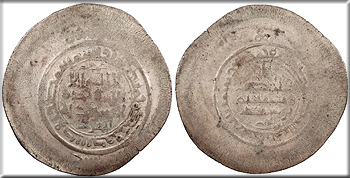
Persia Samanid Nuh II ibn Nasr AH331-343 (943-954 A.D.) Multiple Dirham VF -- #AC87239
AR Multiple Dirham 46mm. 10.40g. Kurat Badakhshan Mint Central legend in three lines; Qur'anic legend in one line around.
Central legend in three lines; Qur'anic legend around.
Album 1455 VF. Toned and lustrous. Typical light porosity and some unevenness of strike. Slightly wavy.
|
|
$ 95.00
|
|
|
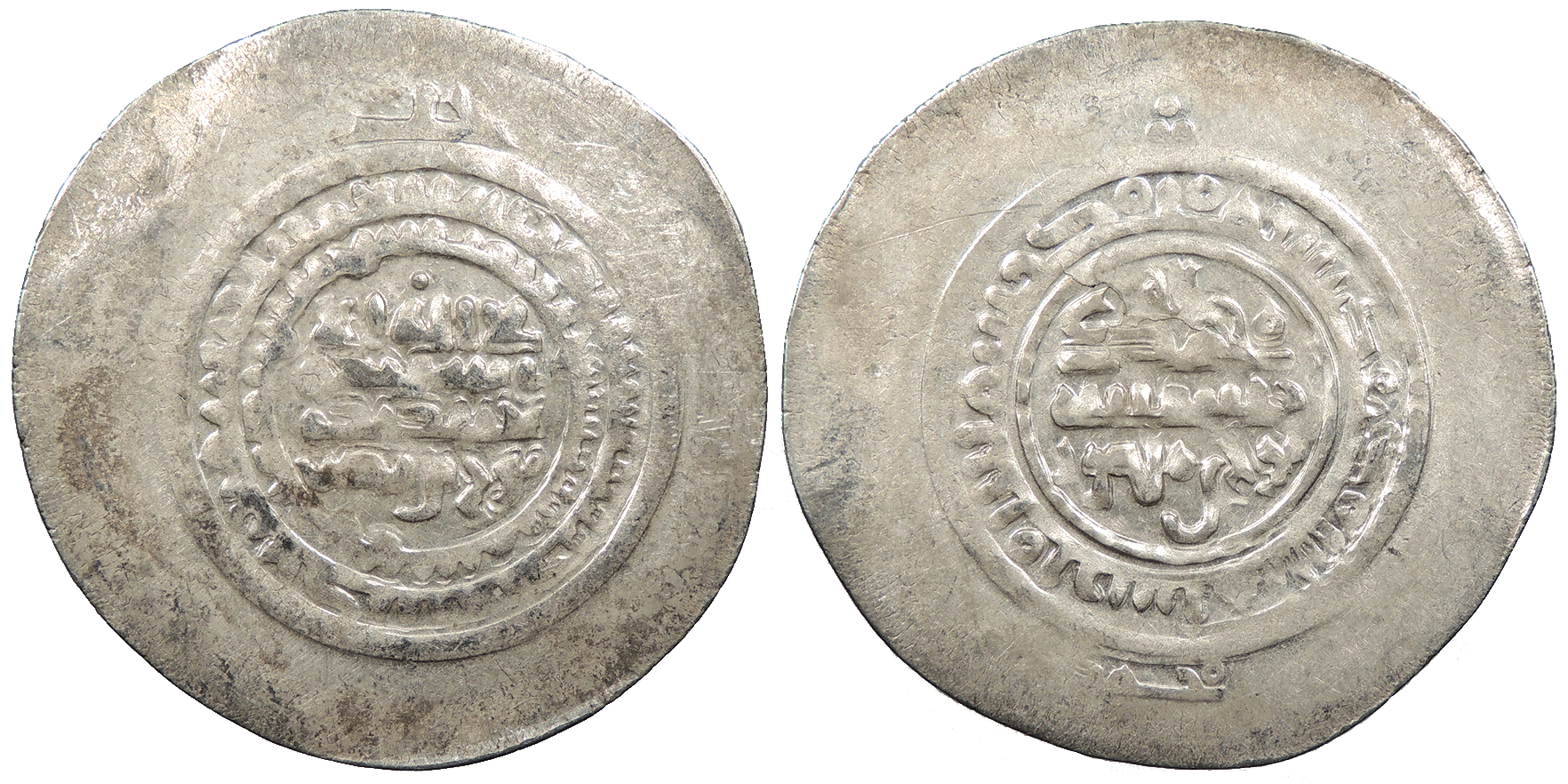
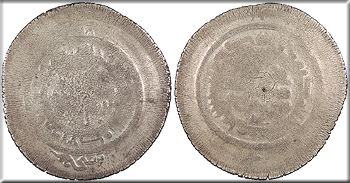
Persia Samanid Nuh II ibn Nasr AH331-343 (943-954 A.D.) Multiple Dirham VF -- #AC86508
AR Multiple Dirham 45mm. 9.10g. Central legend in three lines; Qur'anic legend around.
Central legend in three lines; Qur'anic legend around.
Album-1455 VF. Toned. Lustrous in devices. Very weakly struck, without much actual wear.
|
|
$ 45.00
|
|
|
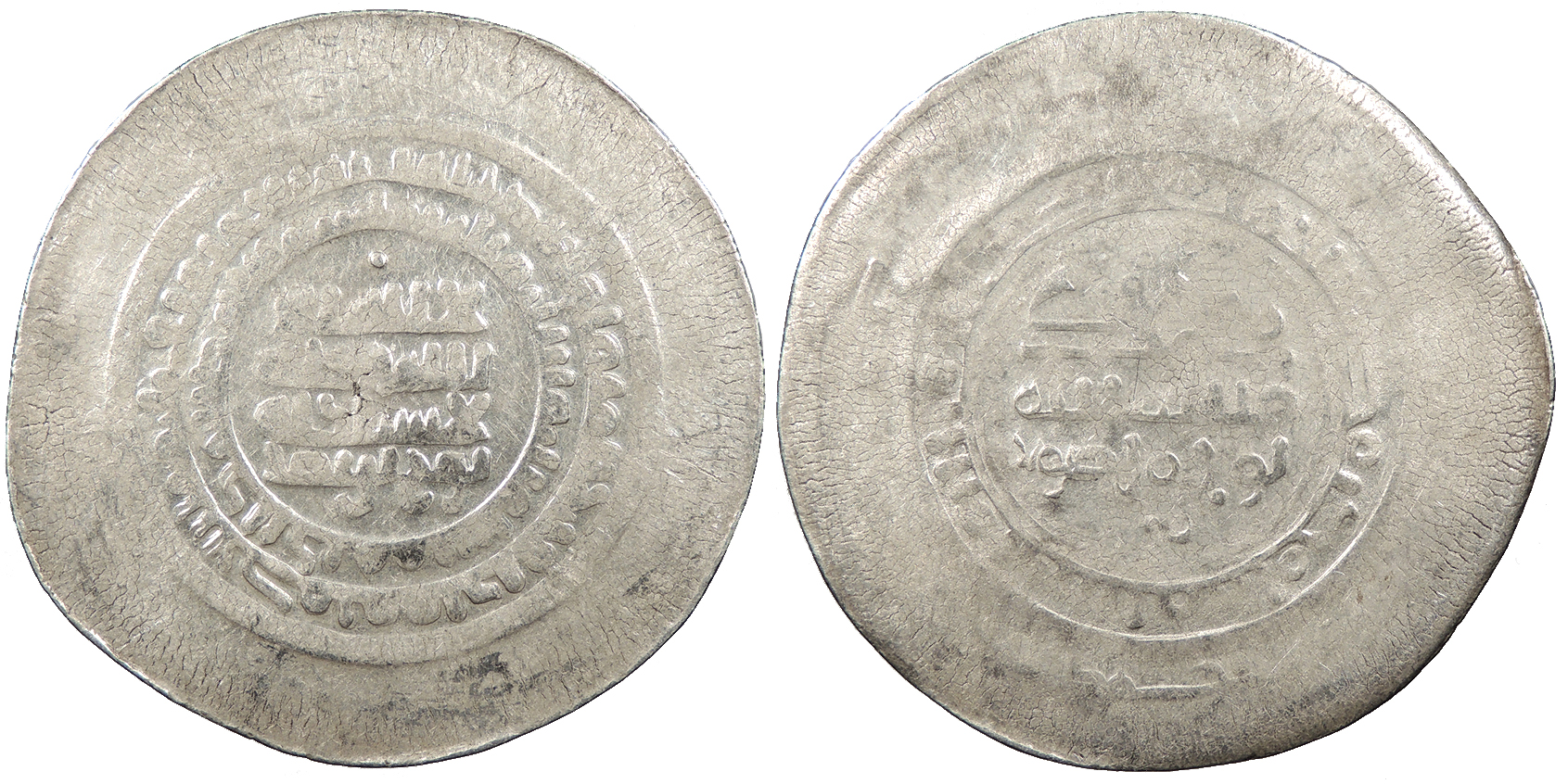
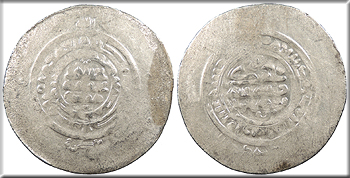
Persia Samanid Nuh II ibn Nasr AH331-343 (943-954 A.D.) Multiple Dirham VF -- #AC85402
AR Multiple Dirham 42mm. 8.30g. Central legend in three lines; Qur'anic legend in two lines around.
Central legend in three lines; Qur'anic legend around.
Album-1455 VF. Lightly toned and lustrous. Typical light porosity and unevenness of strike. Obverse stain.
|
|
$ 75.00
|
|
|
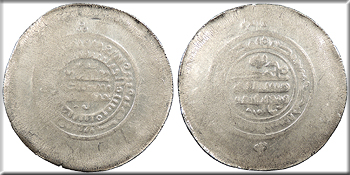
Persia Samanid Nuh II ibn Nasr AH331-343 (943-954 A.D.) Multiple Dirham VF -- #AC85399
AR Multiple Dirham 45mm. 11.40g. Central legend in three lines; Qur'anic legend in two lines around.
Central legend in three lines; Qur'anic legend around.
Album-1455 VF. Lightly toned with nearly full lustre. Typical light porosity and unevenness of strike. A couple of faint marks.
|
|
$ 75.00
|
|
|
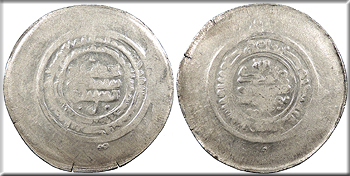
Persia Samanid Nuh II ibn Nasr AH331-343 (943-954 A.D.) Multiple Dirham VF -- #AC85398
AR Multiple Dirham 44mm. 10.70g. Central legend in three lines; Qur'anic legend in two lines around.
Central legend in three lines; Qur'anic legend around.
Album-1455 VF. Lightly toned with nearly full, flashy lustre. Typical light porosity and some unevenness of strike. Some scattered faint marks.
|
|
$ 95.00
|
|
|
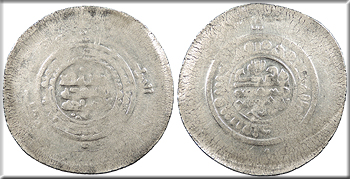
Persia Samanid Nuh II ibn Nasr AH331-343 (943-954 A.D.) Multiple Dirham Good VF -- #AC85396
AR Multiple Dirham 46mm. 11.20g. Central legend in three lines; Qur'anic legend in two lines around.
Central legend in three lines; Qur'anic legend around.
Album-1455 Good VF. Lightly toned. Nearly full, bright lustre. Typical light porosity and some unevenness of strike. A few small flan irregularities on reverse.  Reduced from: $105 Reduced from: $105
|
|
$ 90.00
|
|
|
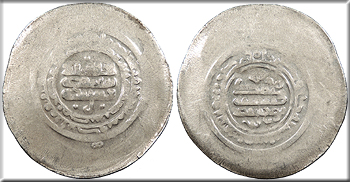
Persia Samanid Nuh II ibn Nasr AH331-343 (943-954 A.D.) Multiple Dirham VF -- #AC85395
AR Multiple Dirham 45mm. 8.20g. Central legend in three lines; Qur'anic legend in two lines around.
Central legend in three lines; Qur'anic legend around.
Album-1455 VF. Lightly toned with brightly lustrous fields. Typical light porosity and some unevenness of strike. A couple of faint marks.
|
|
$ 85.00
|
|
|
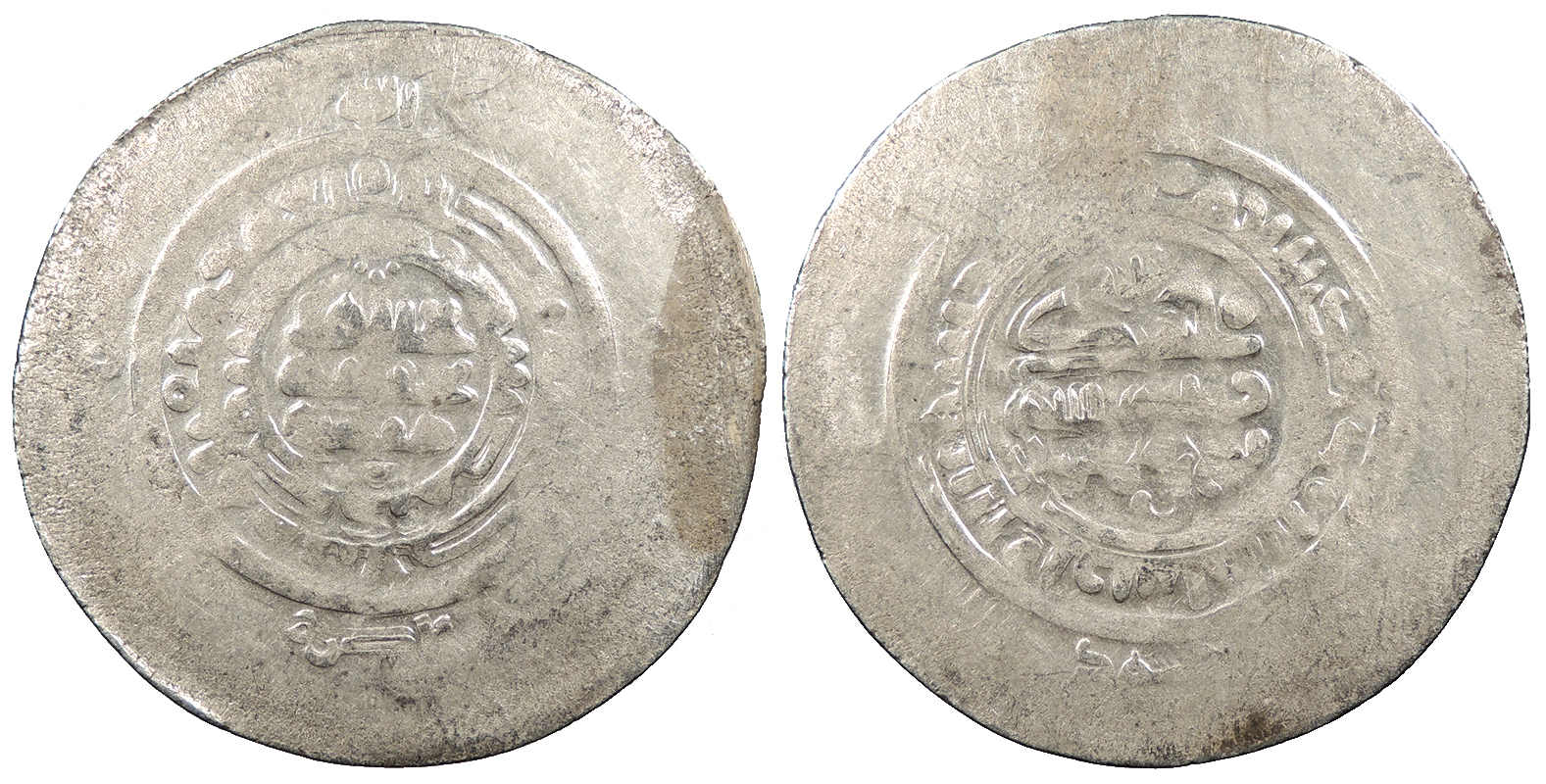
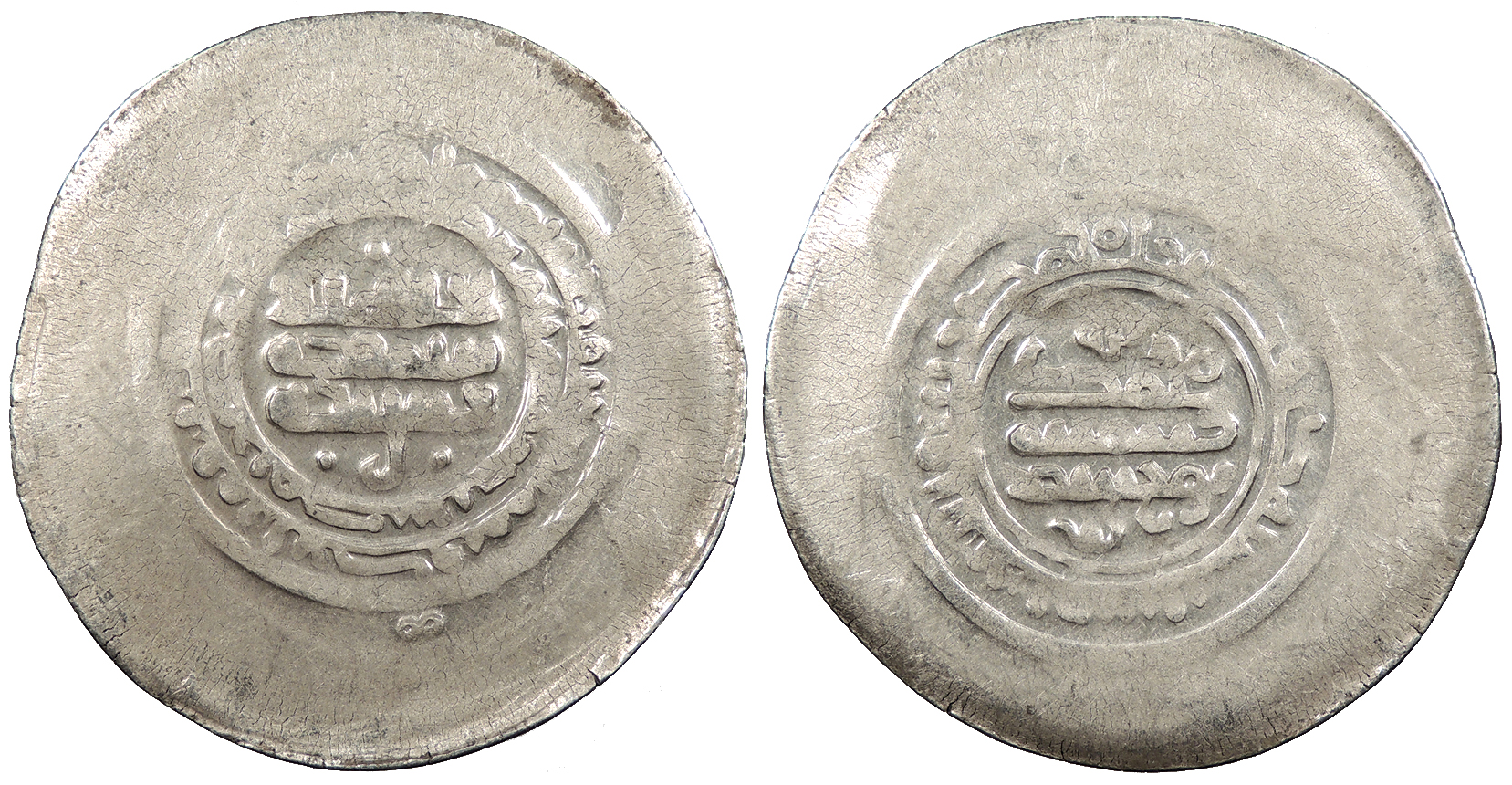
Persia Samanid Nuh III ibn Mansur I AH365-387 (976-997 A.D.) Multiple Dirham VF -- #AC85424
AR Multiple Dirham 48mm. 9.60g. Warwarliz (Walwaliz) Mint AH370 (980/981 A.D.) Central legend in three lines; Qur'anic legend in two lines around.
Central legend in four lines; Qur'anic legend around.
Album-1469W VF. Rare. Lightly toned and lustrous. Nearly fully struck. Typical light porosity and unevenness of strike. Typical double-struck reverse. Some scuffs in margins. This style is indicative of the Warwarliz mint. The reverse legend cites governor Fa'iq, caliph al-Ta'I, and Samanid overlord Nuh ibn Mansur. Listed as rarity 'RR' in Album. Reduced from: $145
|
|

$ 130.00
|
|
|
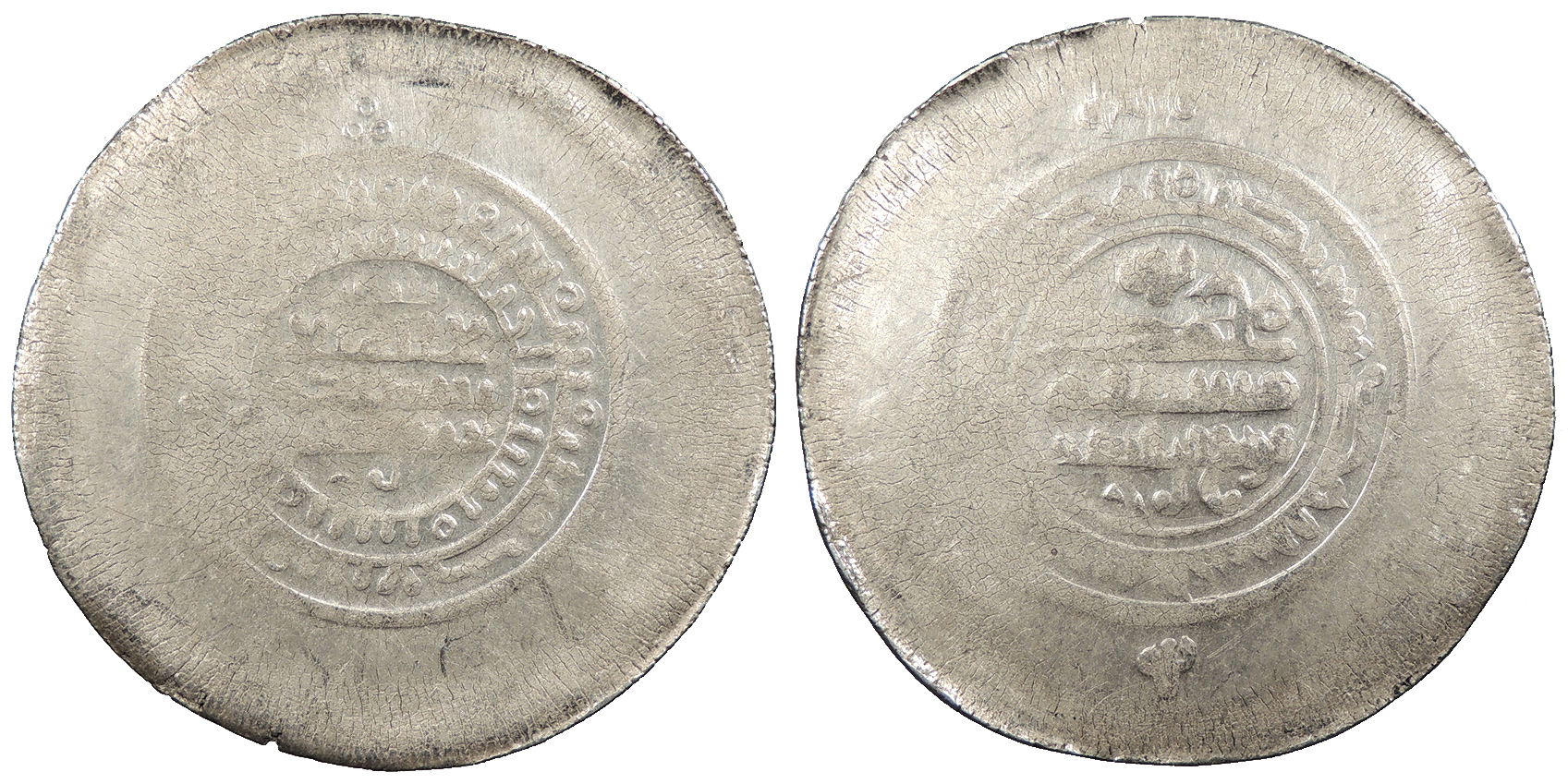
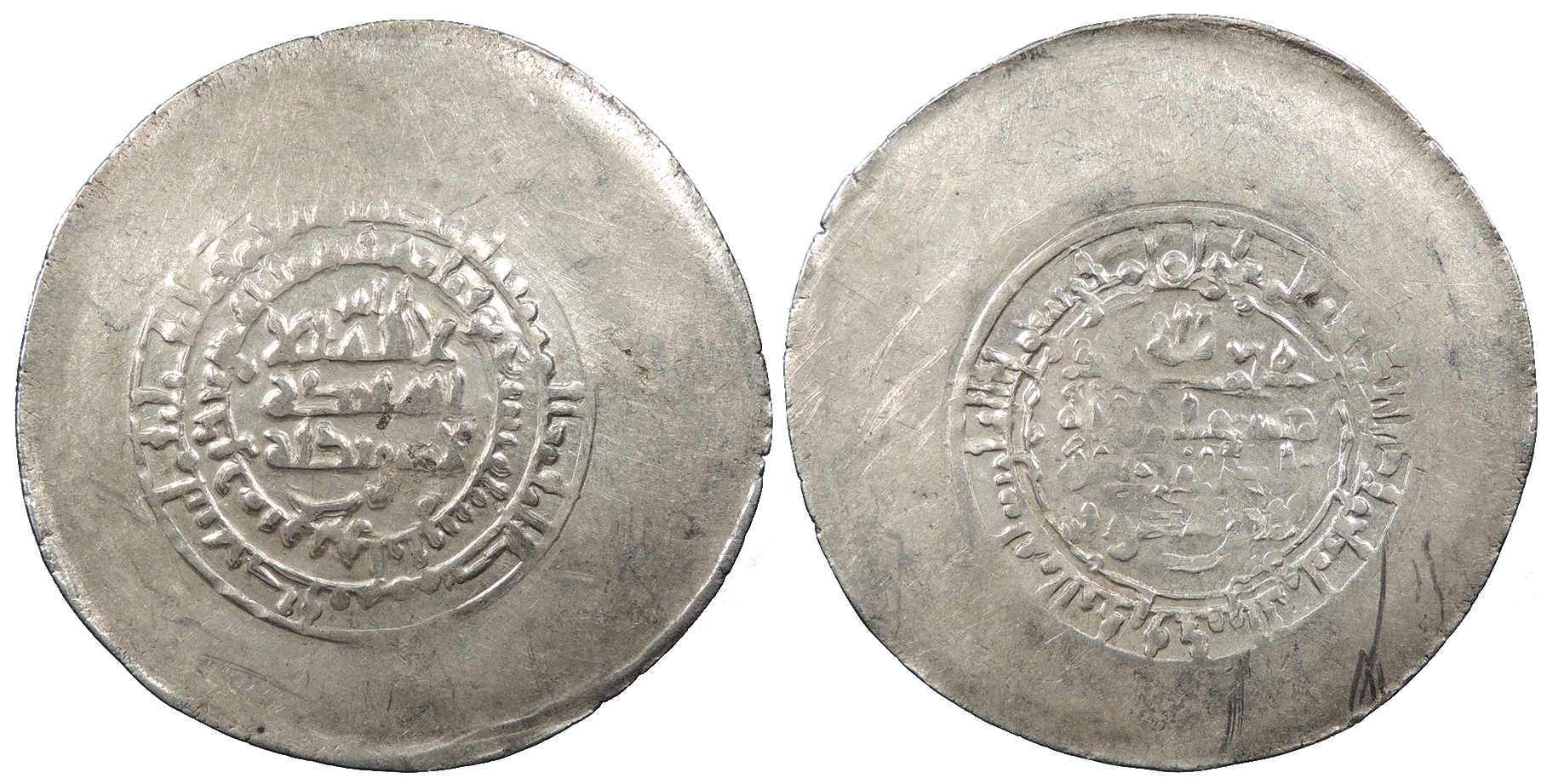
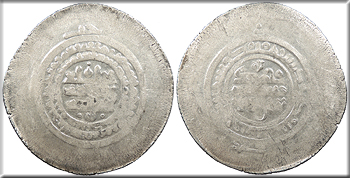
Persia Samanid Nuh III ibn Mansur I AH365-387 (976-997 A.D.) Multiple Dirham VF -- #AC85423
AR Multiple Dirham 45mm. 10.80g. Central legend in three lines; Qur'anic legend in two lines around.
Central legend in three lines; Qur'anic legend around.
Album-1469.2 VF. Lightly toned and lustrous. Typical light porosity and unevenness of strike. A few scattered light marks.
|
|
$ 75.00
|
|
|
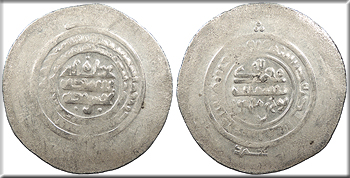
Persia Samanid Nuh III ibn Mansur I AH365-387 (976-997 A.D.) Multiple Dirham VF -- #AC85422
AR Multiple Dirham 43mm. 11.70g. Central legend in three lines; Qur'anic legend in two lines around.
Central legend in three lines; Qur'anic legend around.
Album-1469.2 VF. Lightly toned and lustrous. Typical light porosity and unevenness of strike. A few scattered light marks. Small flan flaw.
|
|
$ 75.00
|
|
|
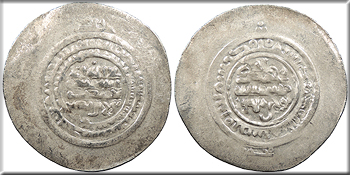
Persia Samanid Nuh III ibn Mansur I AH365-387 (976-997 A.D.) Multiple Dirham VF -- #AC85421
AR Multiple Dirham 44mm. 8.50g. Central legend in four lines; Qur'anic legend in two lines around.
Central legend in three lines; Qur'anic legend around.
Album-1469.2 VF. Lightly toned and lustrous. Sharply struck. Typical light porosity. A few scattered light marks. Small flan flaw.
|
|
$ 75.00
|
|
|
Persia Samanid Nuh III ibn Mansur I AH365-387 (976-997 A.D.) Multiple Dirham VF -- #AC85420
AR Multiple Dirham 42mm. 9.10g. Central legend in four lines; Qur'anic legend in two lines around.
Central legend in three lines; Qur'anic legend around.
Album-1469.2 VF. Lightly toned and lustrous. Nicely styled reverse. Typical light porosity and unevenness of strike. A few scattered light marks.
|
|

$ 75.00
|