|
|
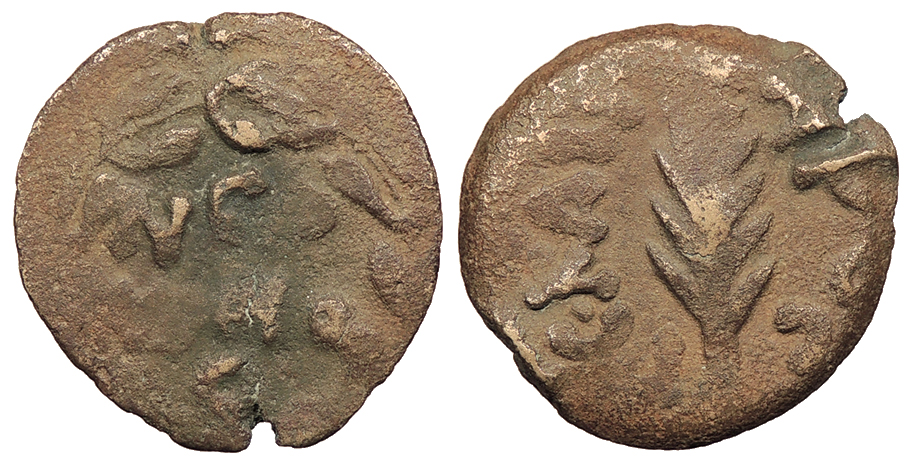
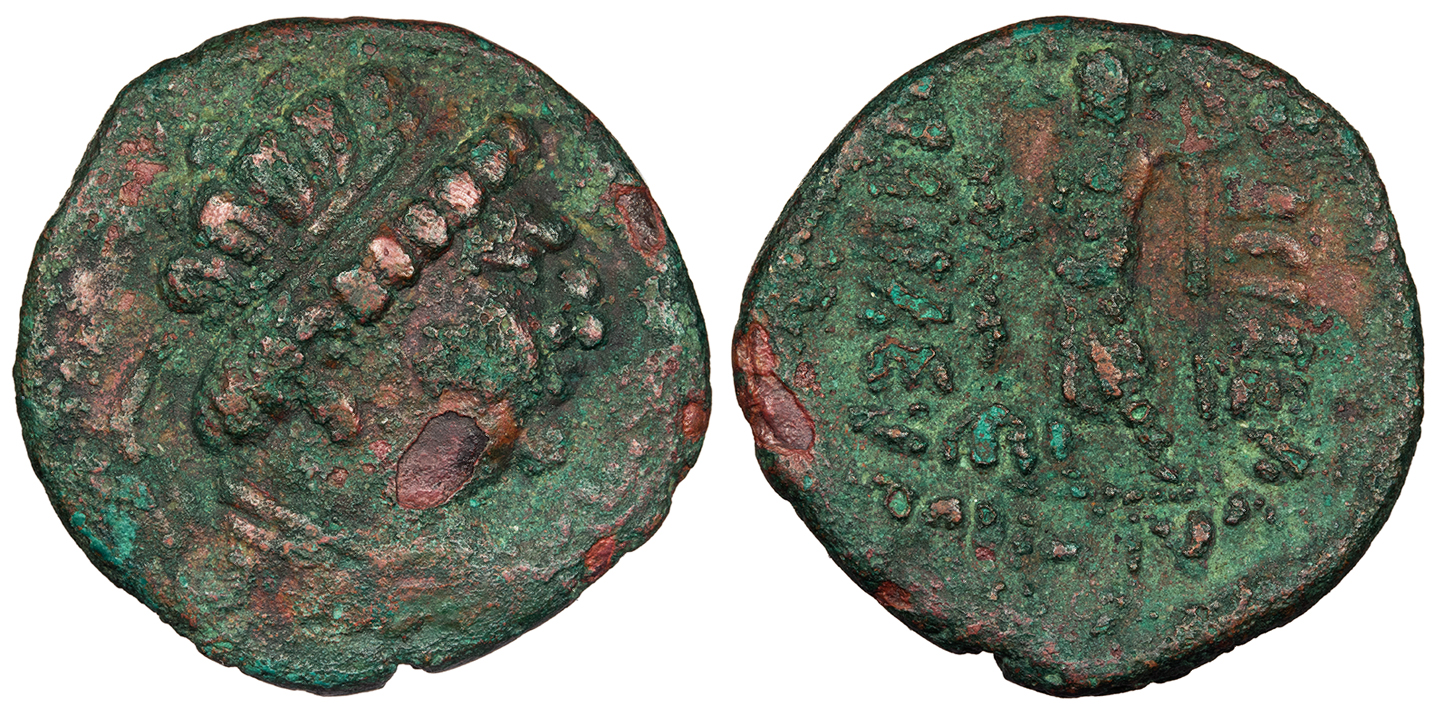
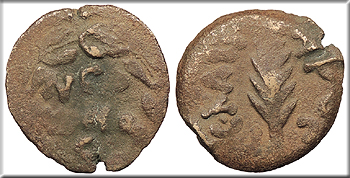
Judaea Roman Procurators Porcius Festus, under Nero 59-62 A.D. Prutah Good Fine -- #AC79986
AE Prutah 17mm. 2.50g. Jerusalem Mint Year 5 (of Nero, 58/59 A.D.) Legend within wreath tied and bottom with an X.
NER/WNO/C Palm branch.
LE KAISAROS Hendin 1351 Good Fine. Brown patina. Light roughness. Ancient gouge on edge.
 
|
|
$ 35.00
|
|
|
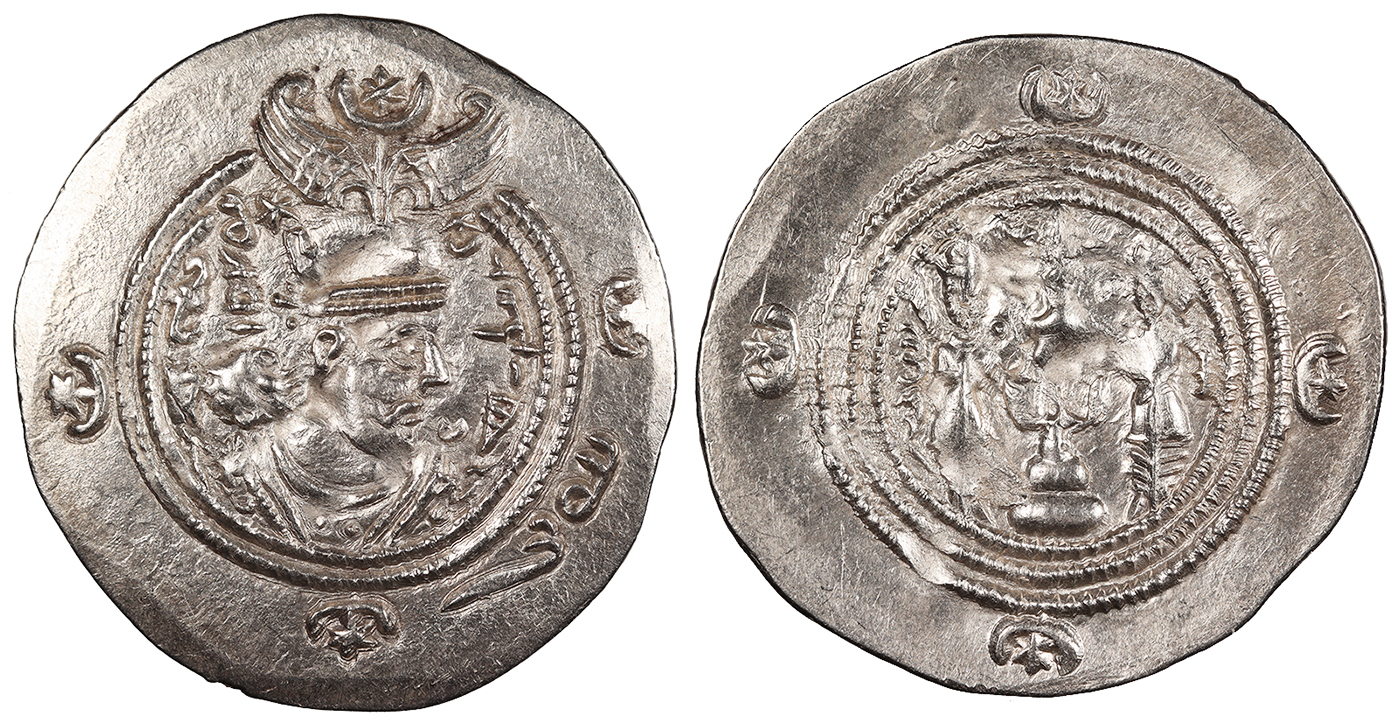
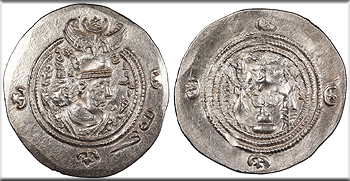
Khusru (Khosrau) II 590-628 A.D. Drachm Mint State -- #AC87105
AR Drachm 32mm. 4.20g. RY 11 (601 A.D.) Bust r., wearing mural crown with frontal crescent, two wings, and surmounted by star in crescent; crescents on shoulders; stars flanking crown; double border with star-in-crescents and APD ('excellent' in Phalavi) around.
Fire altar with ribbons flanked by two attendants; star and crescent flanking flames; date to l., mint to r.; triple border, star in crescents around.
Gobl type II/3 Mint State. Lightly toned and lustrous. Sharp.
|
|
$ 75.00
|
|
|
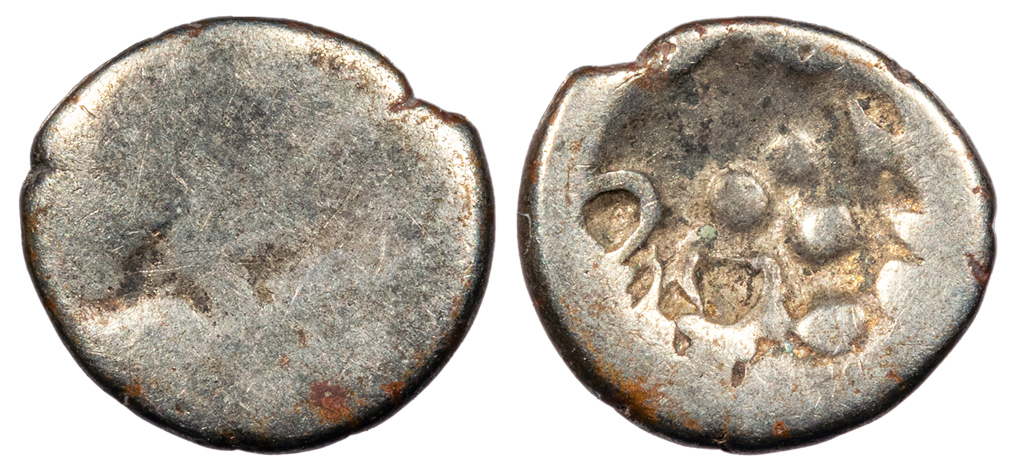
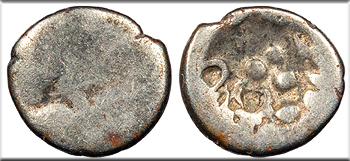
Hunnic Tribes in Sind & Gujarat Rana Vigraha ca. 713-717 A.D. Damma VF -- #AC95107
AR Damma 8mm. 0.40g. Stylized head r.
SRI RANA VIGRAHA ('Lord Rana Vigraha' in Brahmi) around highly stylized bull.
cf. Fishman & Todd, Y12 VF. Lightly toned and with lustre in recesses. Rare. Crudely produced, as typical. Struck with very worn obverse die. A recently identified pre-Islamic type. While this example initially appears to be uniface, the reverse matches that of the highly stylized bull types, which were struck with increasingly poor quality and worn-out obverse dies; we believe this is an example struck with an almost obliterated obverse die. According to Fishman & Todd, Rana Vigraha can be identified as Jayasimha, the last ruler of Sind before the Arab invasion. This crude series is thought to have been struck during his exile following his defeat.
|
|
$ 22.00
|
|
|
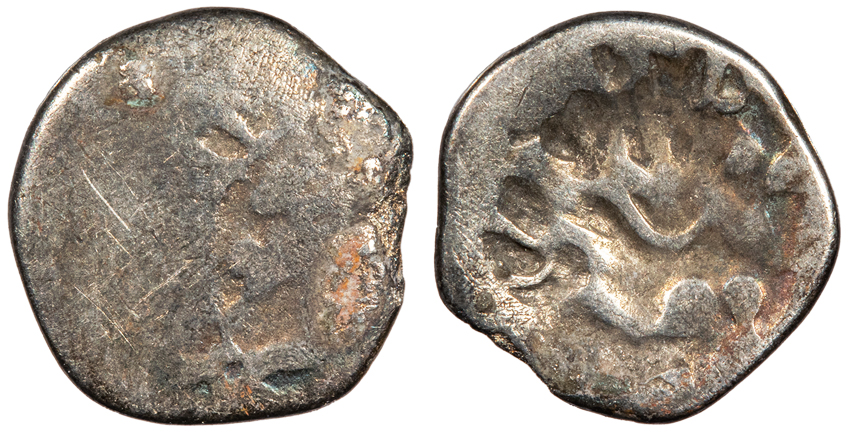
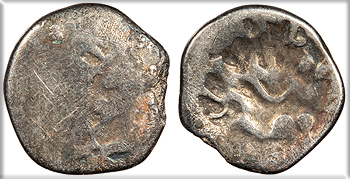
Hunnic Tribes in Sind & Gujarat Rana Vigraha ca. 713-717 A.D. Damma VF -- #AC95106
AR Damma 9mm. 0.40g. Stylized head r.
SRI RANA VIGRAHA ('Lord Rana Vigraha' in Brahmi) around highly stylized bull.
cf. Fishman & Todd, Y12 VF. Lightly toned and with much lustre in recesses. Rare. Crudely produced, as typical. Small porous spot on edge. A recently identified pre-Islamic type. According to Fishman & Todd, Rana Vigraha can be identified as Jayasimha, the last ruler of Sind before the Arab invasion. This crude series is thought to have been struck during his exile following his defeat.
|
|
$ 25.00
|
|
|
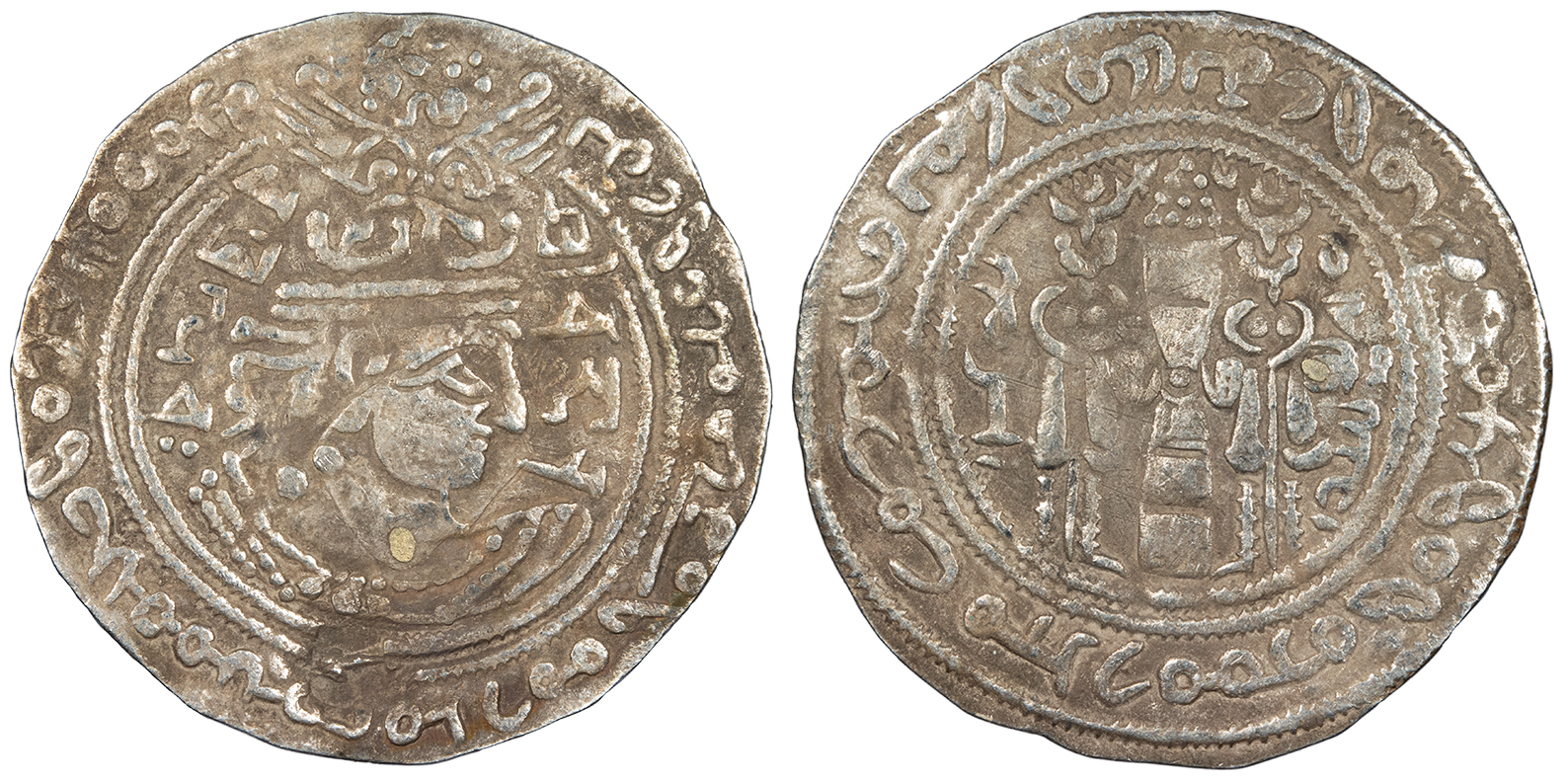
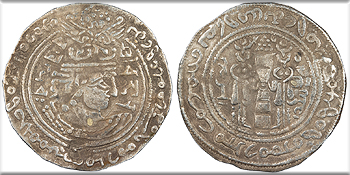
Baktria Western Turks Sandan (Candana), 'Lord of the Oxus' after 688 A.D. Drachm VF -- #AC101283
AR Drachm 33mm. 2.89g. Uncertain mint in Baktria Crowned Sasanian-style bust r.; Brahmi inner legend ('his perfection, Candana, Lord of the Oxus'); Baktrian legend in outer margin ('his perfection, the lord, Commander Sandan, king, the lord'); tamgha countermark and gold plug below bust.
Fire altar flanked by attendants; star and crescent flanking flames; Pahlavi inner legend ('increase,' 'from glory'); Baktrian legend in outer margin citing the Baktrian Khagan (supreme leader).
Vondrovec 244; c/m: Göbl, Dokumente KM 104 VF. Toned. Some porosity and light marks. This type features three languages - Baktrian, Brahmi, and Pahlavi - which pinpoints its issuance to Baktria. This issue was formerly cited as originating from the Shahi Turks or Nezak Huns, specifically to the reign of Shahi Tegin (Sri Shahi), but reassessment of the legends by Vondrovec has placed its origin to the north, in Baktria. Similarly, the issuer is now understood to be one named Sandan, of whom little is known, but whose name is attested in both the Baktrian and Brahmi legends. The Brahmi inscription also offers the title 'vakhudevah,' or 'Lord of the Oxus,' further evidencing a Baktrian origin. Later countermarking with dynastic tamgha symbols and the addition of a debased gold plug at the neck of the portrait were likely intended to raise its value.
|
|
$ 140.00
|
|
|
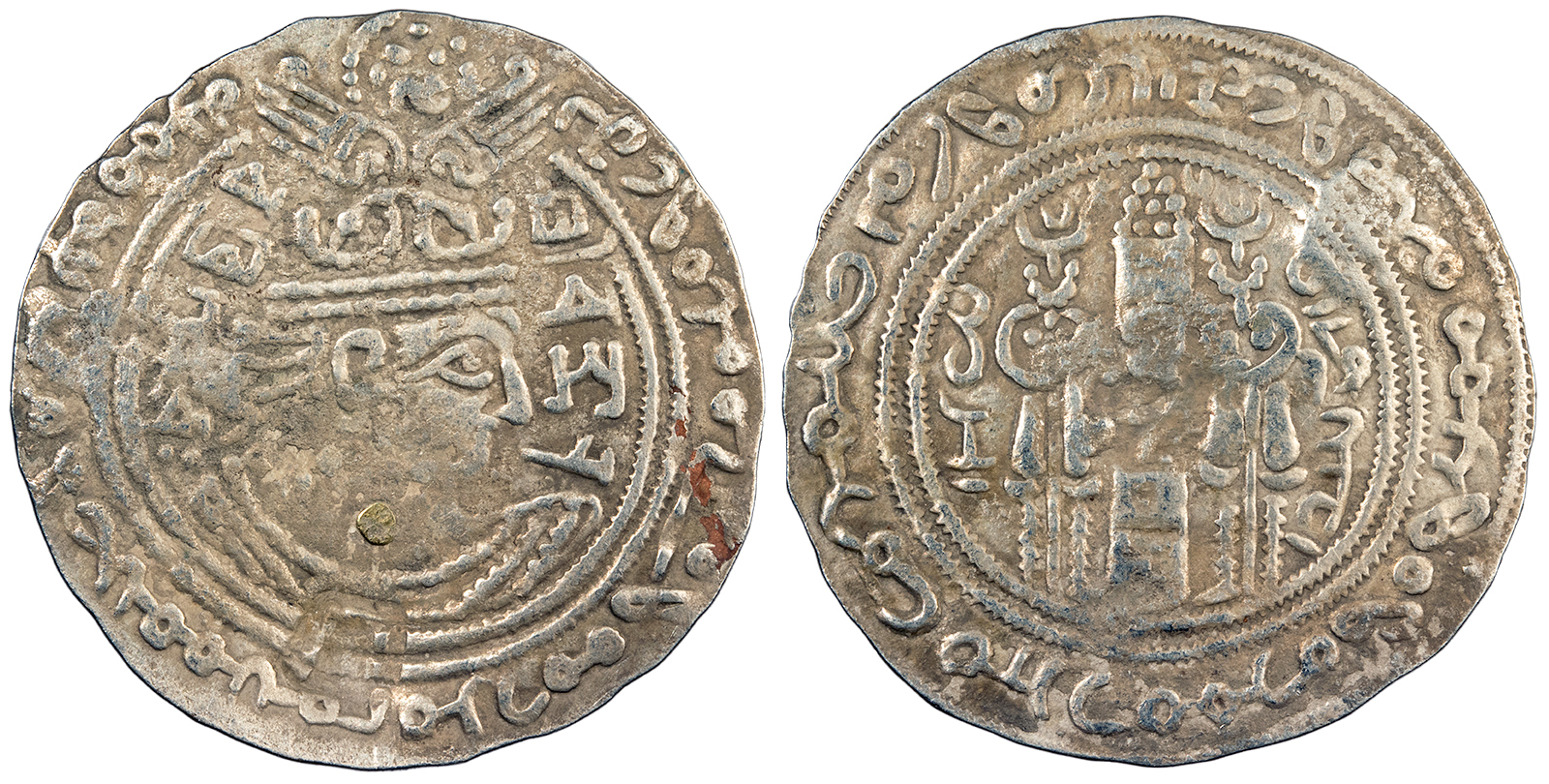
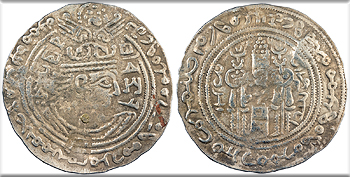
Baktria Western Turks Sandan (Candana), 'Lord of the Oxus' after 688 A.D. Drachm Good VF -- #AC101282
AR Drachm 33mm. 3.28g. Uncertain mint in Baktria Crowned Sasanian-style bust r.; Brahmi inner legend ('his perfection, Candana, Lord of the Oxus'); Baktrian legend in outer margin ('his perfection, the lord, Commander Sandan, king, the lord'); tamgha countermark and gold plug below bust.
Fire altar flanked by attendants; star and crescent flanking flames; Pahlavi inner legend ('increase,' 'from glory'); Baktrian legend in outer margin citing the Baktrian Khagan (supreme leader).
Vondrovec 244; c/m: Göbl, Dokumente KM 103 Good VF. Toned. Some porosity. This type features three languages - Baktrian, Brahmi, and Pahlavi - which pinpoints its issuance to Baktria. This issue was formerly cited as originating from the Shahi Turks or Nezak Huns, specifically to the reign of Shahi Tegin (Sri Shahi), but reassessment of the legends by Vondrovec has placed its origin to the north, in Baktria. Similarly, the issuer is now understood to be one named Sandan, of whom little is known, but whose name is attested in both the Baktrian and Brahmi legends. The Brahmi inscription also offers the title 'vakhudevah,' or 'Lord of the Oxus,' further evidencing a Baktrian origin. Later countermarking with dynastic tamgha symbols and the addition of a debased gold plug at the neck of the portrait were likely intended to raise its value.  Reduced from: $140 Reduced from: $140
|
|
$ 125.00
|
|
|
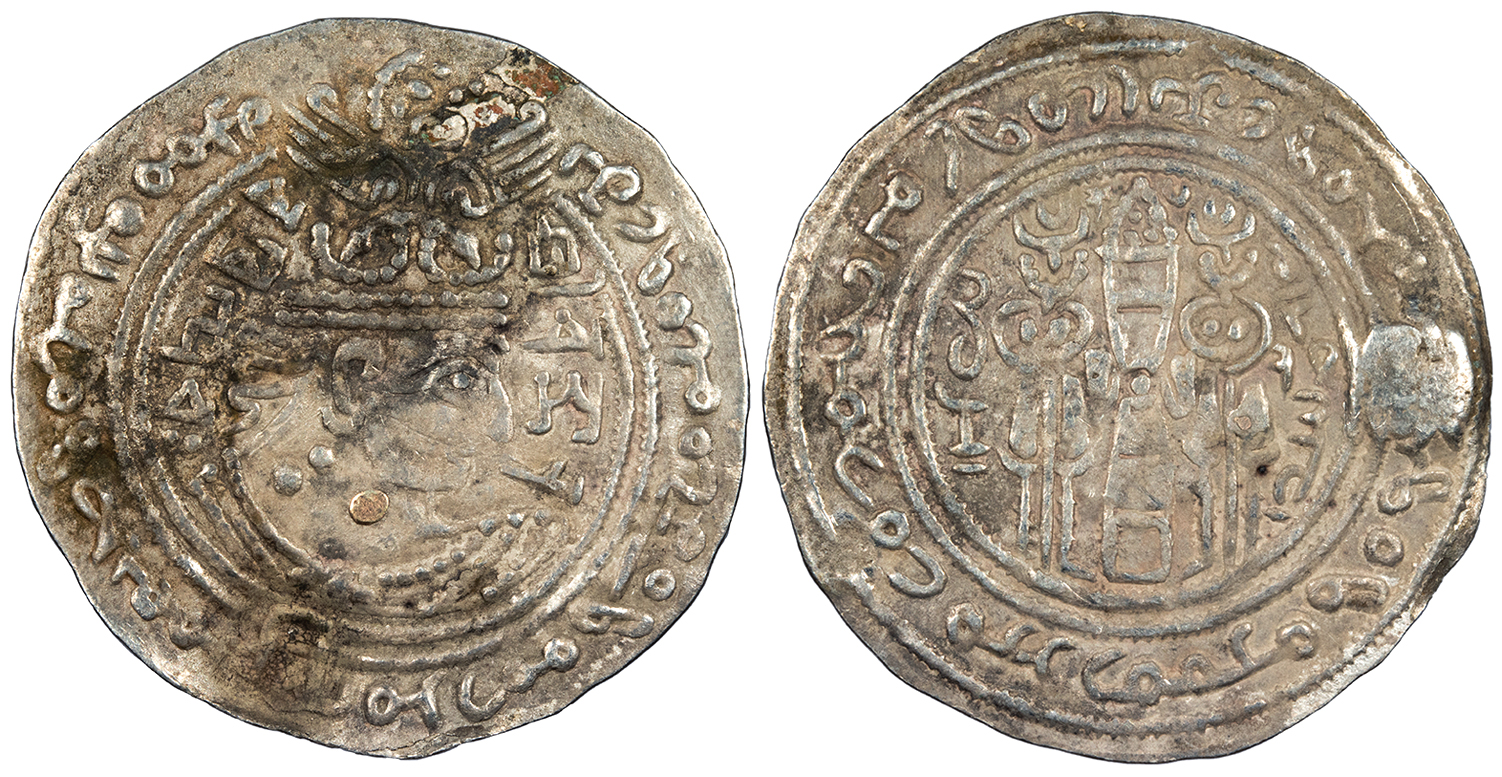
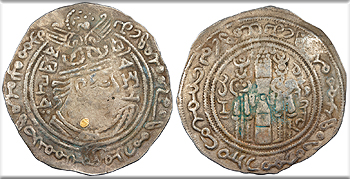
Baktria Western Turks Sandan (Candana), 'Lord of the Oxus' after 688 A.D. Drachm Good VF -- #AC101278
AR Drachm 34mm. 3.10g. Uncertain mint in Baktria Crowned Sasanian-style bust r.; Brahmi inner legend ('his perfection, Candana, Lord of the Oxus'); Baktrian legend in outer margin ('his perfection, the lord, Commander Sandan, king, the lord'); tamgha countermark and gold plug below bust.
Fire altar flanked by attendants; star and crescent flanking flames; Pahlavi inner legend ('increase,' 'from glory'); Baktrian legend in outer margin citing the Baktrian Khagan (supreme leader).
Vondrovec 244; c/m: Göbl, Dokumente KM 103 Good VF. Toned. Green stain on reverse. This type features three languages - Baktrian, Brahmi, and Pahlavi - which pinpoints its issuance to Baktria. This issue was formerly cited as originating from the Shahi Turks or Nezak Huns, specifically to the reign of Shahi Tegin (Sri Shahi), but reassessment of the legends by Vondrovec has placed its origin to the north, in Baktria. Similarly, the issuer is now understood to be one named Sandan, of whom little is known, but whose name is attested in both the Baktrian and Brahmi legends. The Brahmi inscription also offers the title 'vakhudevah,' or 'Lord of the Oxus,' further evidencing a Baktrian origin. Later countermarking with dynastic tamgha symbols and the addition of a debased gold plug at the neck of the portrait were likely intended to raise its value.
|
|
$ 140.00
|
|
|
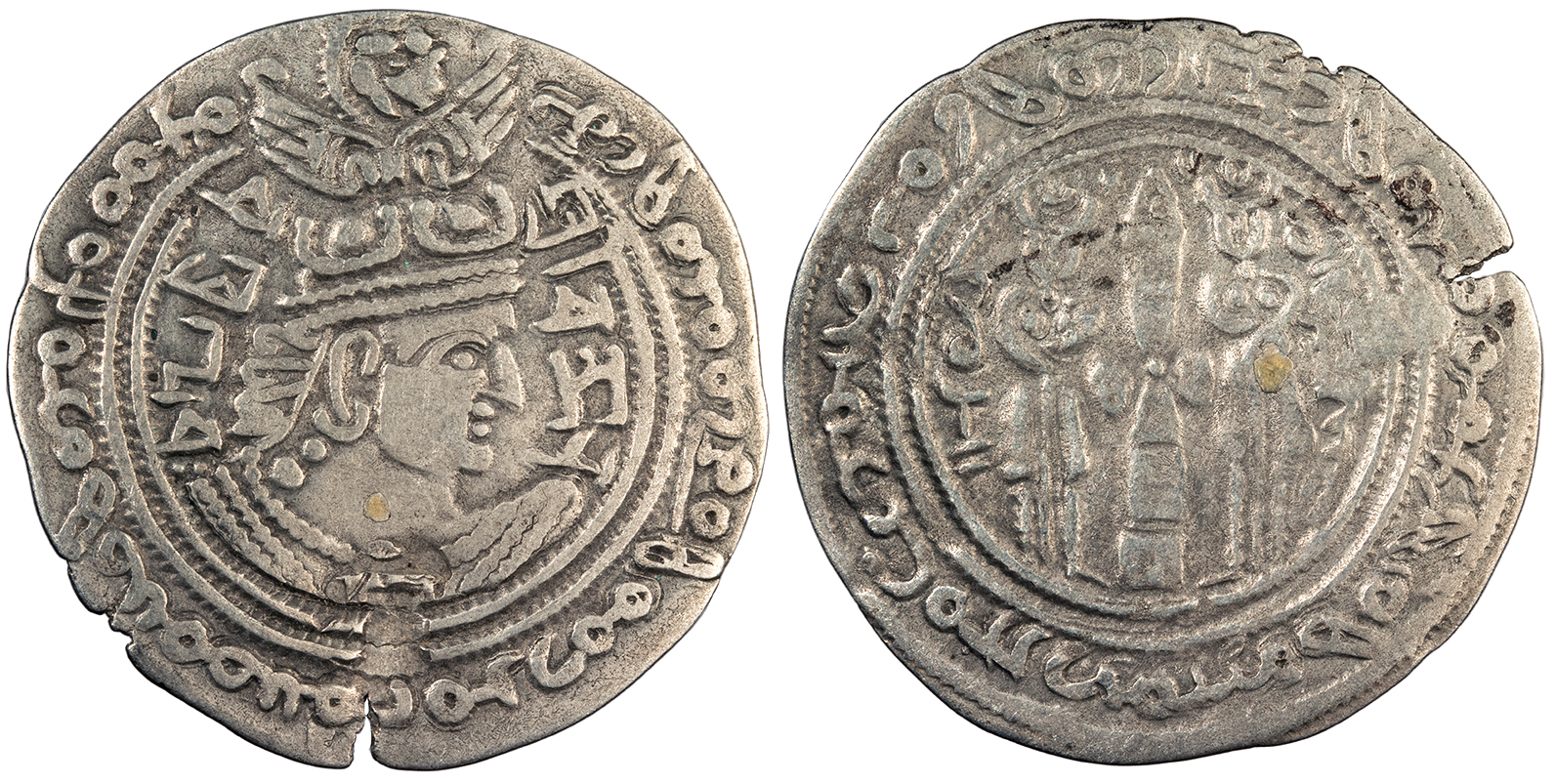
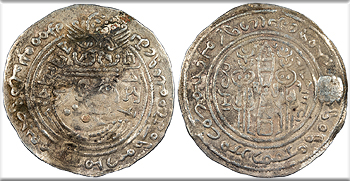
Baktria Western Turks Sandan (Candana), 'Lord of the Oxus' after 688 A.D. Drachm Good VF -- #AC101275
AR Drachm 34mm. 2.94g. Uncertain mint in Baktria Crowned Sasanian-style bust r.; Brahmi inner legend ('his perfection, Candana, Lord of the Oxus'); Baktrian legend in outer margin ('his perfection, the lord, Commander Sandan, king, the lord'); tamgha countermark and gold plug below bust.
Fire altar flanked by attendants; star and crescent flanking flames; Pahlavi inner legend ('increase,' 'from glory'); Baktrian legend in outer margin citing the Baktrian Khagan (supreme leader).
Vondrovec 244; c/m: Göbl, Dokumente KM 103 Good VF. Unevenly toned. This type features three languages - Baktrian, Brahmi, and Pahlavi - which pinpoints its issuance to Baktria. This issue was formerly cited as originating from the Shahi Turks or Nezak Huns, specifically to the reign of Shahi Tegin (Sri Shahi), but reassessment of the legends by Vondrovec has placed its origin to the north, in Baktria. Similarly, the issuer is now understood to be one named Sandan, of whom little is known, but whose name is attested in both the Baktrian and Brahmi legends. The Brahmi inscription also offers the title 'vakhudevah,' or 'Lord of the Oxus,' further evidencing a Baktrian origin. Later countermarking with dynastic tamgha symbols and the addition of a debased gold plug at the neck of the portrait were likely intended to raise its value.
|
|
$ 160.00
|
|
|
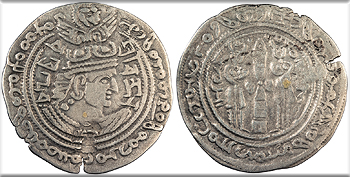
Baktria Western Turks Sandan (Candana), 'Lord of the Oxus' after 688 A.D. Drachm Good VF -- #AC101267
AR Drachm 32mm. 3.07g. Uncertain mint in Baktria Crowned Sasanian-style bust r.; Brahmi inner legend ('his perfection, Candana, Lord of the Oxus'); Baktrian legend in outer margin ('his perfection, the lord, Commander Sandan, king, the lord'); tamgha countermark and gold plug below bust.
Fire altar flanked by attendants; star and crescent flanking flames; Pahlavi inner legend ('increase,' 'from glory'); Baktrian legend in outer margin citing the Baktrian Khagan (supreme leader).
Vondrovec 244; c/m: Göbl, Dokumente KM 103 Good VF. Toned. Small flan split from countermarking. Lightly brushed. This type features three languages - Baktrian, Brahmi, and Pahlavi - which pinpoints its issuance to Baktria. This issue was formerly cited as originating from the Shahi Turks or Nezak Huns, specifically to the reign of Shahi Tegin (Sri Shahi), but reassessment of the legends by Vondrovec has placed its origin to the north, in Baktria. Similarly, the issuer is now understood to be one named Sandan, of whom little is known, but whose name is attested in both the Baktrian and Brahmi legends. The Brahmi inscription also offers the title 'vakhudevah,' or 'Lord of the Oxus,' further evidencing a Baktrian origin. Later countermarking with dynastic tamgha symbols and the addition of a debased gold plug at the neck of the portrait were likely intended to raise its value. Reduced from: $175
|
|
$ 160.00
|
|
|
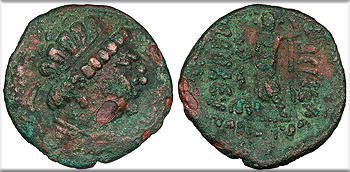
Sogdiana Yuezhi (Yueh Chi) imitating Heliokles I ca. 1st Century B.C.-80 A.D. Tetradrachm Good VF -- #AC107495
AE Tetradrachm 33mm. 17.58g. Uncertain mint in Baktria Diademed bust of Heliokles I, r.
Zeus standing facing, holding thunderbolt and sceptire; monogram to lower inner l.
BACILEWC HLIILEVC DIIDIV Senior A21.1T; HGC 12, 174 (Kushan); MIG 501-4 Good VF. Scarce. Green and red encrusted patina. Nice bust and good detail despite rough surfaces. Heavy patina is quite rough. This enigmatic type is often attributed to the Yuezhi ruler Kujula Kadphises (ca. 30-80 A.D.) in Baktria, who united the Yuezhi and formed the Kushan Empire. But these imitations are also traditionally attributed to the earlier pre-Kushan period of the Yuezhi in Baktria. As such, there appears to be no firm concensus of when these were struck.
|
|
$ 135.00
|
|
|
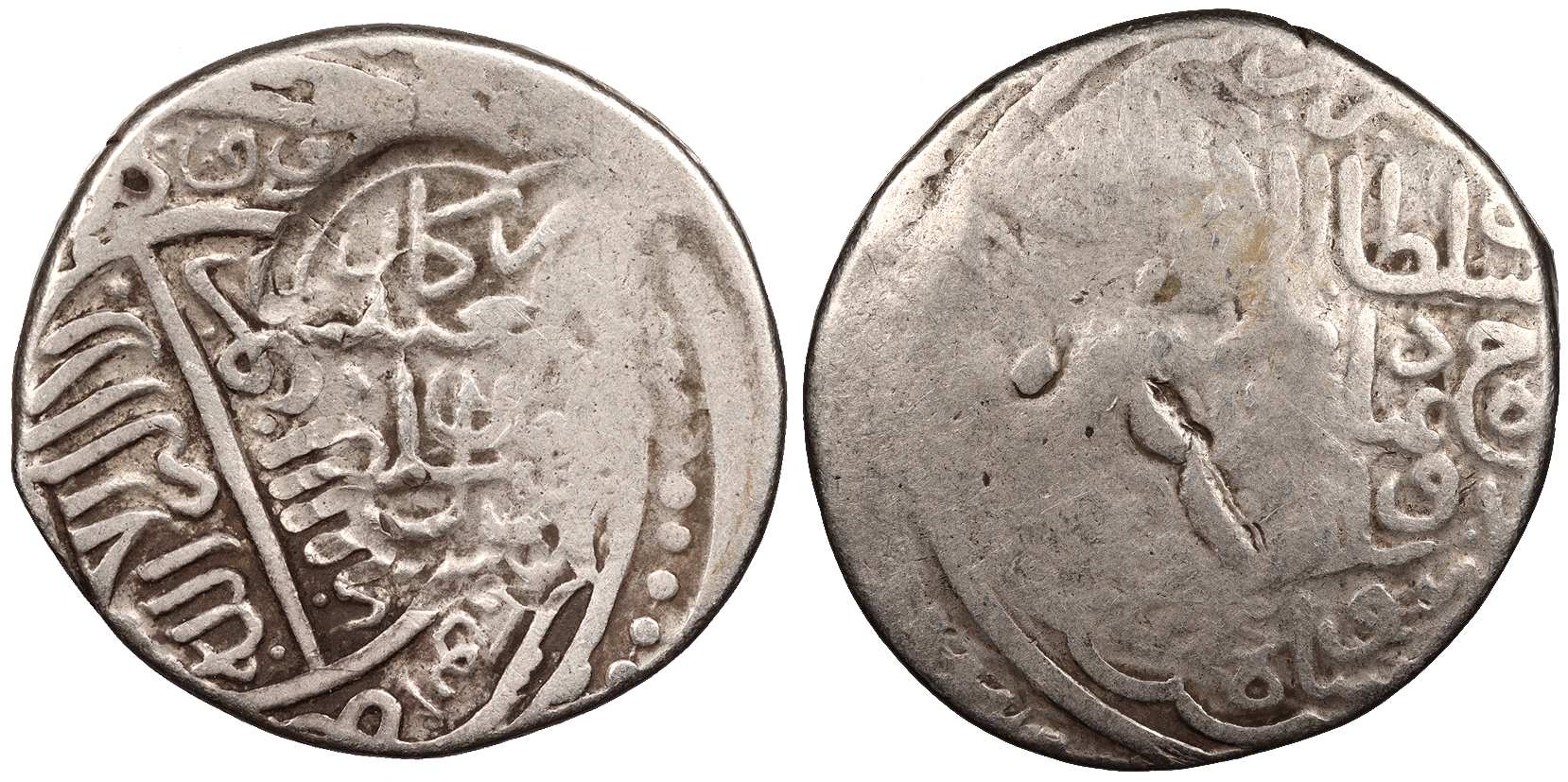
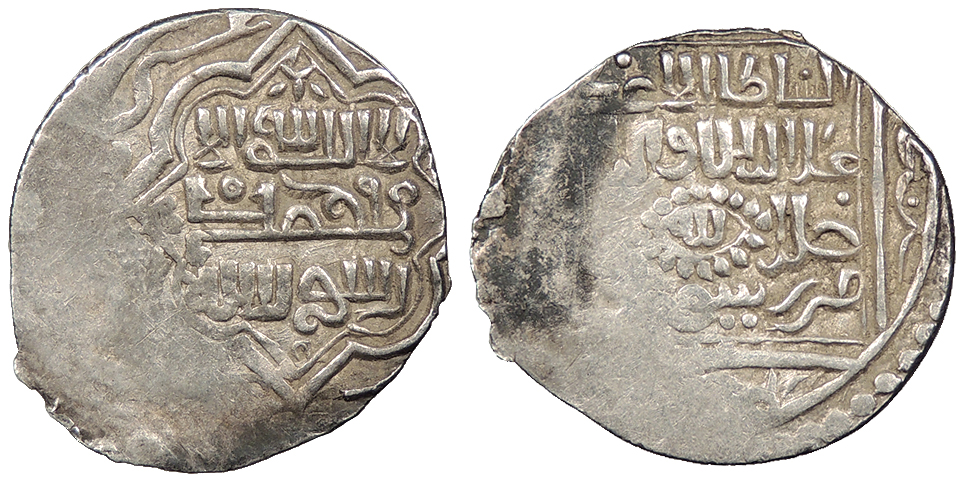
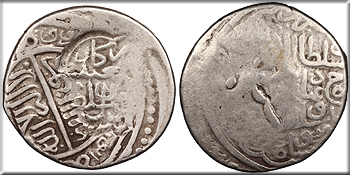
Timurids Abu Sa'id Gurkan AH855-873 (1451-1469 A.D.) Countermarked tanka VF -- #AC87250
AR Countermarked tanka 22mm. 5.00g. (No mint) (No date) 'Gurkan Sa'id' in quatrefoil counterstamp.
Reverse of undertype.
Album 2417 (c/m on Album 2405, tanka of Shahrukh struck at Saveh) VF. Toned. Host about VF. Both host and countermark show faint lustre in devices. Countermark unevenly applied. This common countermarked issue was struck by Abu Sa'id on top of older tankas, particularly those of Shahrukh (AH807-850).
|
|
$ 40.00
|
|
|
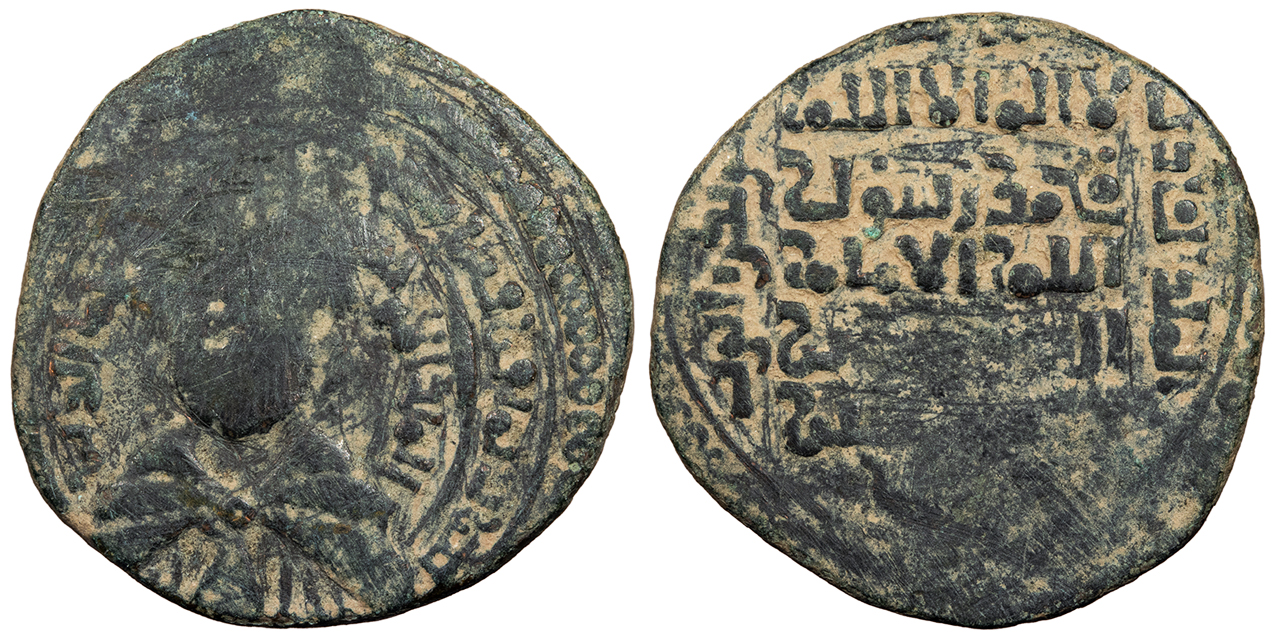
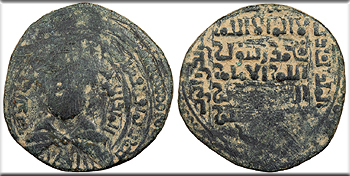
Ayyubids Mayyafariqin & Jabal Sinjar al-Adil Abu Bakr I Sayf al-Din AH596-607 (1200-1210 A.D.) Dirham Fine -- #AC94608
AE Dirham 27mm. 7.10g. Mayyafariqin mint AH591-592 Draped bust of Prince facing, wearing a Byzantine-style crown; legend around, date to either side of head.
Legend in six lines, legend around.
Album 809 Fine. Dark green patina with some tan contrast. Unevenly struck. Light scratches.
|
|
$ 30.00
|
|
|
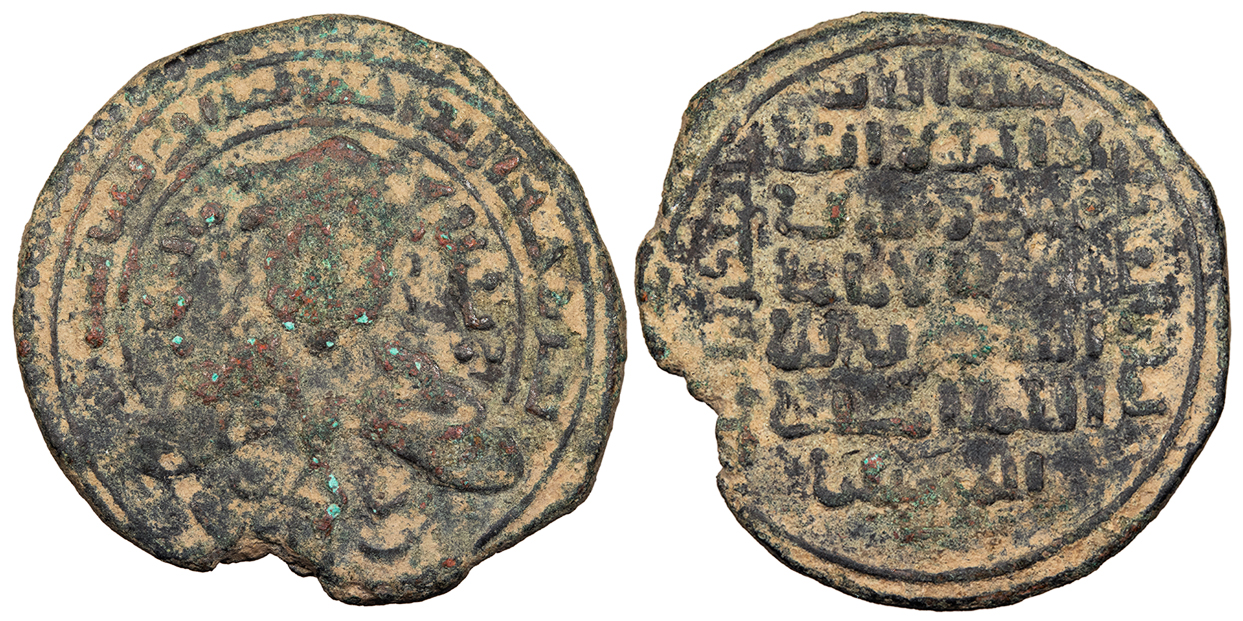
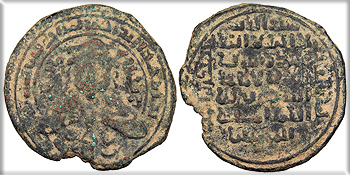
Ayyubids Mayyafariqin & Jabal Sinjar al-Adil Abu Bakr I Sayf al-Din AH596-607 (1200-1210 A.D.) Dirham Fine -- #AC94607
AE Dirham 29mm. 11.00g. Mayyafariqin mint AH591-592 Draped bust of Prince facing, wearing a Byzantine-style crown; legend around, date to either side of head.
Legend in six lines, legend around.
Album 809 Fine. Dark green-red mottled patina with tan contrast. Some light roughness. Irregular flan. A few tiny corrosion spots.
|
|
$ 33.00
|
|
|
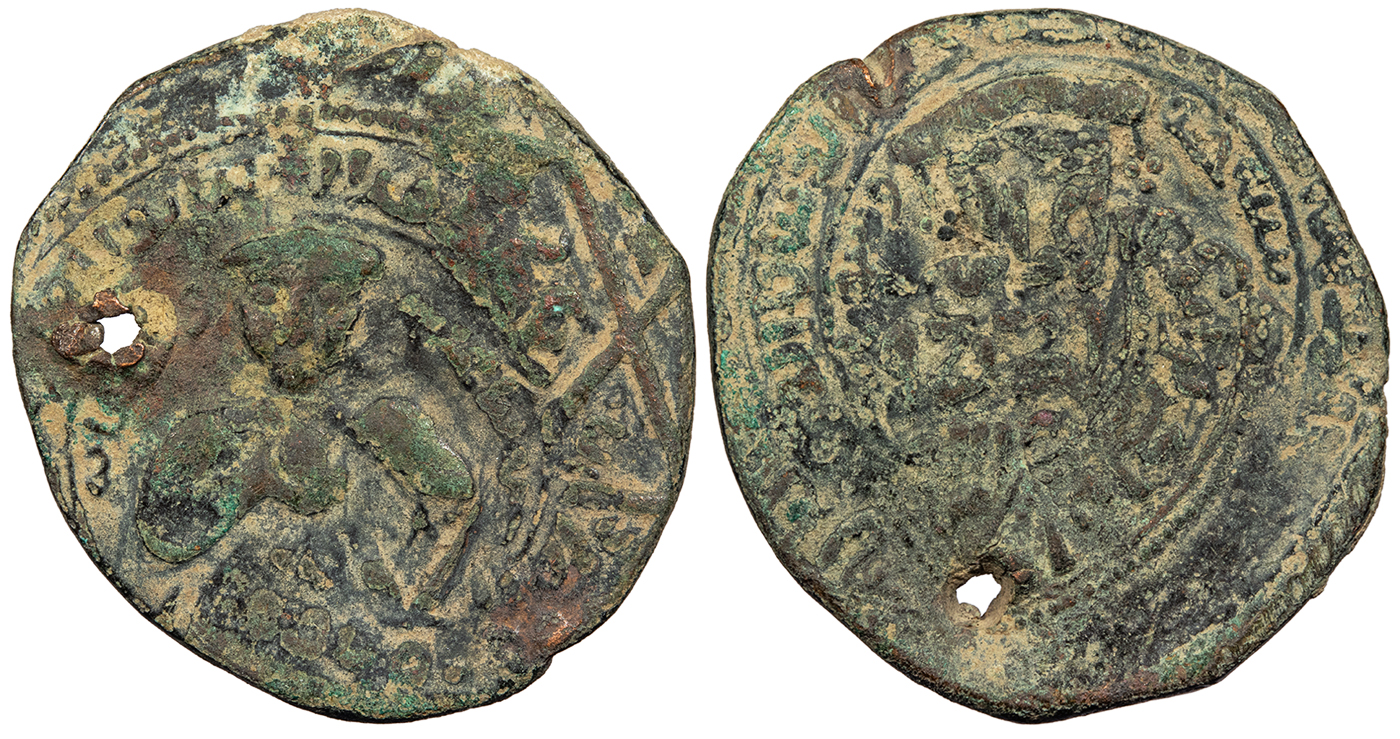
Ayyubids Mayyafariqin & Sinjar al-Ashraf Musa AH607-617 (1210-1220 A.D.) Dirham Fine -- #AC94611
AE Dirham 28mm. 10.00g. Sinjar mint AH615-617 Prince seated facing, holding globe; legends around.
Legend in six lines citing al-Kamil Muhammad of Egypt as overlord, legend and circle around.
Album 859.2 Fine. Rare. Dark gray-green patina. Somewhat porous surfaces. Pierced. Listed as 'scarce' in Album but seemingly rarer on the market.
|
|

$ 40.00
|
|
|
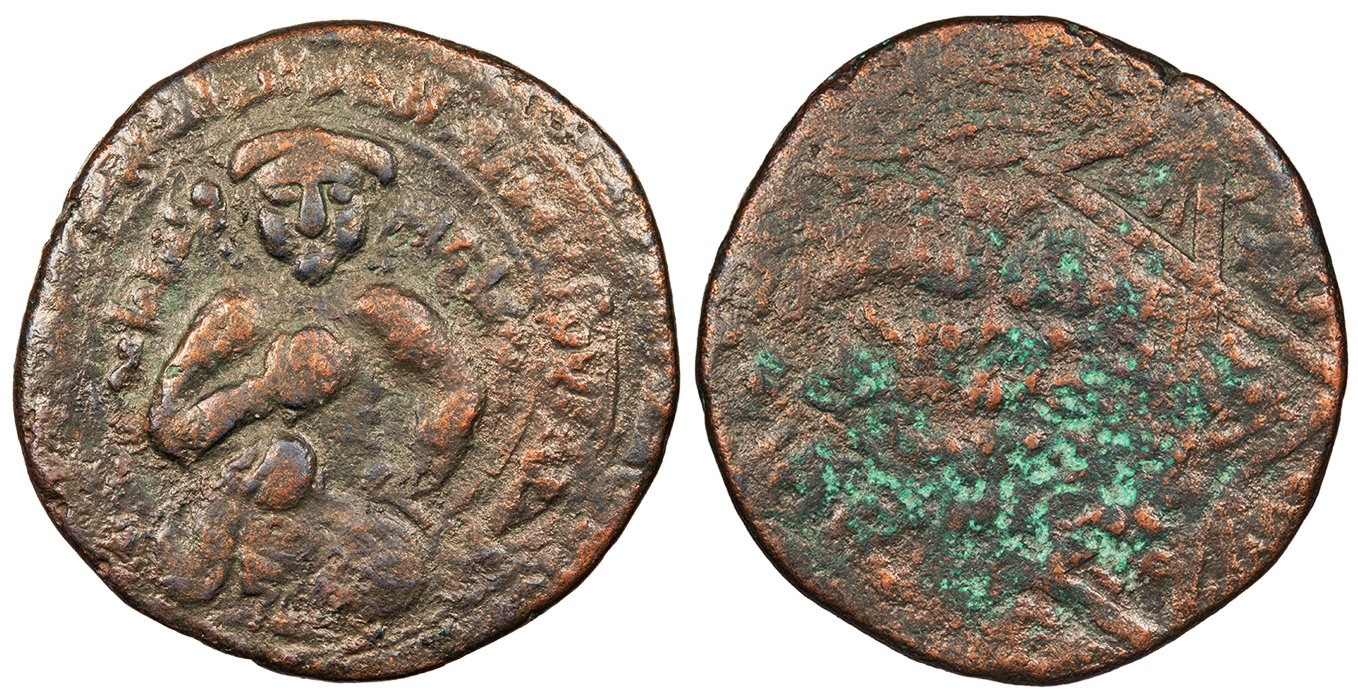
Ayyubids Mayyafariqin & Sinjar al-Ashraf Musa AH607-617 (1210-1220 A.D.) Dirham Fine -- #AC94609
AE Dirham 33mm. 12.70g. Mayyafariqin mint AH612 (1215/6 A.D.) Prince seated facing, holding globe; legends around; hexagram from undertype visible to r.
Legend citing al-Adil Abu Bakr as overlord within and around trilobe; strong undertype effects
Album 859.1 on 856.2 Fine. Mottled green patina. Moderate roughness from overstriking. Pierced. The seated-prince type of al-Ashraf Musa was often overstruck upon facing-bust type dirhams of the previous ruler, al-Awhad Ayyub, which features a hexagram still clearly visible on the obverse of this coin.
|
|

$ 40.00
|
|
|
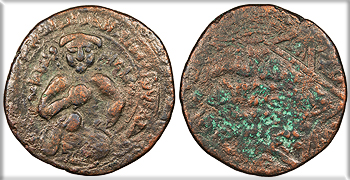
Ayyubid Mayyafariqin & Sinjar al-Ashraf Musa AH607-617 (1210-1220 A.D.) Dirham VF -- #AC93910
AE Dirham 30mm. 11.50g. Mayyafariqin mint AH612 (1215/6 A.D.) Prince seated facing, holding globe; legends around.
[Legend citing al-Adil Abu Bakr as overlord within and around trilobe] (illegible, poorly executed overstrike upon earlier hexagram type).
Album 859.1 on 856.2 VF. Brown patina with some coppery high points. Interesting overstrike. Some roughness from overstriking. Soft, unclear reverse with green adhesions. The seated-prince type of al-Ashraf Musa features a reverse legend within a trilobe or ornamented triangle, but was frequently overstruck upon facing-bust type dirhams of the previous ruler, al-Awhad Ayyub, which featured a reverse legend within a hexagram. On this example, the obverse was properly overstruck, but for some reason the trilobe reverse is essentially missing, instead exhibiting a partially flattened hexagram reverse from the original al-Awhad Ayyub dirham. An interesting 'blend' of subsequent types.
|
|
$ 80.00
|
|
|
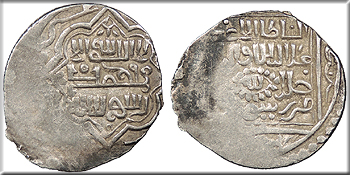
Anatolian Beyliks Eretnids 'Ali Beg AH767-782 (1366-1380 A.D.) Akce VF -- #AC86519
AR Akce 19mm. 1.50g. Sivas mint AH776 Kalima within lobated diamond.
Legend in four lines within linear square; eye-shaped cartouche at center.
Album 2324.5 VF. Rare. Toned with a hint of underlying lustre in devices. Uneven and off-center strike. Far rarer with a lobated diamond frame around the Kalima than similar types with differently shaped motifs.
|
|
$ 55.00
|
|
|
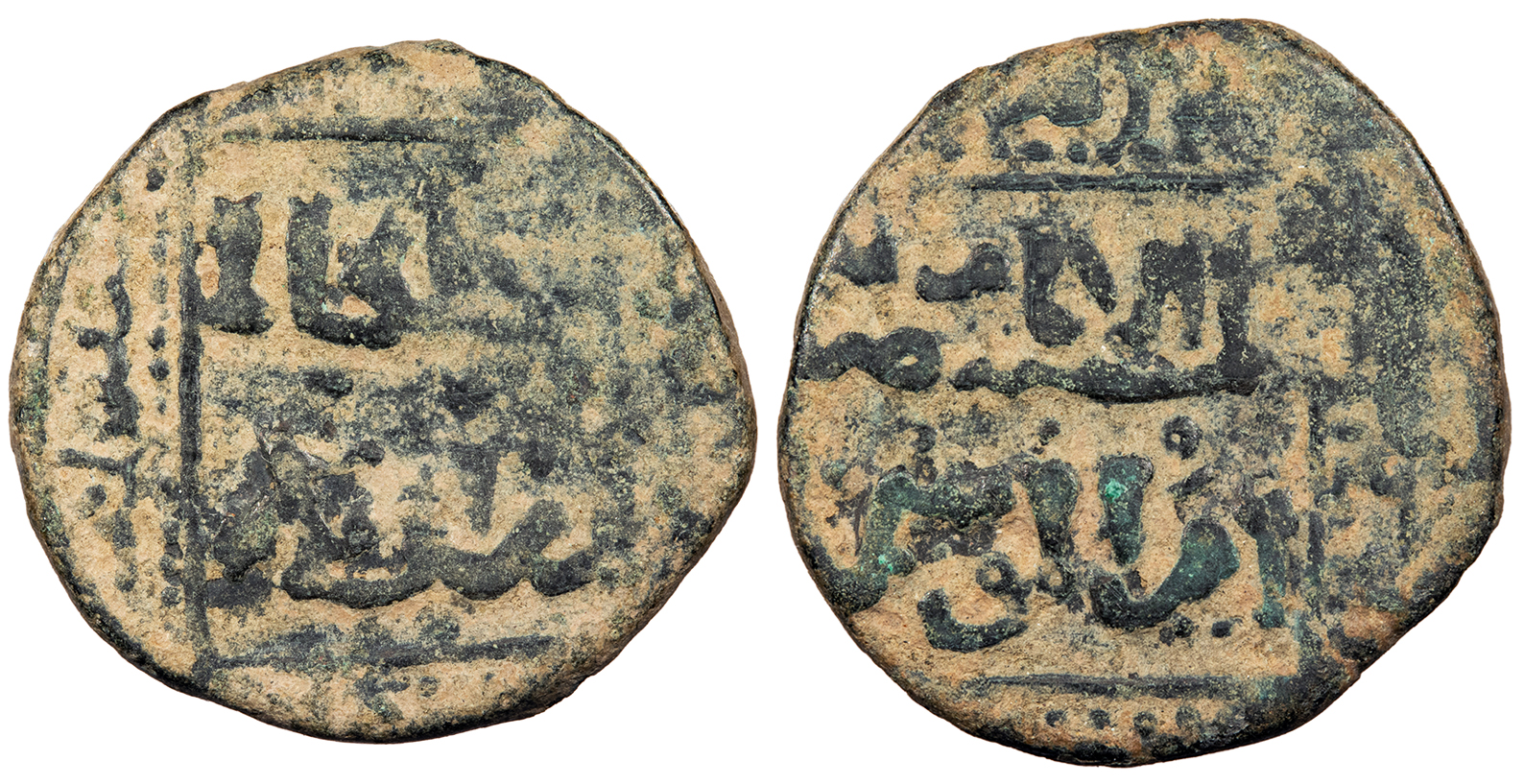
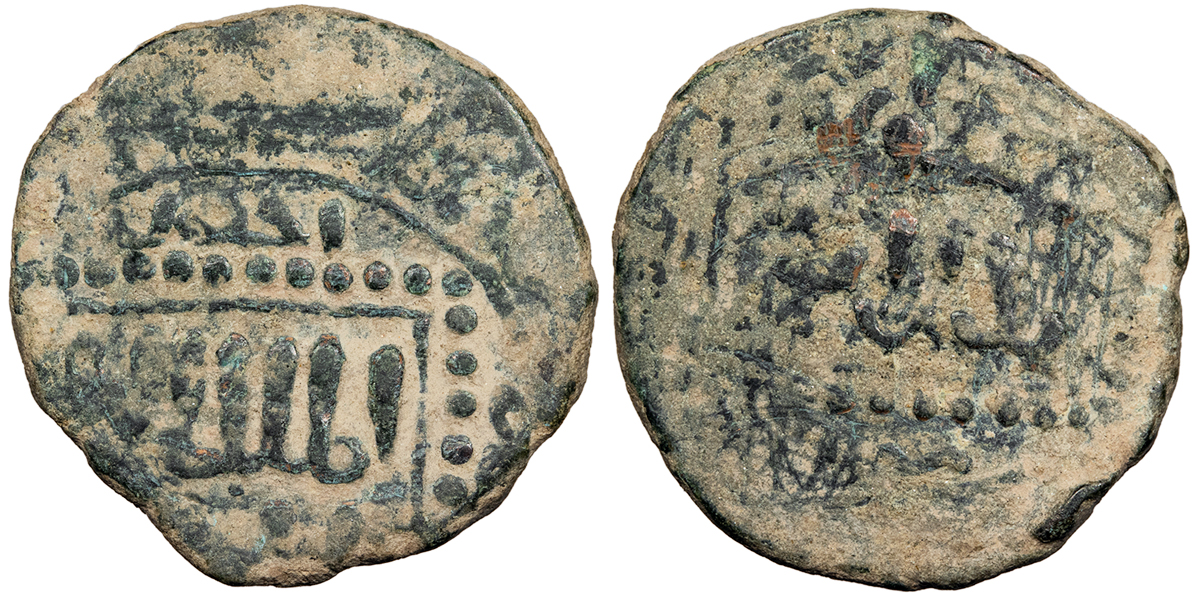
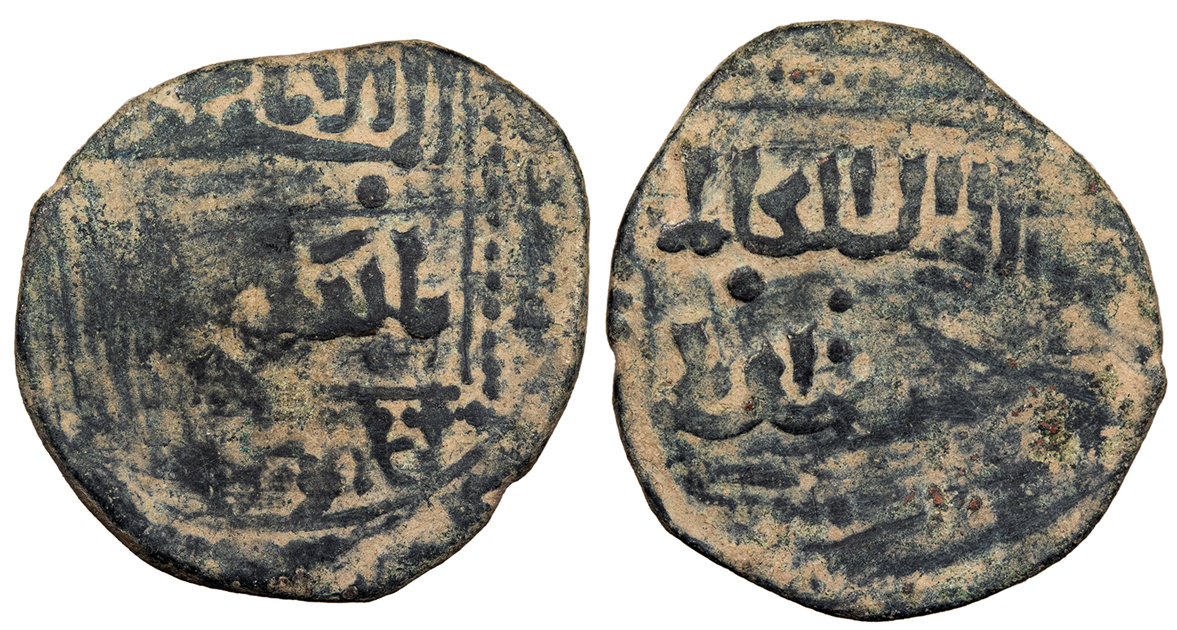
Ayyubids al-Kamil Abu'l Ma'ali Muhammad I AH615-635 (1218-1238 A.D.) Fals Fine -- #AC94753
AE Fals 22mm. 5.50g. Harran mint AH623-634 Two-lined legend with name of Caliph al-Mustansir, three pellets between lines; square within circle around.
Two-lined legend, three pellets between lines; square within circle around.
Album 816.2 Fine. Nearly black patina with tan fill. Minor roughness. Off-center, as usual, with some flatness. Listed as 'scarce' in Album.
|
|

$ 23.00
|
|
|
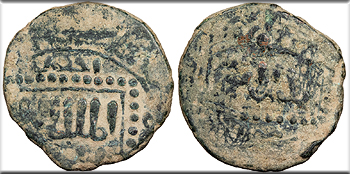
Ayyubids al-Kamil Abu'l Ma'ali Muhammad I AH615-635 (1218-1238 A.D.) Fals Good Fine -- #AC94752
AE Fals 22mm. 4.70g. Harran mint AH623-634 Two-lined legend with name of Caliph al-Mustansir, three pellets between lines; square within circle around.
Two-lined legend, three pellets between lines; square within circle around.
Album 816.2 Good Fine. Nearly black patina with tan fill. Some cleaning scratches and minor roughness. Off-center, as usual. Listed as 'scarce' in Album.
|
|
$ 21.00
|
|
|
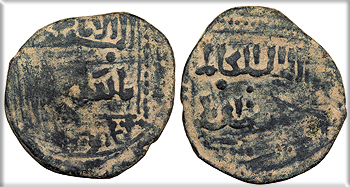
Ayyubids al-Kamil Abu'l Ma'ali Muhammad I AH615-635 (1218-1238 A.D.) Fals Good Fine -- #AC94751
AE Fals 25mm. 4.30g. Harran mint AH623-634 Two-lined legend with name of Caliph al-Mustansir, three pellets between lines; square within circle around.
Two-lined legend, three pellets between lines; square within circle around.
Album 816.2 Good Fine. Nearly black patina with tan fill. Off-center, as usual, with some double striking and flatness. Listed as 'scarce' in Album.
|
|
$ 23.00
|