|
|
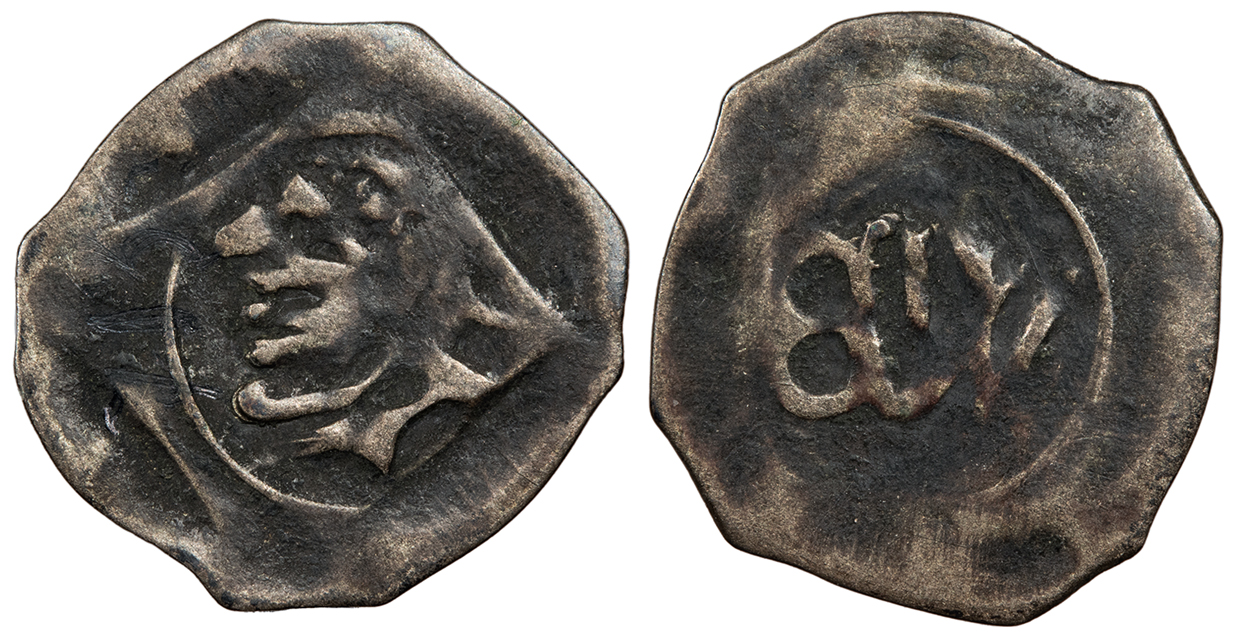
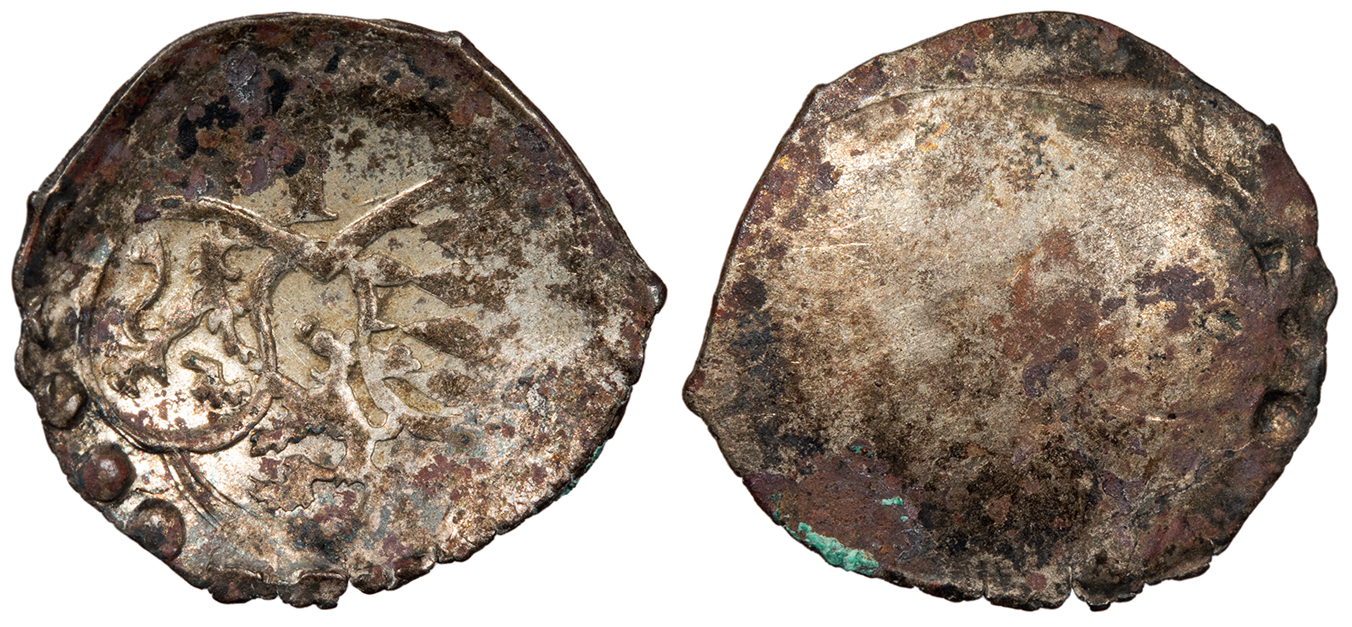
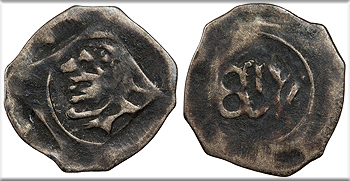
GERMAN STATES Bavaria (Bayern) Munich Ernst & William III 1397-1435 Pfennig Near VF -- #ME105718
AR Pfennig 16mm. 0.45g. Monk's head left in circle.
Gothic 'E W' monogram in circle.
Witt. 165 Near VF. Deeply toned.
 
|
|
$ 25.00
|
|
|
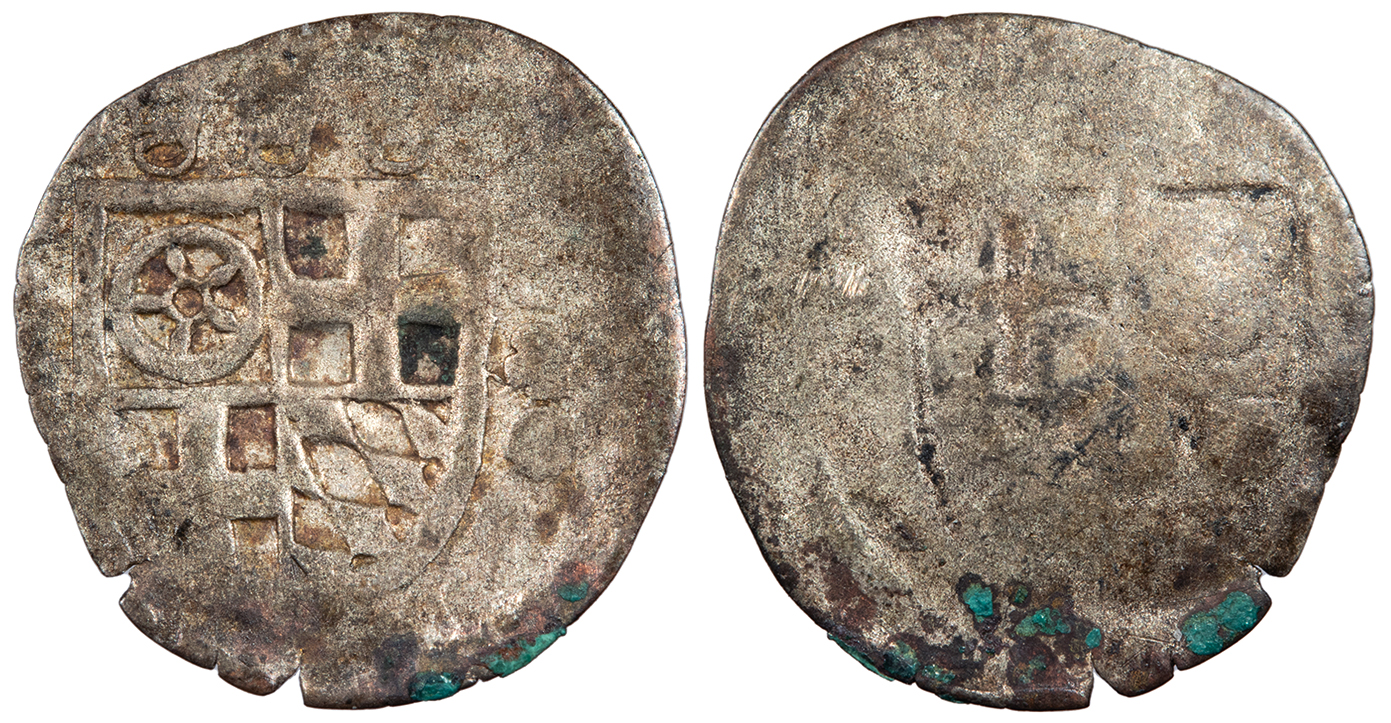
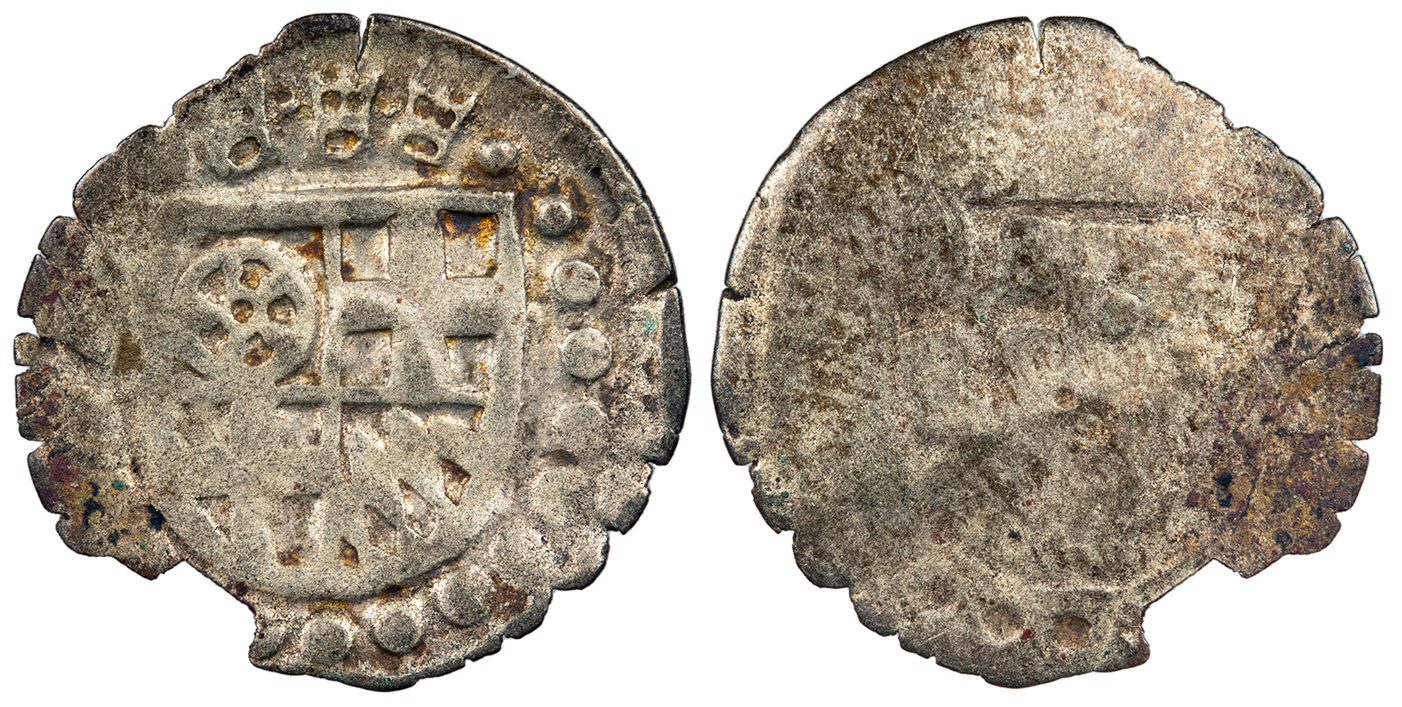
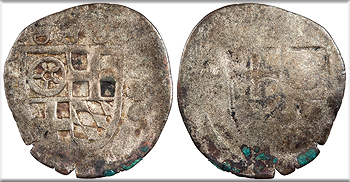
GERMAN STATES Cologne (Köln) Civic Issue 1512-1532 Einseitiger Pfennig (Unifacial) EF -- #ME88098
AR Einseitiger Pfennig (Unifacial) 15mm. 0.23g. Arms, three crowns above, all within border of pellets.
Blank.
Saurma 1511 #2839; KM MB#45, Schulten 1675 EF. Adhesions.
|
|
$ 35.00
|
|
|
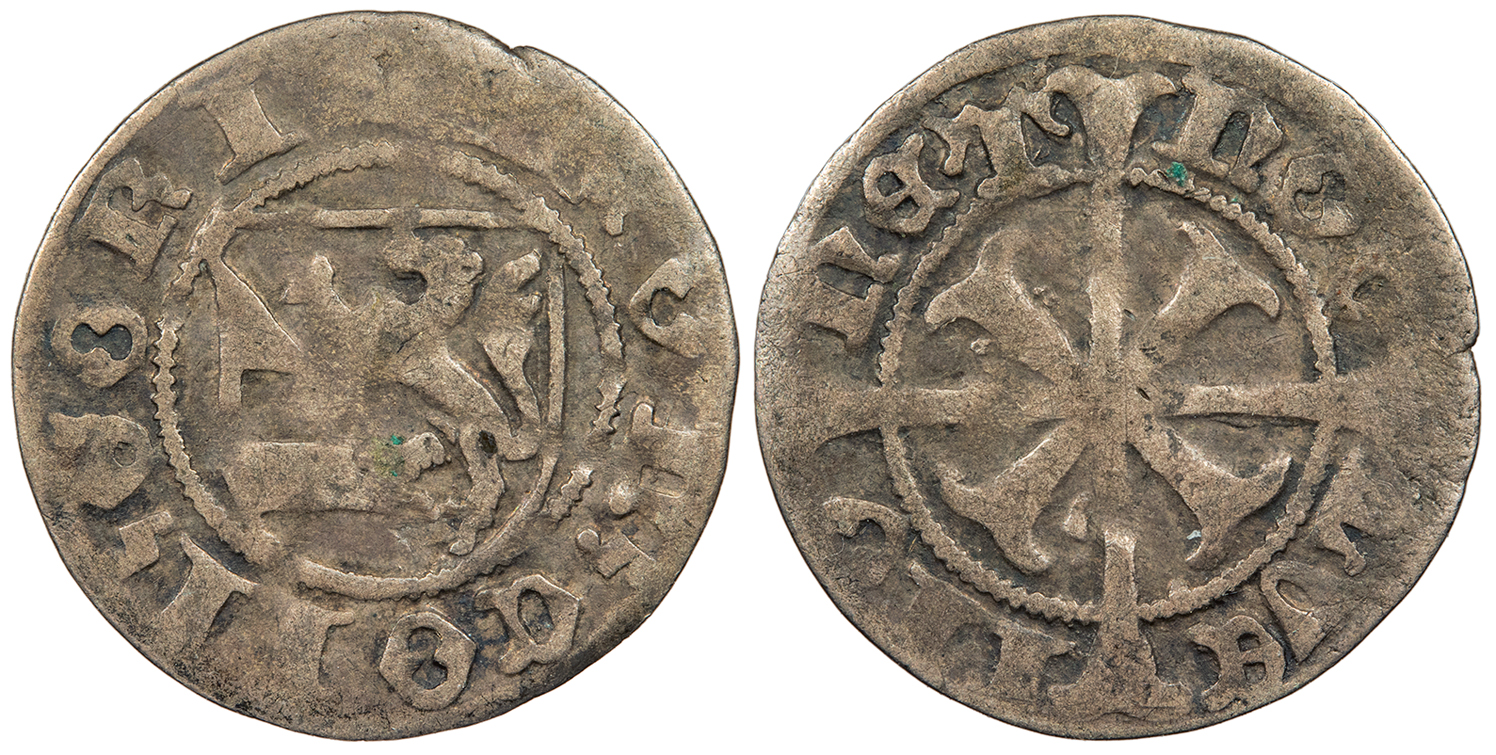
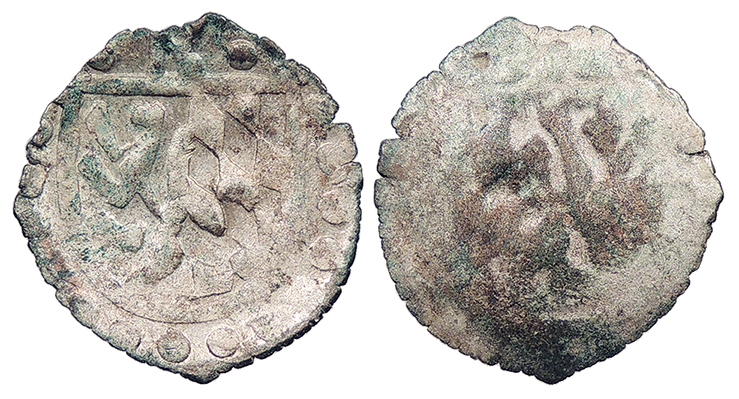
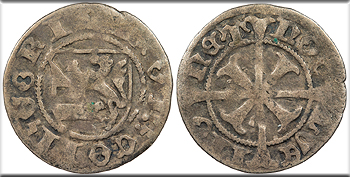
GERMAN STATES Gorz Leonhard 1462-1500 Kreuzer Near VF -- #ME88203
AR Kreuzer 18mm. 1.12g. Lienz Mint. Arms within denticled circle.
+LEON' COM' GORI[?] Long cross before short cross.
MO -NET -NOV -LVE Saurma 334 #805 var; CNA K41b Near VF. Nicely toned.
|
|
$ 55.00
|
|
|
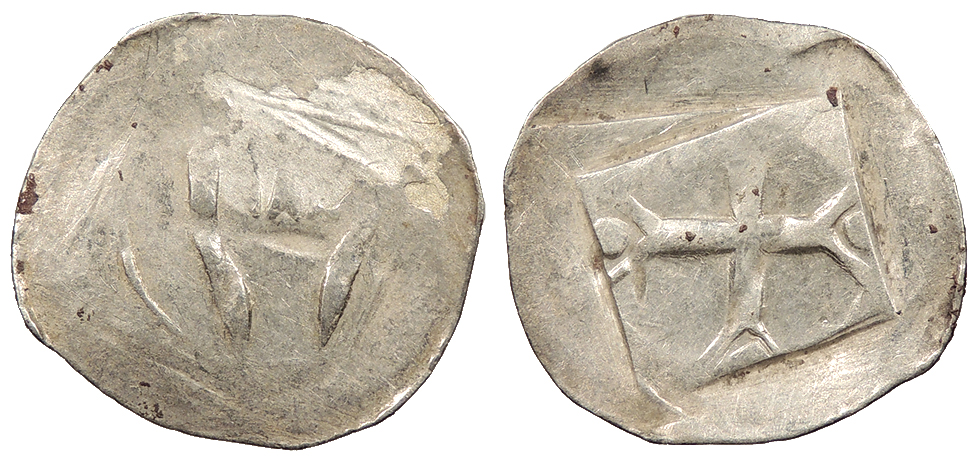
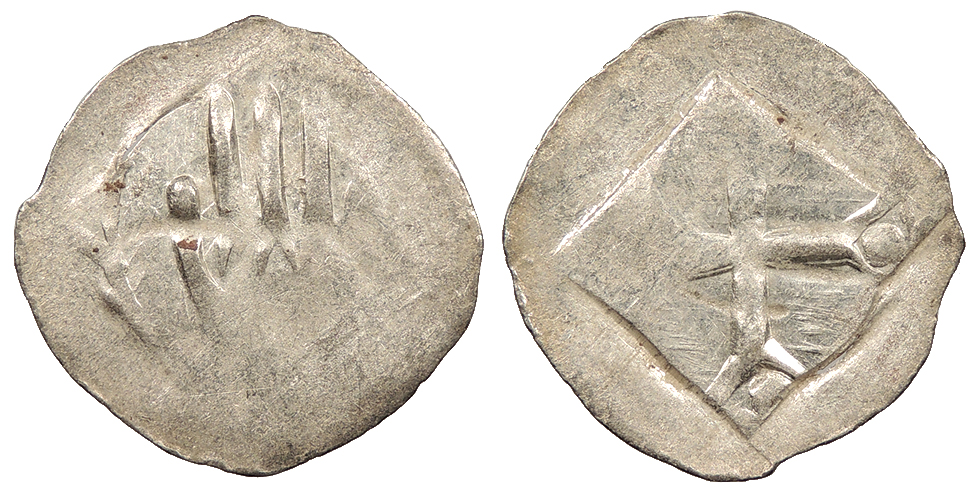
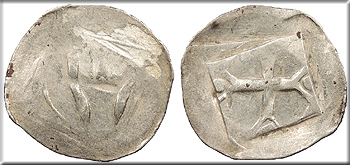
GERMAN STATES Hall (in Swabia) Anonymous Civic Issue Circa 14th Century Handheller VF -- #ME82345
AR Handheller 18mm. 0.74g. Hand.
Cross fourchée, with pellets at terminals.
Saurma 1365 VF. Lightly toned. Typical incomplete strike. The 'heller' derives its name from the 'Haller,' or coin of Hall. The Handhellars were first recorded as being minted in 1189 in Hall. While in Frankish lands, the Emperor Frederick Barbarossa believed it was in Swabia, and thus gained the name 'Schwäbisch Hall.' It fell into common use within southwest Germany in the 12th century, and soon became a de facto imperial coin. Many cities in the area coined their own 'Handhellar', but with no identifying mark (until an imperial edict of 1356 required a mintmark), there is no way to know for certain where these coins were minted.
|
|
$ 25.00
|
|
|
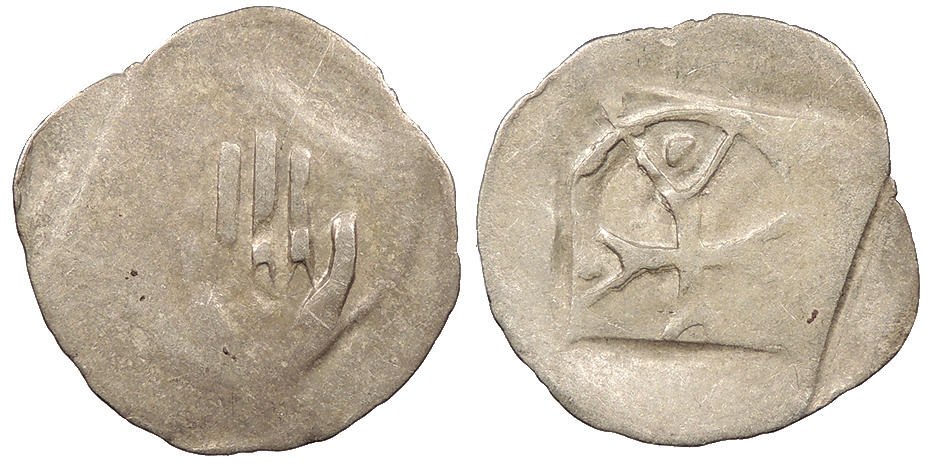
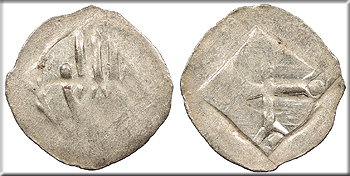
GERMAN STATES Hall (in Swabia) Anonymous Civic Issue Circa 14th Century Handheller EF -- #ME82346
AR Handheller 18mm. 0.53g. Hand.
Cross fourchée, with pellets at terminals.
Saurma 1365 EF. Lightly toned with lustrous fields. The 'heller' derives its name from the 'Haller,' or coin of Hall. The Handhellars were first recorded as being minted in 1189 in Hall. While in Frankish lands, the Emperor Frederick Barbarossa believed it was in Swabia, and thus gained the name 'Schwäbisch Hall.' It fell into common use within southwest Germany in the 12th century, and soon became a de facto imperial coin. Many cities in the area coined their own 'Handhellar', but with no identifying mark (until an imperial edict of 1356 required a mintmark), there is no way to know for certain where these coins were minted.
|
|
$ 26.00
|
|
|
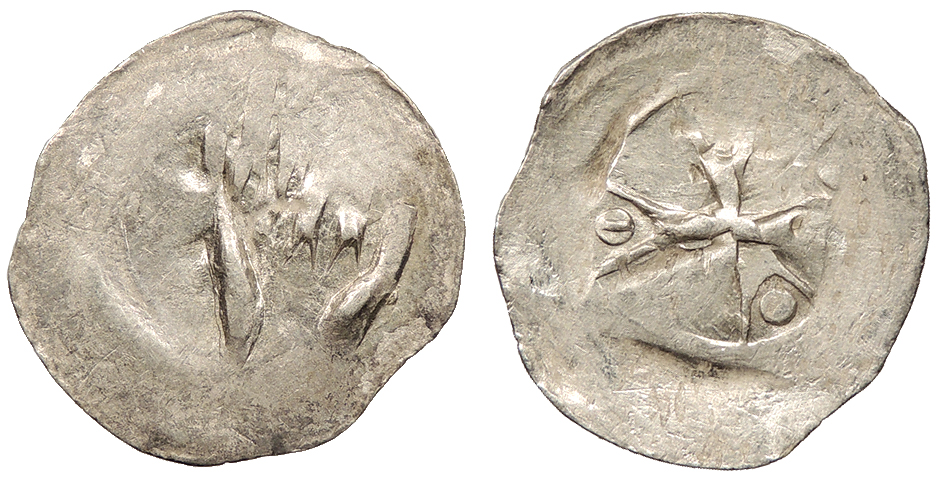
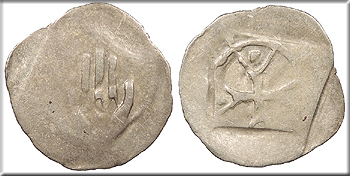
GERMAN STATES Hall (in Swabia) Anonymous Civic Issue Circa 14th Century Handheller EF -- #ME82347
AR Handheller 17mm. 0.54g. Hand.
Cross fourchée, with pellets at terminals.
Saurma 1365 EF. Toned. The 'heller' derives its name from the 'Haller,' or coin of Hall. The Handhellars were first recorded as being minted in 1189 in Hall. While in Frankish lands, the Emperor Frederick Barbarossa believed it was in Swabia, and thus gained the name 'Schwäbisch Hall.' It fell into common use within southwest Germany in the 12th century, and soon became a de facto imperial coin. Many cities in the area coined their own 'Handhellar', but with no identifying mark (until an imperial edict of 1356 required a mintmark), there is no way to know for certain where these coins were minted.
|
|
$ 26.00
|
|
|
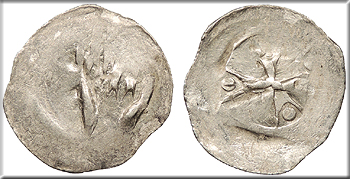
GERMAN STATES Hall (in Swabia) Anonymous Civic Issue Circa 14th Century Handheller EF -- #ME82352
AR Handheller 17mm. 0.54g. Hand.
Cross fourchée, with pellets at terminals.
Saurma 1365 EF. Lustrous with light toning. Double struck. The 'heller' derives its name from the 'Haller,' or coin of Hall. The Handhellars were first recorded as being minted in 1189 in Hall. While in Frankish lands, the Emperor Frederick Barbarossa believed it was in Swabia, and thus gained the name 'Schwäbisch Hall.' It fell into common use within southwest Germany in the 12th century, and soon became a de facto imperial coin. Many cities in the area coined their own 'Handhellar', but with no identifying mark (until an imperial edict of 1356 required a mintmark), there is no way to know for certain where these coins were minted.
|
|
$ 26.00
|
|
|
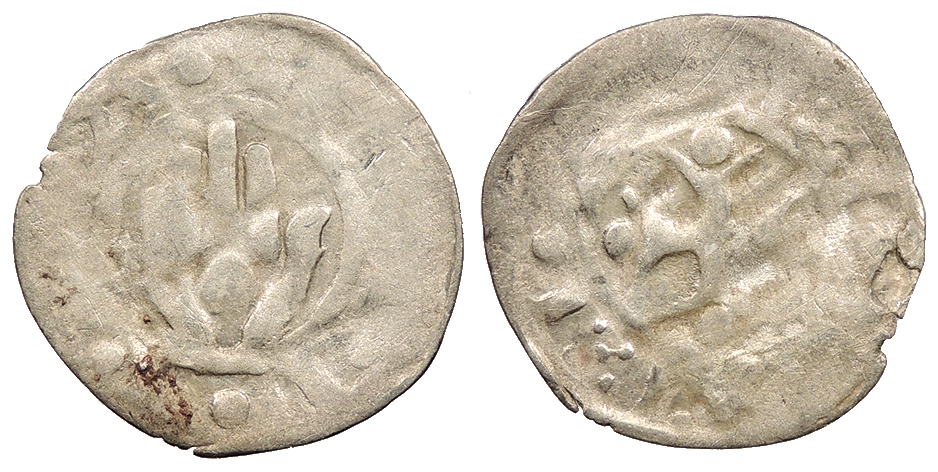
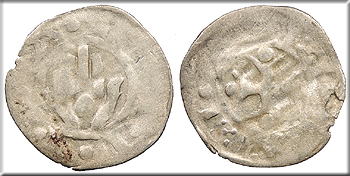
GERMAN STATES Hall (in Swabia) Anonymous Civic Issue Circa 14th Century Handheller VF -- #ME82351
AR Handheller 18mm. 0.45g. Hand; pseudo-legend of stars and pellets between bars, around
Cross fourchée, with pellets at terminals; pseudo-legend of stars and pellets between bars, around
Saurma 1365 var VF. Scarce type. Lightly toned. The 'heller' derives its name from the 'Haller,' or coin of Hall. The Handhellars were first recorded as being minted in 1189 in Hall. While in Frankish lands, the Emperor Frederick Barbarossa believed it was in Swabia, and thus gained the name 'Schwäbisch Hall.' It fell into common use within southwest Germany in the 12th century, and soon became a de facto imperial coin. Many cities in the area coined their own 'Handhellar', but with no identifying mark (until an imperial edict of 1356 required a mintmark), there is no way to know for certain where these coins were minted.
|
|
$ 35.00
|
|
|
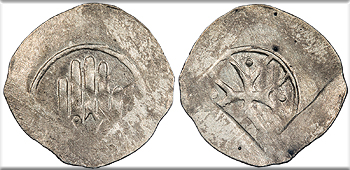
GERMAN STATES Hall (in Swabia) Anonymous Civic Issue Circa 14th Century Handheller EF -- #ME101167
AR Handheller 17mm. 0.46g. Hand.
Cross fourchée, with pellets at terminals.
Saurma 1365 EF. Lustrous. Typical incomplete strike and minor porosity. The 'heller' derives its name from the 'Haller,' or coin of Hall. The Handhellars were first recorded as being minted in 1189 in Hall. While in Frankish lands, the Emperor Frederick Barbarossa believed it was in Swabia, and thus gained the name 'Schwäbisch Hall.' It fell into common use within southwest Germany in the 12th century, and soon became a de facto imperial coin. Many cities in the area coined their own 'Handhellar', but with no identifying mark (until an imperial edict of 1356 required a mintmark), there is no way to know for certain where these coins were minted.
|
|
$ 45.00
|
|
|
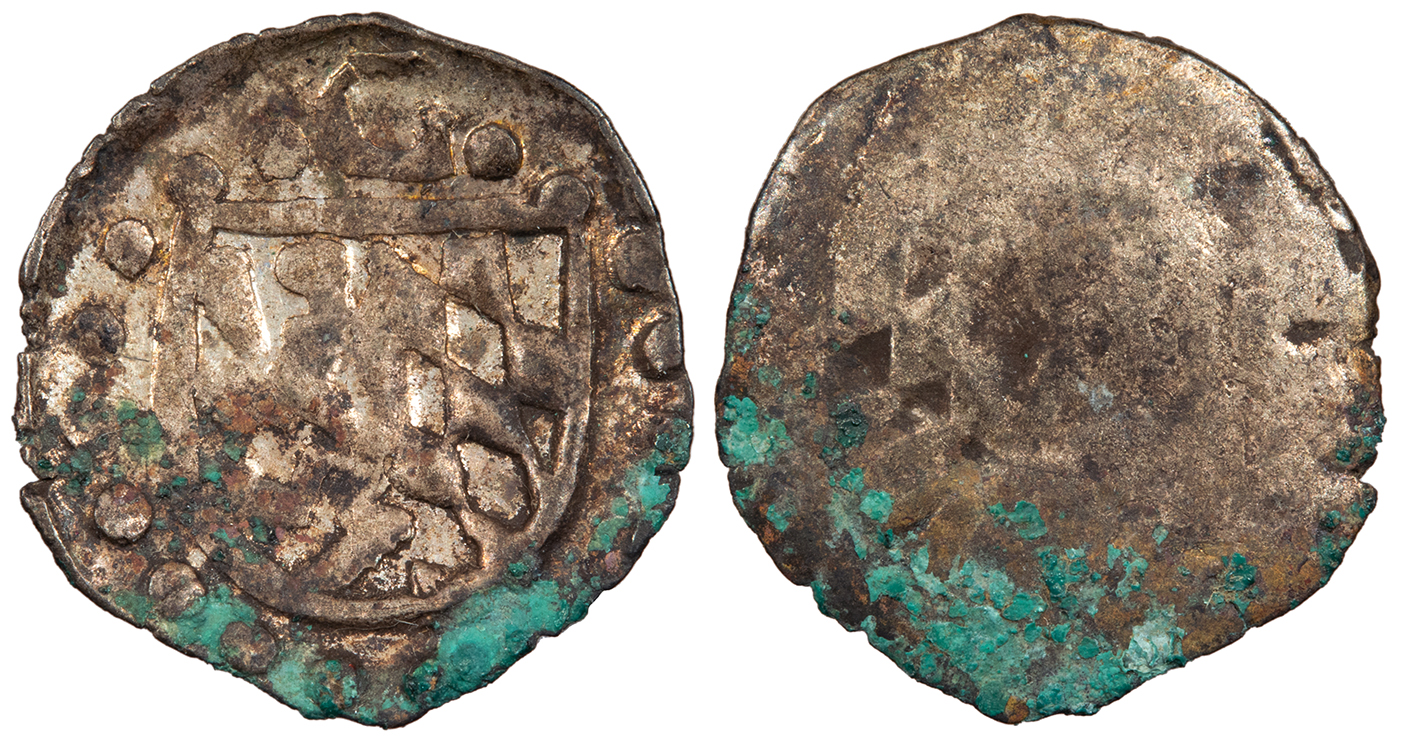
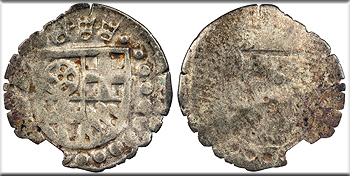
GERMAN STATES Koln (Cologne) Civic Issue 1512-1532 Einseitiger Pfennig (Unifacial) EF -- #ME88095
AR Einseitiger Pfennig (Unifacial) 14mm. 0.24g. Arms, three crowns above, all within border of pellets.
Blank.
Saurma 1511 #2839; KM MB#45, Schulten 1675 EF. Bent; edge chip.
|
|
$ 22.00
|
|
|
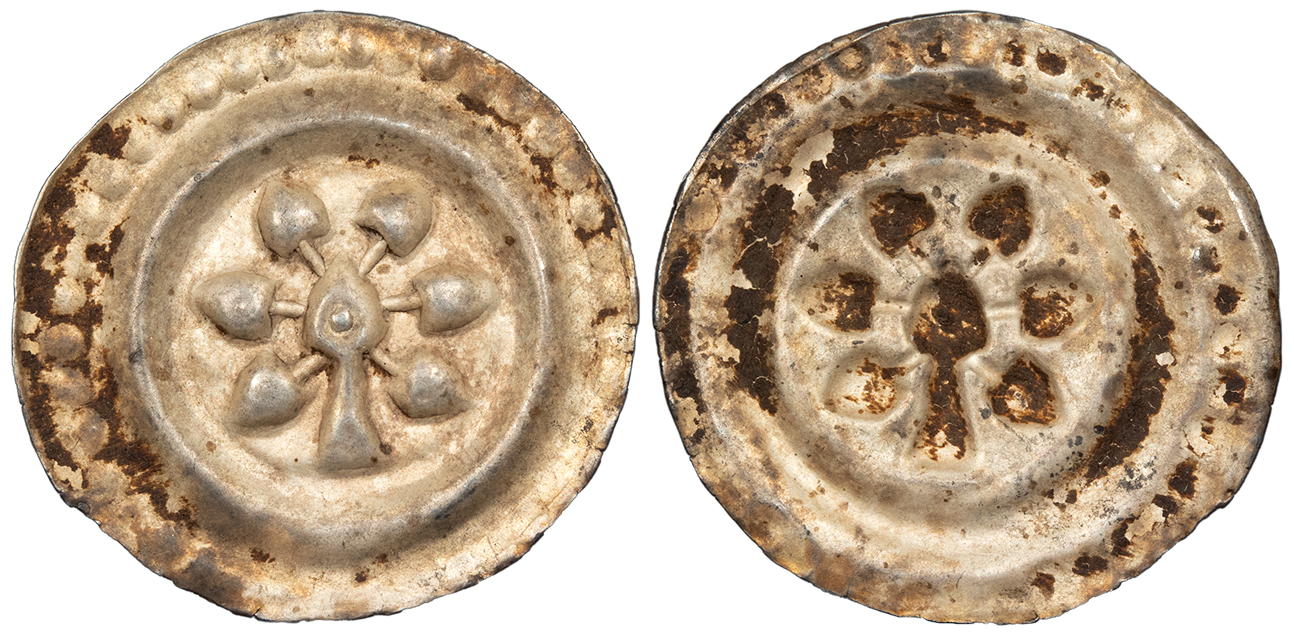
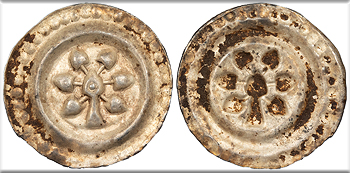
GERMAN STATES Lindau Abbey Circa 1260 Bracteate Denier EF -- #ME105717
AR Bracteate Denier 20mm. 0.36g. Linden tree with seven leaves; six arranged as a circle, and one leaf in center and flat bottomed tree trunk.
Incuse of the obverse.
Berger 2527; Lebek 8b; Cahn 187 EF. Slight adhesions in crevices. Ex Steve Album 512; Lot 947. Includes ticket. 
|
|
$ 125.00
|
|
|
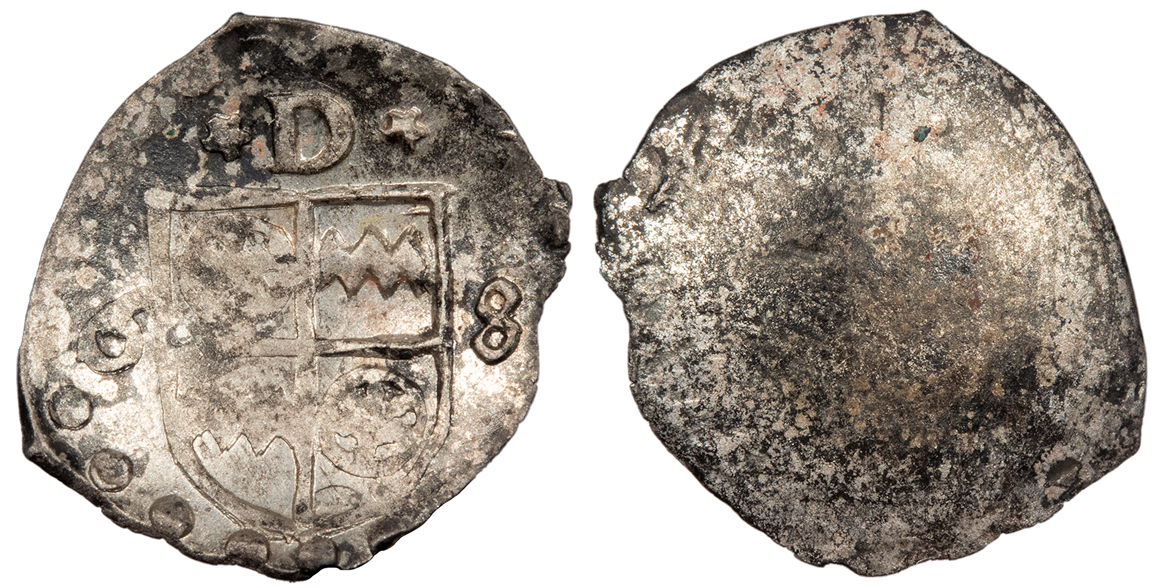
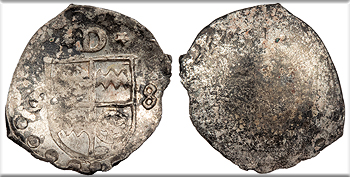
GERMAN STATES Mainz Archbishopric Daniel Brendel von Homburg 1555-1582 1568 Schüsselpfennig ('bowl' Pfennig) AU -- #ME88069
AR Schüsselpfennig ('bowl' Pfennig) 14mm. 0.35g. 1568 Arms, 'D' with starss flanking above; all within border of pellets.
Blank.
Saurma 1279 #2527 AU. Lustrous with some toning. Includes old collector's envelope.
|
|
$ 75.00
|
|
|
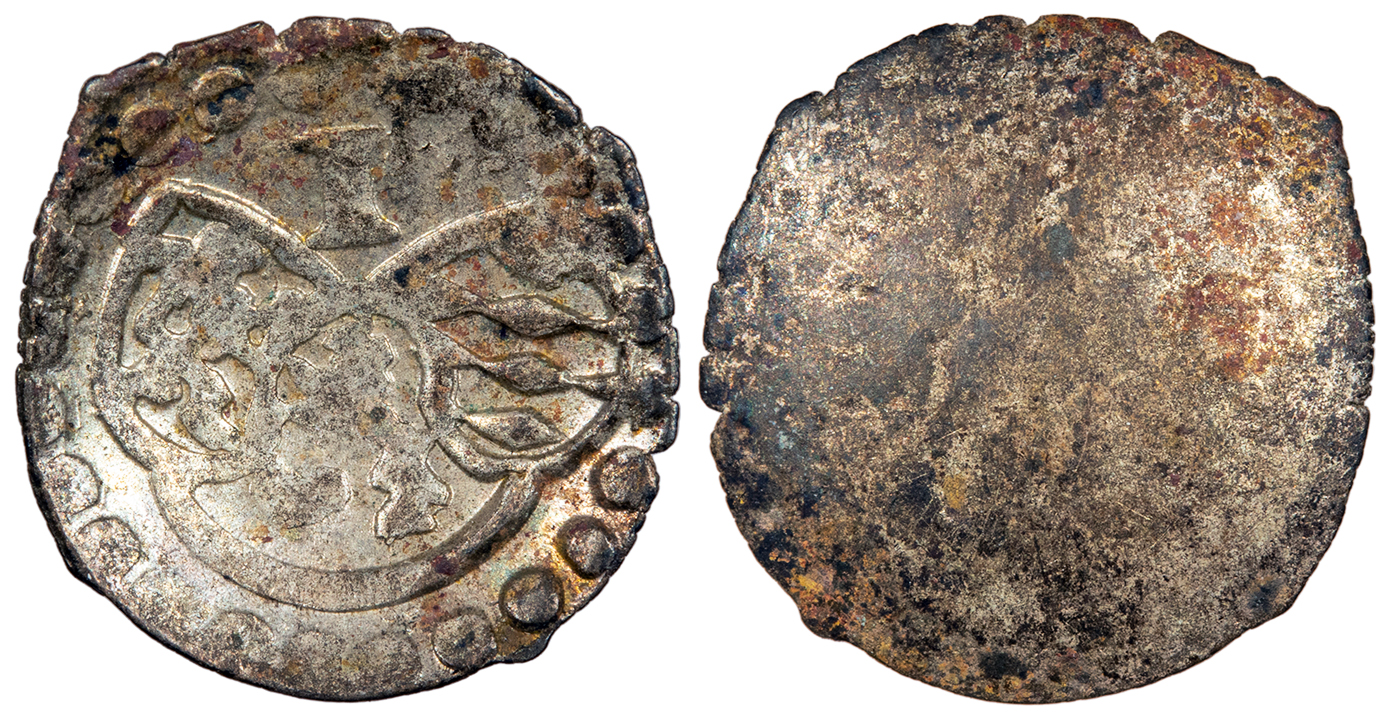
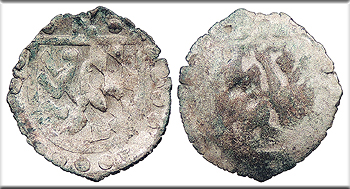
GERMAN STATES Pfalz-Simmern Richard 1569-1598 Schüsselpfennig ('bowl' Pfennig) EF -- #ME83174
AR Schüsselpfennig ('bowl' Pfennig) 14mm. 0.22g. Monogram 'R' above arms
Blank
Saurma 2085 EF.
|
|
$ 19.00
|
|
|
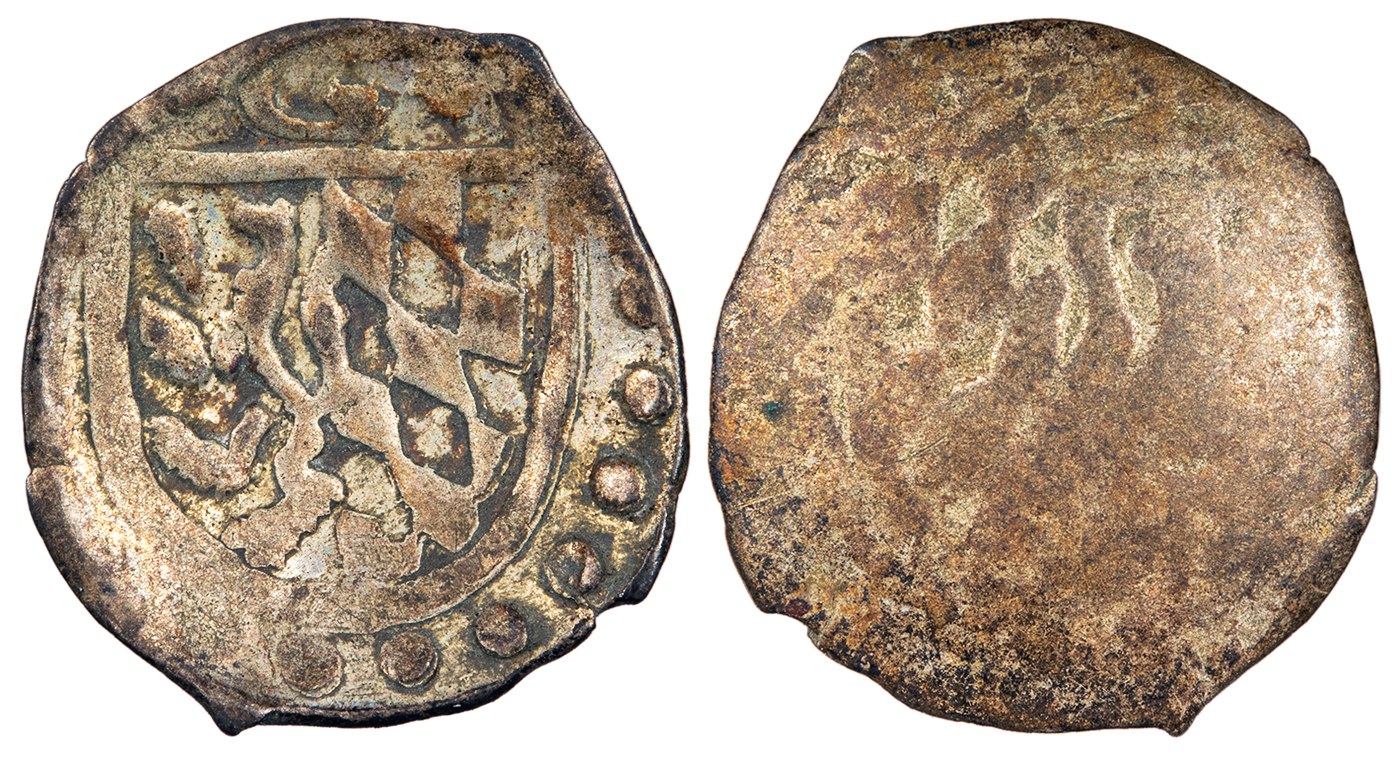
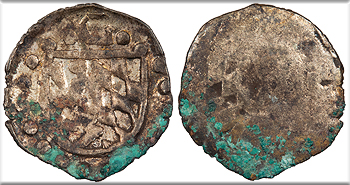
GERMAN STATES Pfalz-Simmern-Sponheim Georg 1559-1569 Schüsselpfennig ('bowl' Pfennig) AU -- #ME88124
AR Schüsselpfennig ('bowl' Pfennig) 14mm. 0.29g. Arms of Pfalz & Bavaria; 'G' with star flanking above; all within border of pellets.
Blank.
Slg. Memmesh. 2636 var; saurma 1014 var. AU. Flattened; adhesions.
|
|
$ 25.00
|
|
|
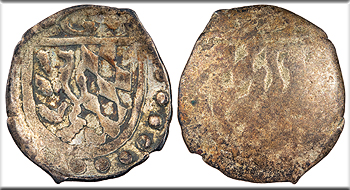
GERMAN STATES Pfalz-Simmern-Sponheim Georg 1559-1569 Schüsselpfennig ('bowl' Pfennig) AU -- #ME88064
AR Schüsselpfennig ('bowl' Pfennig) 14mm. 0.37g. Arms of Pfalz & Bavaria; 'G' with star flanking above; all within border of pellets.
Blank.
Slg. Memmesh. 2636 var; Saurma 1014 var. AU. Includes old collector's envelope.
|
|
$ 30.00
|
|
|
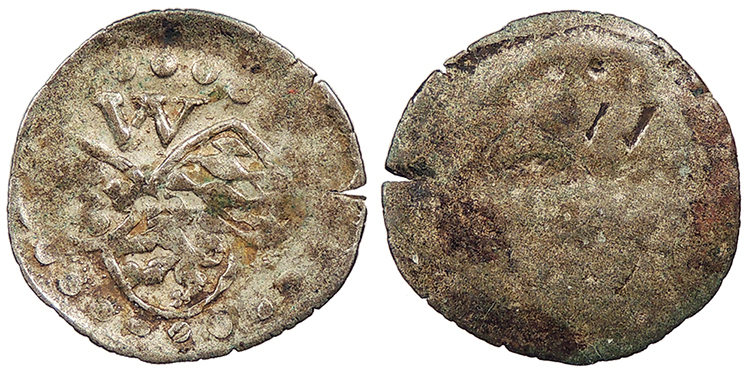
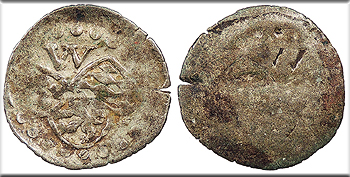
GERMAN STATES Pfalz-Zweibrucken Wolfgang 1532-1569 Schüsselpfennig ('bowl' Pfennig) EF -- #ME83171
AR Schüsselpfennig ('bowl' Pfennig) 14mm. 0.22g. Monogram 'W' above conjoined arms of Pfalz, Zweibrucken and Veldenz.
Blank
Saurma 1996 EF.
|
|
$ 22.00
|
|
|
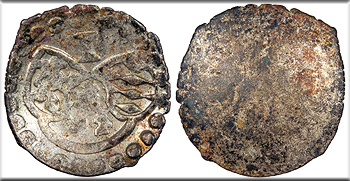
GERMAN STATES Pfalz-Zweibrucken Johann I, the Lame 1569-1604 1569-1600 Schüsselpfennig ('bowl' Pfennig) AU -- #ME88061
AR Schüsselpfennig ('bowl' Pfennig) 14mm. 0.32g. 1569-1600 Three adjacent arms of Pfalz, Zweibrucken, Veldenz; 'I' above; all within border of pellets.
Blank.
Saurma 994 #2018; KM MB#61 AU.
|
|
$ 22.00
|
|
|
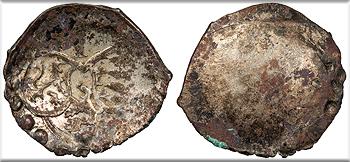
GERMAN STATES Pfalz-Zweibrucken Johann I, the Lame 1569-1604 1569-1600 Schüsselpfennig ('bowl' Pfennig) EF -- #ME88114
AR Schüsselpfennig ('bowl' Pfennig) 14mm. 0.32g. 1569-1600 Three adjacent arms of Pfalz, Zweibrucken, Veldenz; 'I' above; all within border of pellets.
Blank.
Saurma 994 #2018; KM MB#61 EF. Lustrous. Some minor adhesions.
|
|
$ 35.00
|
|
|
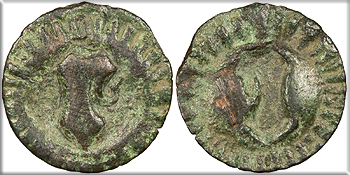
GERMAN STATES Rostock ND (Ca. 1550) Hohlpfennig (Bracteate Pfennig) VF -- #ME88025
AE Hohlpfennig (Bracteate Pfennig) 15mm. 0.36g. ND (Ca. 1550) 'R' in radiant circle.
Incuse of obverse.
Oertzen 200; Leschhorn 1028 VF. Dark brown patina with green fill. Small scratch on reverse. Faint old marks.
|
|
$ 55.00
|
|
|
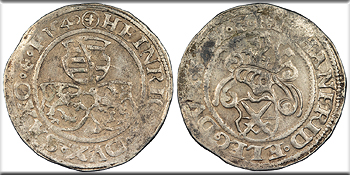
GERMAN STATES Saxony (Sachsen) Johann Friedrich and Heinrich 1539-1541 1540 Groschen Good VF -- #ME88161
AR Groschen 24mm. 2.61g. 1540 Plumed and helmeted arms of Sachsen.
:IOHAN FRID.ELEC.DVX.SAX.F.F Tri-lobed arms within circle.
+HENRICVS.DVX.SAXO.F.F 1540 Saurma 2380 #4444 Good VF. Lustrous fields with light toning. Rare. Some areas of flat strike, as is typical.  Reduced from: $595 Reduced from: $595
|
|
$ 495.00
|