|
|
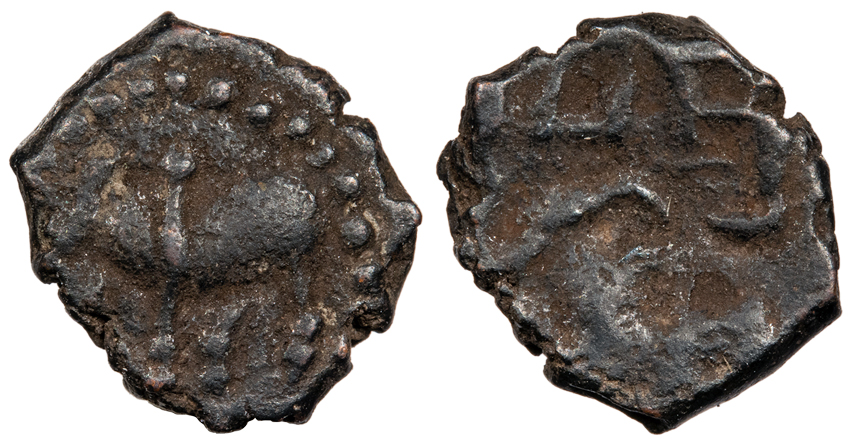
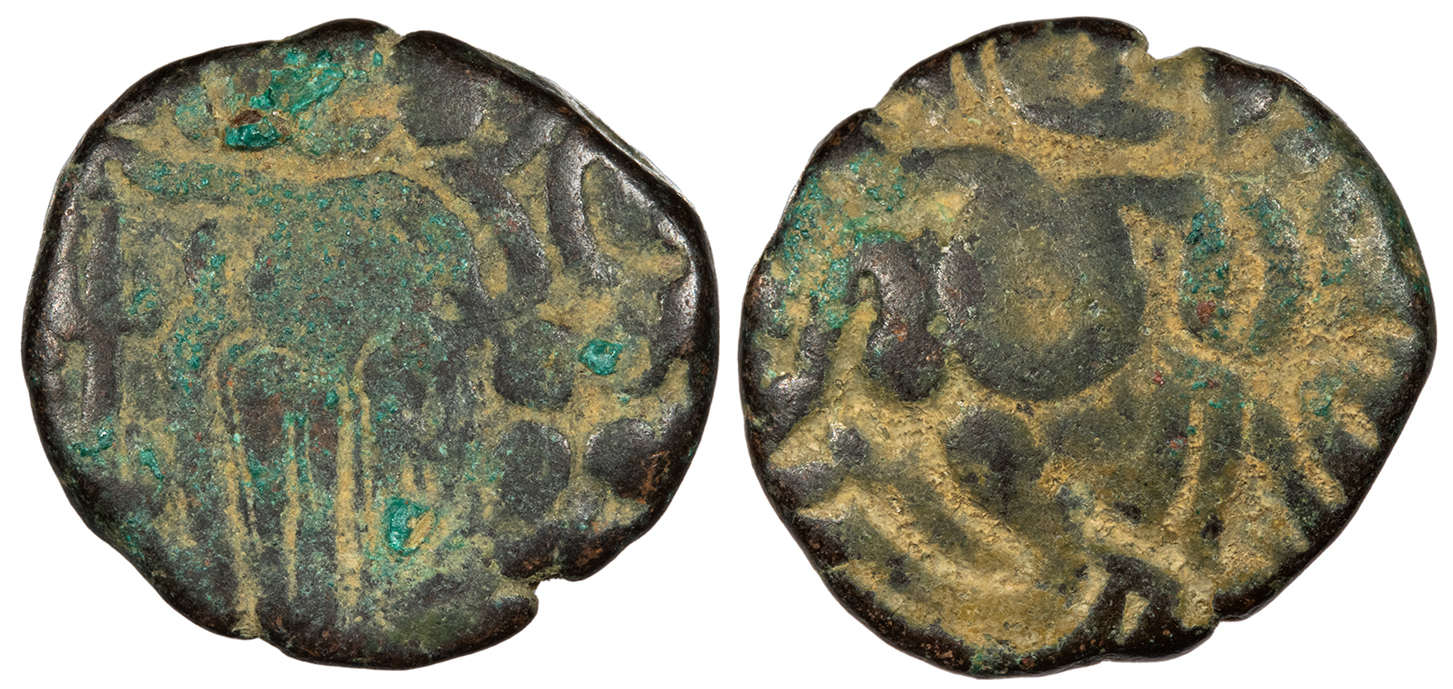
Post-Kushan Nagas of Padmavati Ganapati Naga ca. 340-365 A.D. Kakini Good VF -- #AC95112
AE Kakini 10mm. 0.80g. ca. 340-350 A.D. Humped bull advancing l.
Brahmi legend 'MAHARAJA SRI GANA' around.
cf. Pieper 1057; Mitch. 4746-53 Good VF. Brown patina. Nice obverse detail. The Naga dynasty ruled parts of north-central India after the decline of the Kushan Empire and before the rise of the Gupta Empire. Its capital was located at Padmavati.
 
|
|
$ 40.00
|
|
|
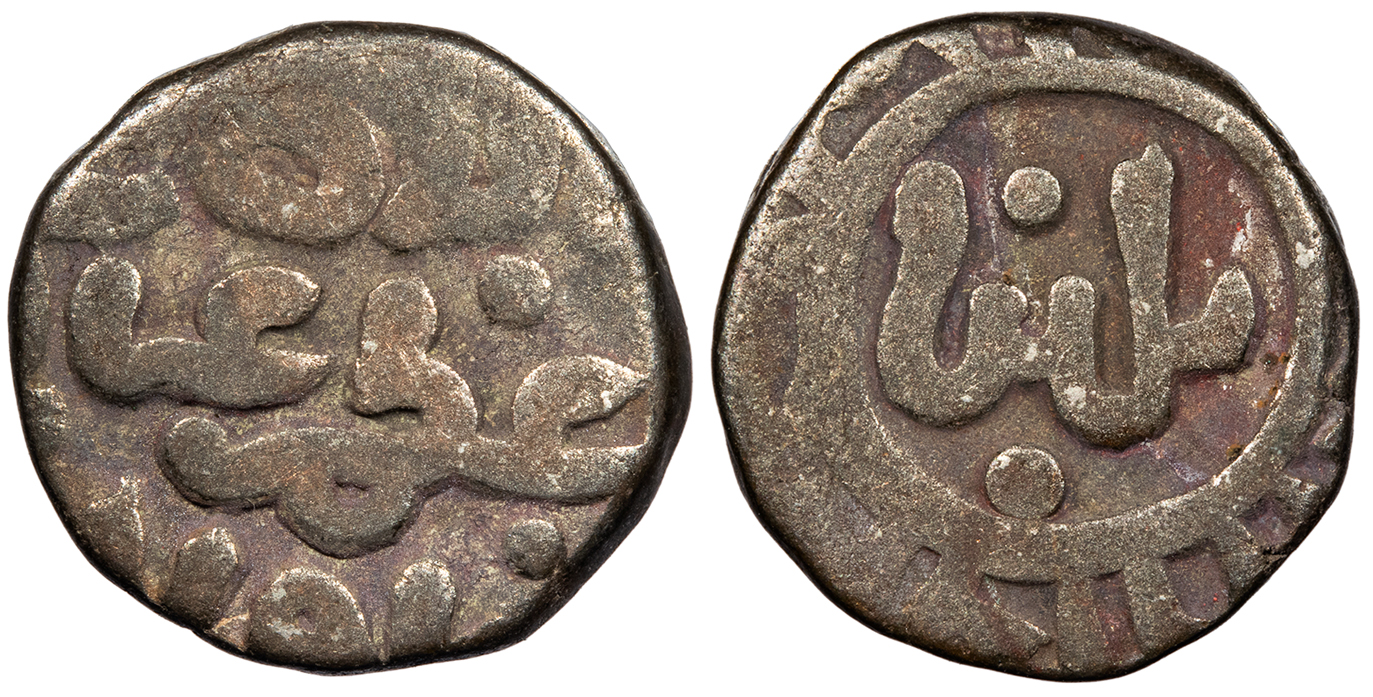
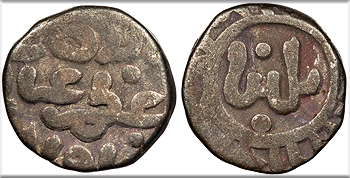
Delhi Sultanate Ghiyath al-din Balban 1266-1287 A.D. Dugani (or Jital) Fine -- #AC94080
Bi Dugani (or Jital) 15mm. 3.50g. 'al-sultan al-a'zam ghiyath al-dunya wa'l din' in Arabic.
'Balban' in Arabic in central circle; 'sri sultan gayasadin' in Nagari around.
GG-D165 Fine. Gray patina. Bilingual type.
|
|
$ 25.00
|
|
|
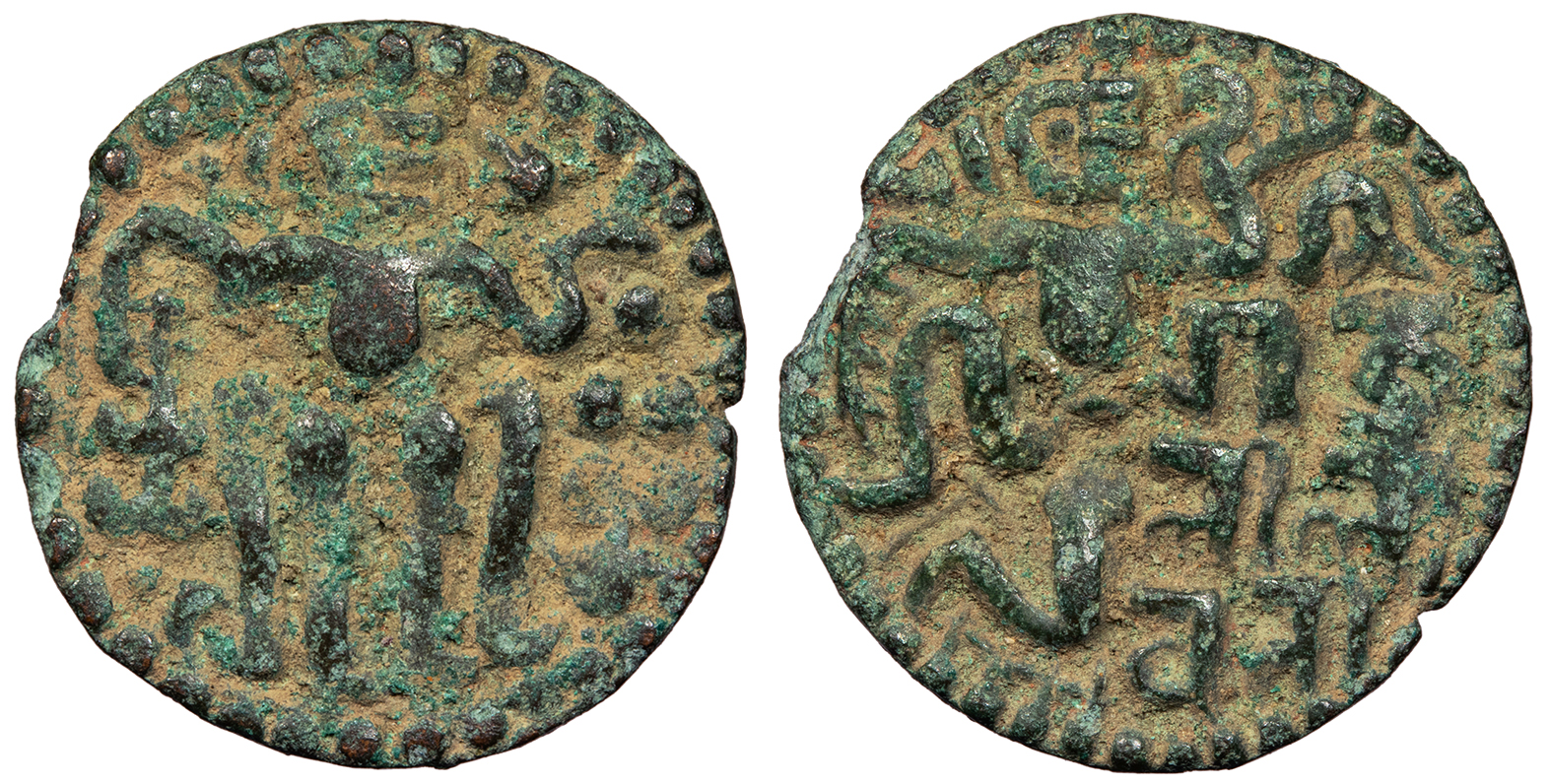
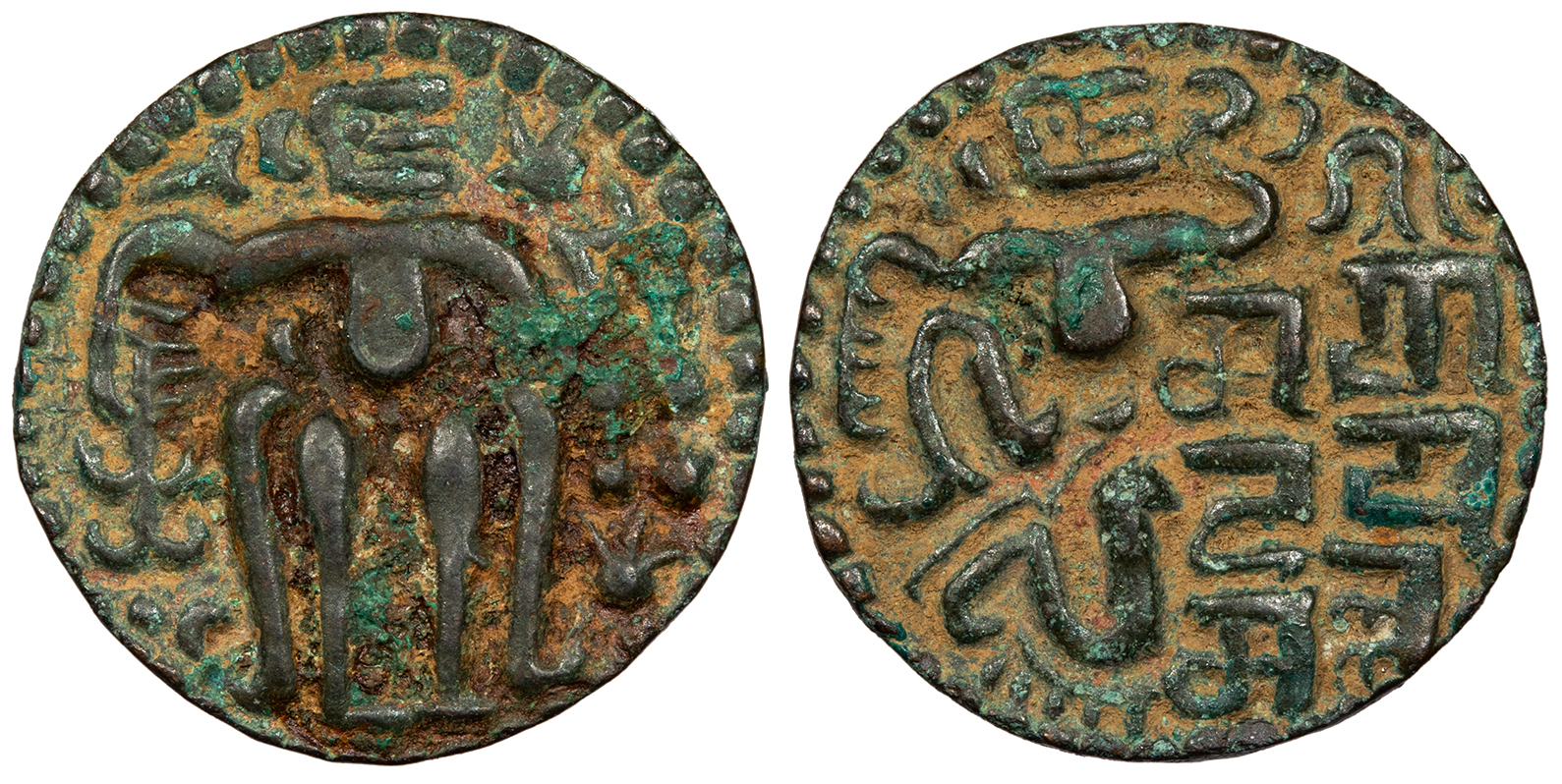
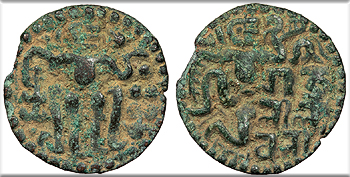
Sri Lanka (Ceylon) Polonnaruva period Queen Lilavati 1197-1200 A.D. Massa VF -- #AC106734
AE Massa 21mm. 3.86g. King standing front, head r., smelling lotus flower held in his l. hand; in field to r., five pellets above lotus flower; in field to l., altar.
SRI RAJA LILAVATI (in Brahmi) King seated front, head r., holding uncertain object in his l. hand.
Mitch. 838 VF. Green patina with earthen fill. Some rough adhesions.
|
|
$ 28.00
|
|
|
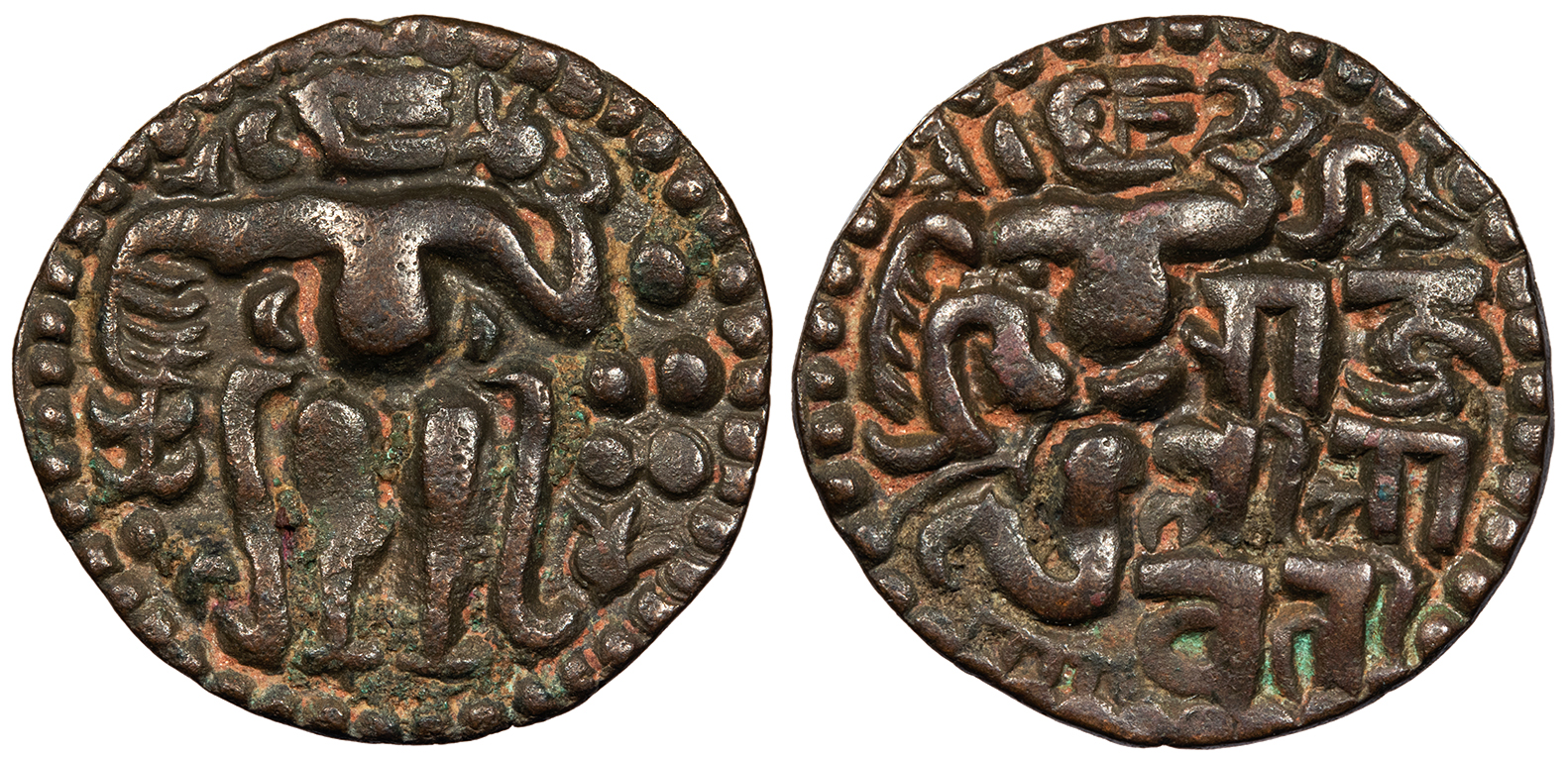
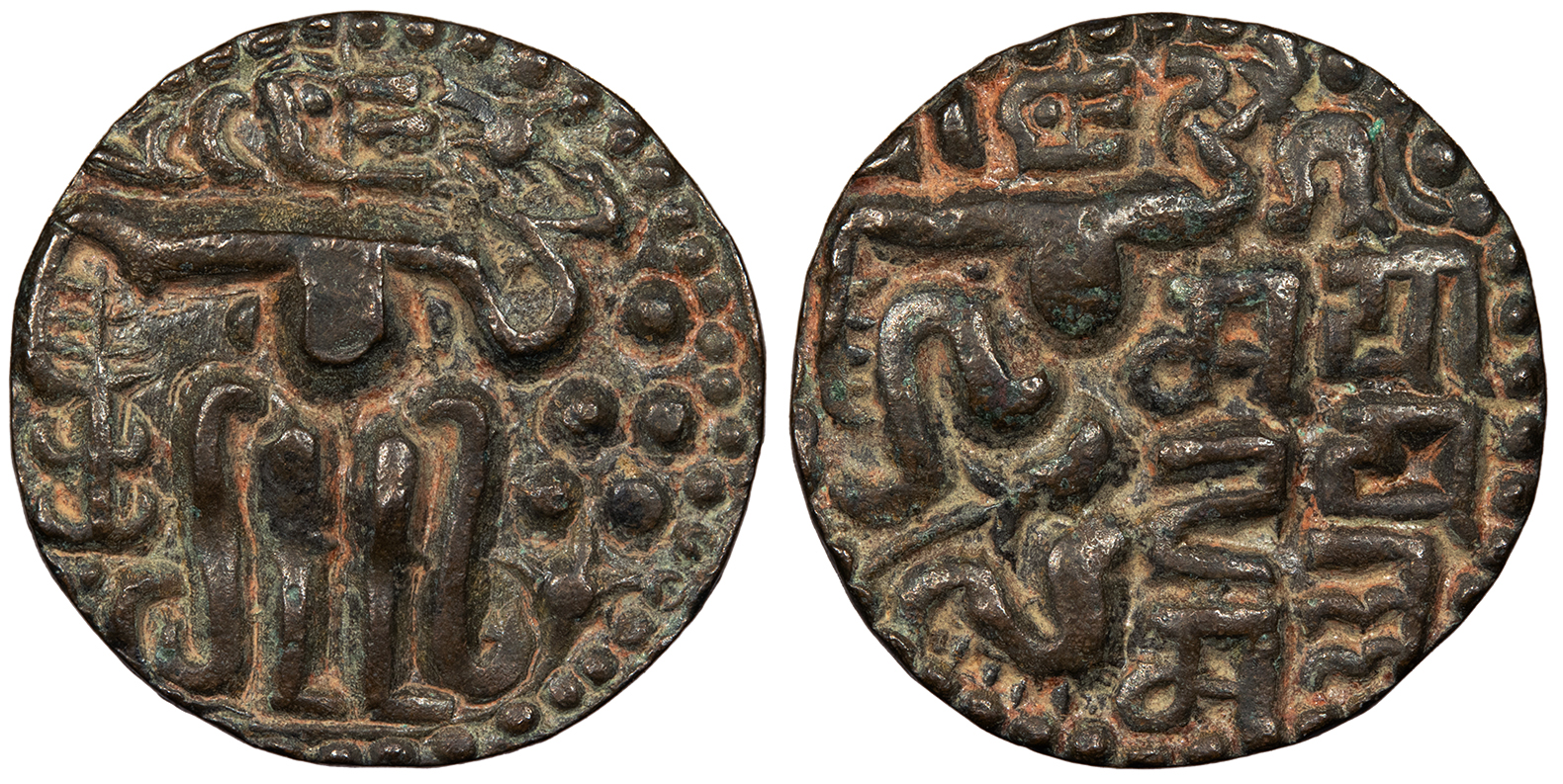
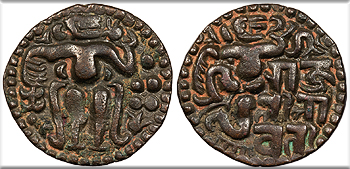
Sri Lanka (Ceylon) Polonnaruva period Queen Lilavati 1197-1200 A.D. Massa VF -- #AC106733
AE Massa 21mm. 4.17g. King standing front, head r., smelling lotus flower held in his l. hand; in field to r., five pellets above lotus flower; in field to l., altar.
SRI RAJA LILAVATI (in Brahmi) King seated front, head r., holding uncertain object in his l. hand.
Mitch. 838 VF. Red-brown patina with some nice contrast.
|
|
$ 38.00
|
|
|
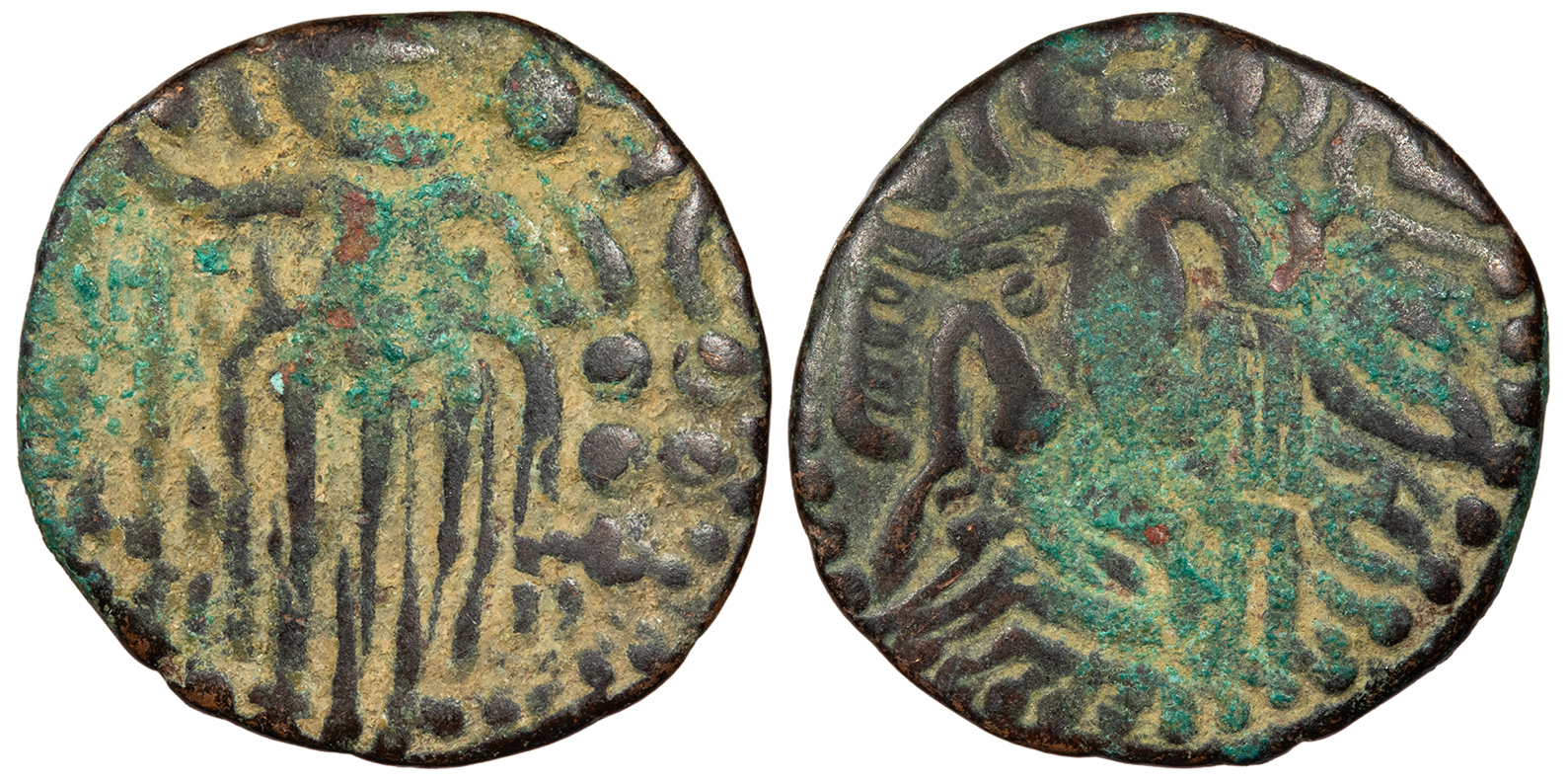
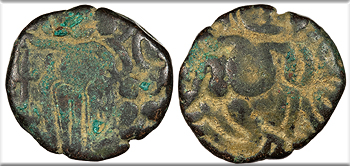
Peninsular India Imperial Cholas of Tanjore Raja Raja I 985-1014 A.D. Kahavanu Fine -- #AC106739
AE Kahavanu 17mm. 3.90g. King standing facing r., arm raised holding a lotus, lamp to l., group of pellets to r.
SRI RAJA RAJA (in Nagari) King seated leaning r., arm raised holding a conch.
Mitch. 730 Fine. Unusually compact flan. Brown patina with tan fill. Green adhesions.
|
|
$ 22.00
|
|
|
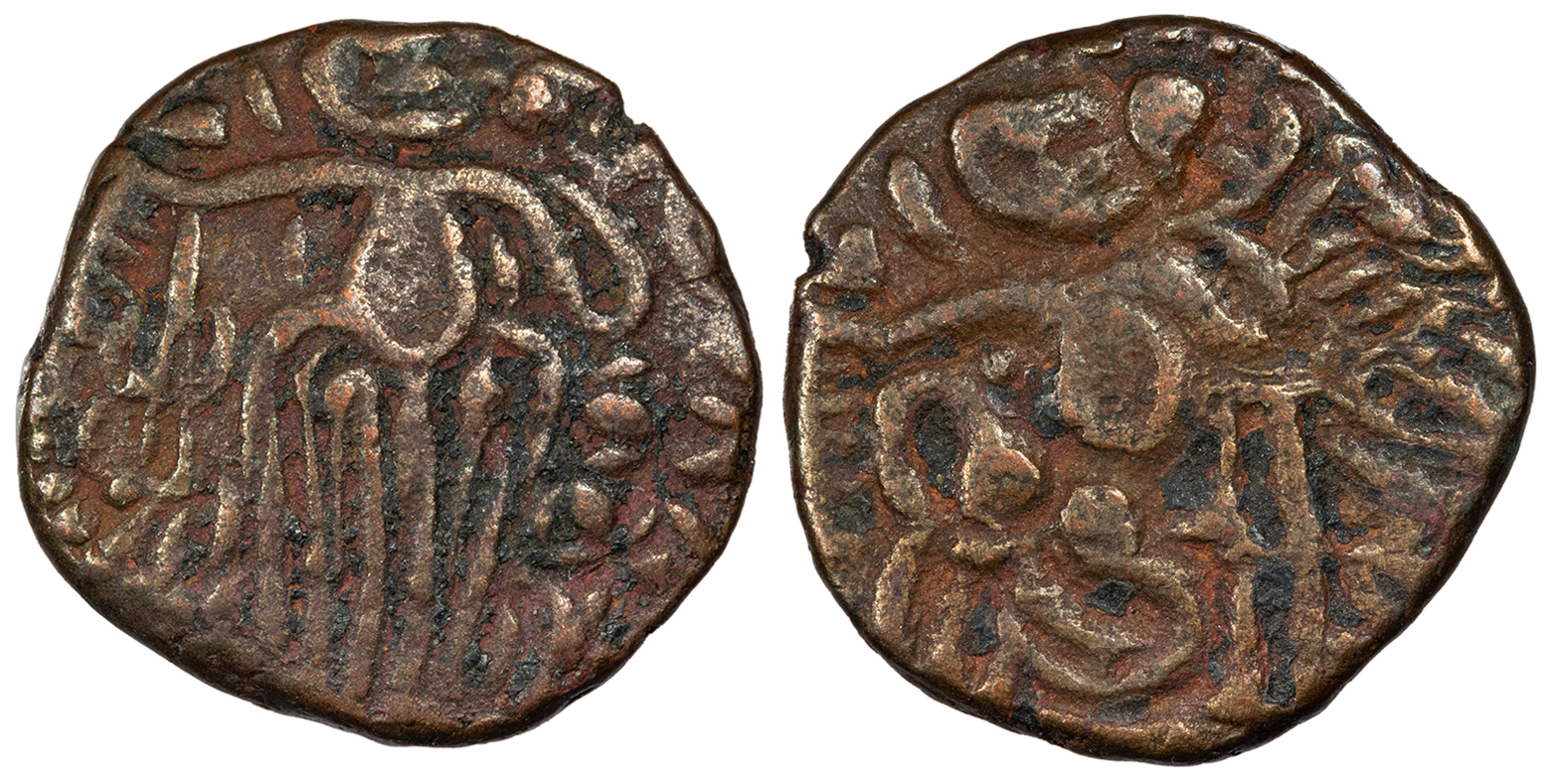
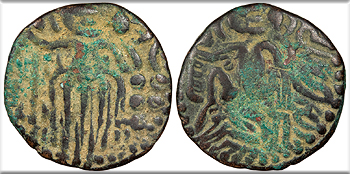
Peninsular India Imperial Cholas of Tanjore Raja Raja I 985-1014 A.D. Kahavanu Good Fine -- #AC106738
AE Kahavanu 20mm. 4.30g. King standing facing r., arm raised holding a lotus, lamp to l., group of pellets to r.
SRI RAJA RAJA (in Nagari) King seated leaning r., arm raised holding a conch.
Mitch. 730 Good Fine. Brown patina with contrasting earthen fill. Green adhesions.
|
|
$ 22.00
|
|
|
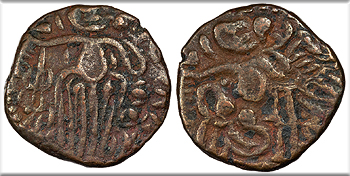
Peninsular India Imperial Cholas of Tanjore Raja Raja I 985-1014 A.D. Kahavanu Good Fine -- #AC106737
AE Kahavanu 18mm. 4.90g. King standing facing r., arm raised holding a lotus, lamp to l., group of pellets to r.
SRI RAJA RAJA (in Nagari) King seated leaning r., arm raised holding a conch.
Mitch. 730 Good Fine. Brown patina.
|
|
$ 25.00
|
|
|
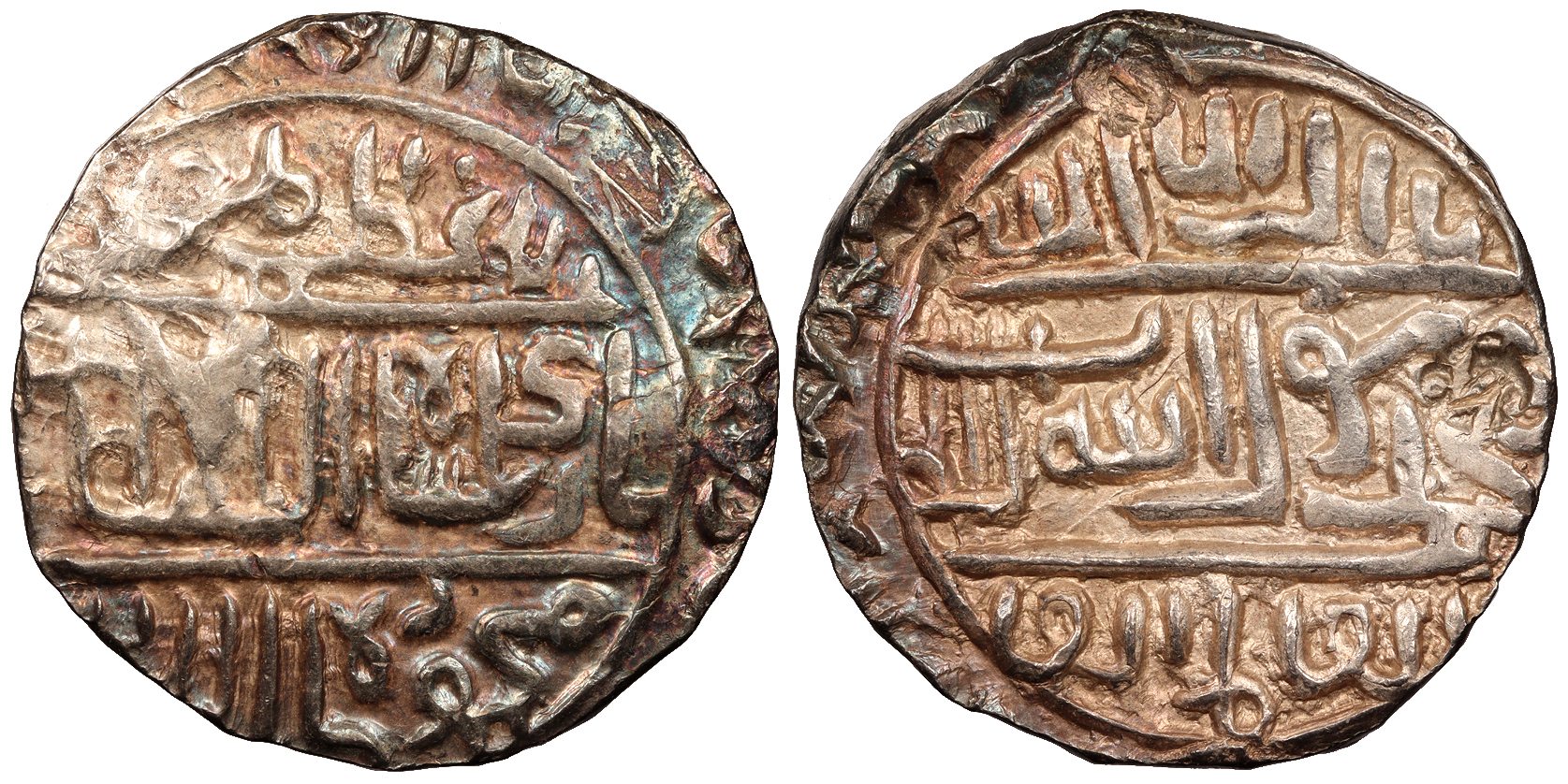
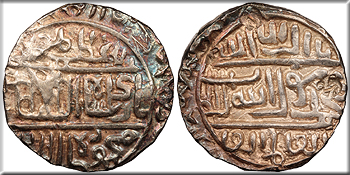
Islamic Sultanates Sultans of Bengal Rukn al-Din Barbak Shah AH863-879 (1459-1474 A.D.) Tanka EF -- #AC88630
AR Tanka 26mm. 10.60g. NM ND Legend in three lines, legend around.
Legend in three lines, legend around.
G&G B549 EF. Lustrous with colorful iridescent toning. Three shroff (test) punches on reverse, as often seen, otherwise choice. 'Three chamber' type. Album posits that this type may actually have a mint name in the outer margin, but that the oversized dies always left the name off the flan.
|
|
$ 95.00
|
|
|
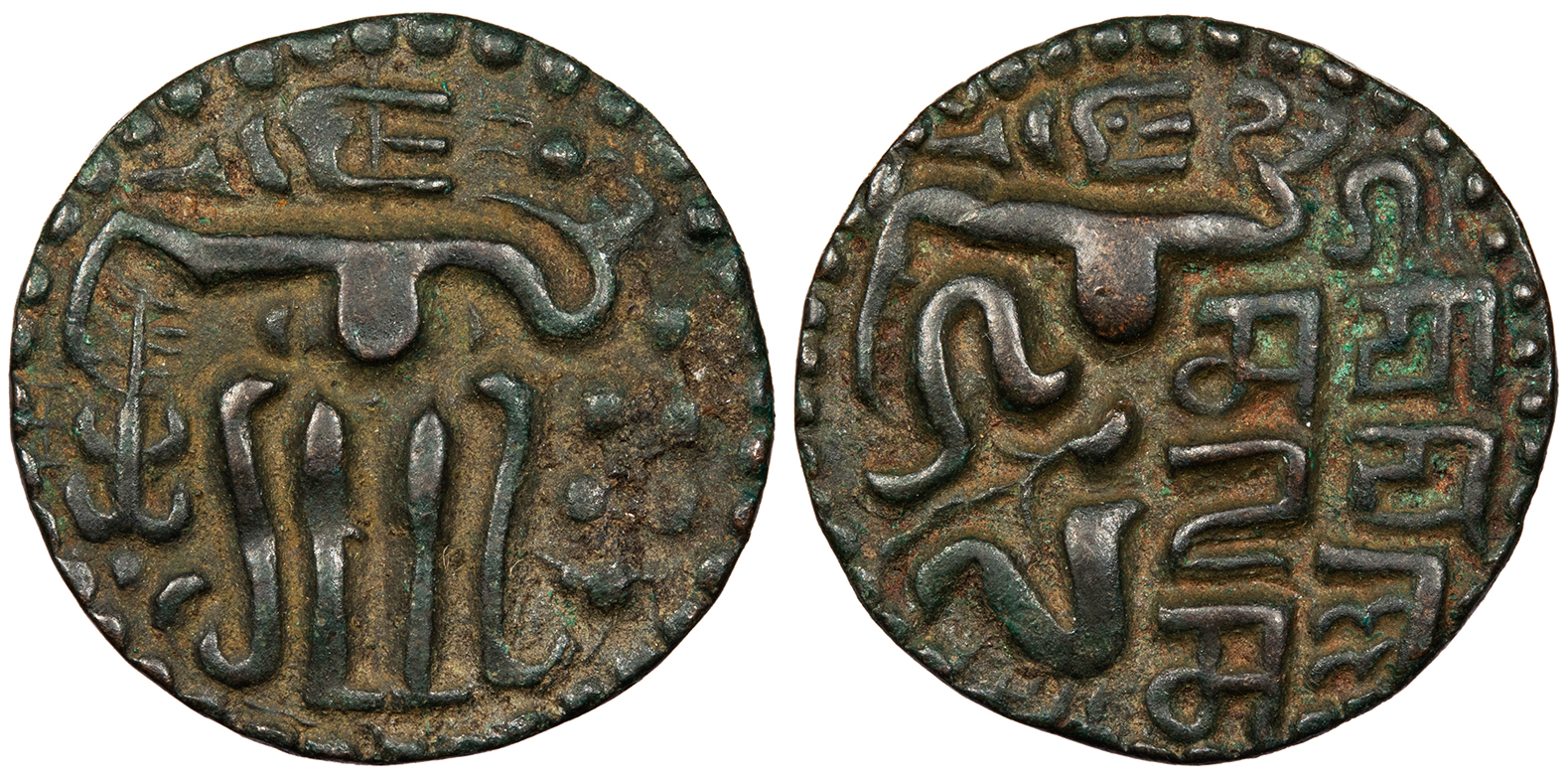
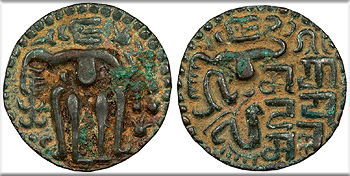
Sri Lanka (Ceylon) Polonnaruva period Sahasamalla (Sahassa Malla) 1200-1202 A.D. Massa VF -- #AC106732
AE Massa 20mm. 4.11g. King standing front, head r., smelling lotus flower held in his l. hand; in field to r., five pellets above lotus flower; in field to l., altar.
SRIMA SAHASA MALLA (in Brahmi) Sahassa Malla seated front, head r., holding uncertain object in his l. hand.
Mitch. 840 VF. Dark green-brown patina with nice earthen contrast. Some roughness and adhesions.
|
|
$ 35.00
|
|
|
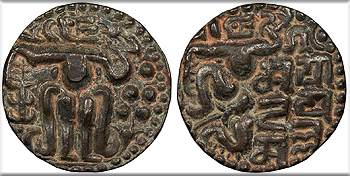
Sri Lanka (Ceylon) Polonnaruva period Sahasamalla (Sahassa Malla) 1200-1202 A.D. Massa Good VF -- #AC106731
AE Massa 20mm. 4.21g. King standing front, head r., smelling lotus flower held in his l. hand; in field to r., five pellets above lotus flower; in field to l., altar.
SRIMA SAHASA MALLA (in Brahmi) Sahassa Malla seated front, head r., holding uncertain object in his l. hand.
Mitch. 840 Good VF. Brown patina with nice contrast.
|
|
$ 40.00
|
|
|
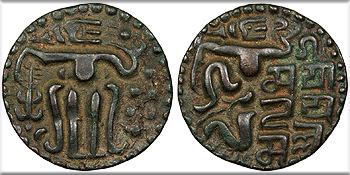
Sri Lanka (Ceylon) Polonnaruva period Sahasamalla (Sahassa Malla) 1200-1202 A.D. Massa Good VF -- #AC106730
AE Massa 21mm. 4.25g. King standing front, head r., smelling lotus flower held in his l. hand; in field to r., five pellets above lotus flower; in field to l., altar.
SRIMA SAHASA MALLA (in Brahmi) Sahassa Malla seated front, head r., holding uncertain object in his l. hand.
Mitch. 840 Good VF. Brown patina with nice contrast. Some minor adhesions.
|
|
$ 40.00
|
|
|
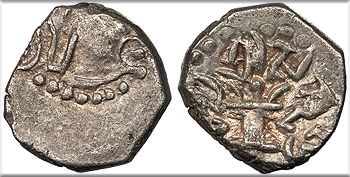
Gupta Empire First Dynasty Skandagupta 455-480 A.D. Drachm Good VF -- #AC100416
AR Drachm 12mm. 2.10g. Bust of king r.; dotted border.
Altar with flames (or Garuda?); Brahmi legend around.
Pieper 875-6 Good VF. Scarce. Toned with good lustre in devices. Obverse off center.
|
|
$ 45.00
|
|
|
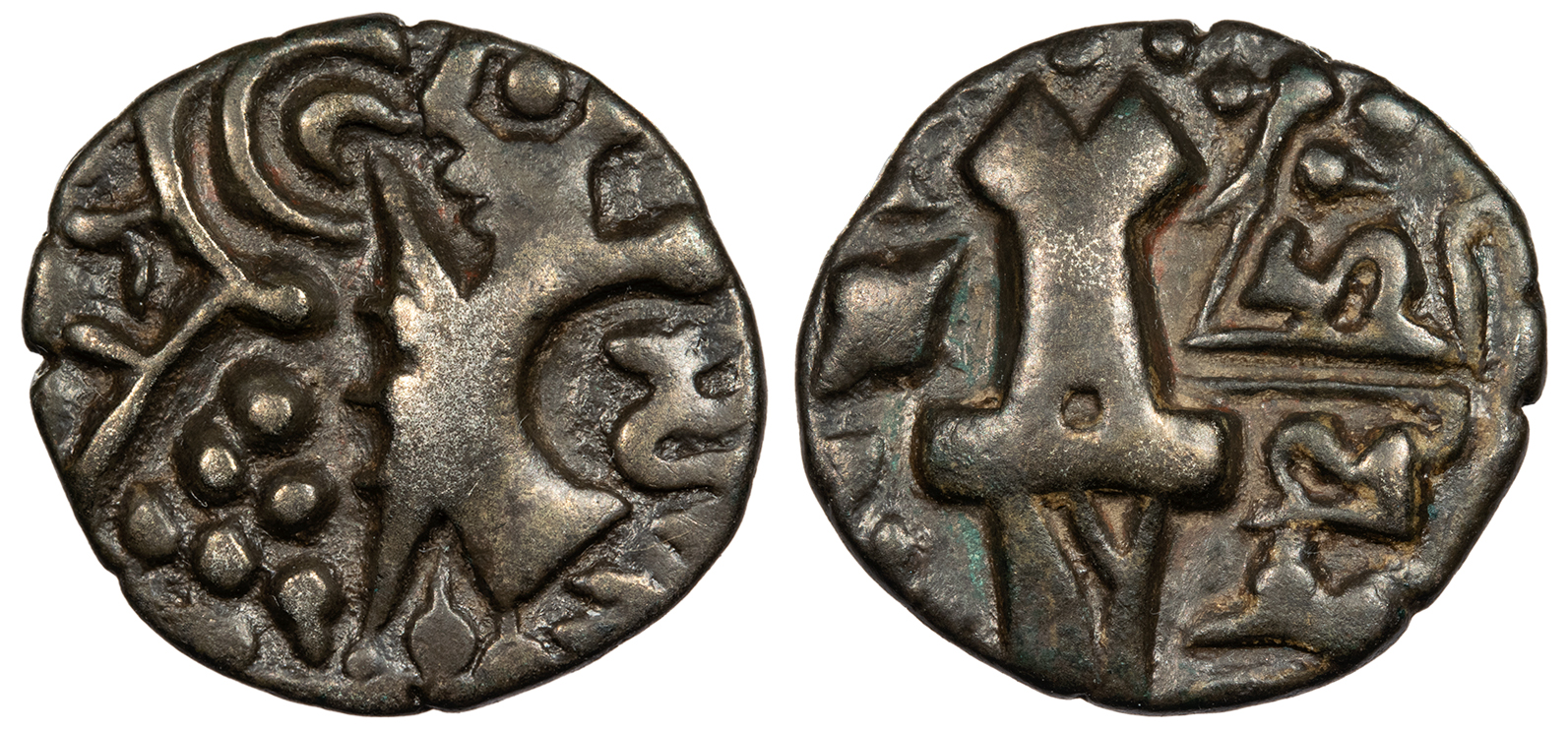
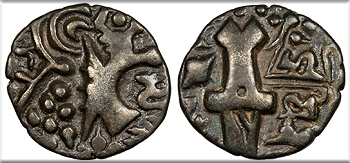
Kidarites Jammu and Kashmir Sri Vinayaditya ca. 7th-8th Centuries A.D. Debased Dinar VF -- #AC107502
AV Debased Dinar 22mm. 7.52g. Abstract Kushan-style King standing l., Brahmi characters to r.
Abstract Enthroned Ardoksho, DITYA (in Brahmi) to l., SRI VINAYA (in Brahmi) to r.
Mitch. 3656ff. VF. Deeply toned. Some hints of silver-gold coloration on high points. Highly debased 'Kidara' type dinar, derived from the Kushan 'standing king' types.
|
|
$ 175.00
|
|
|
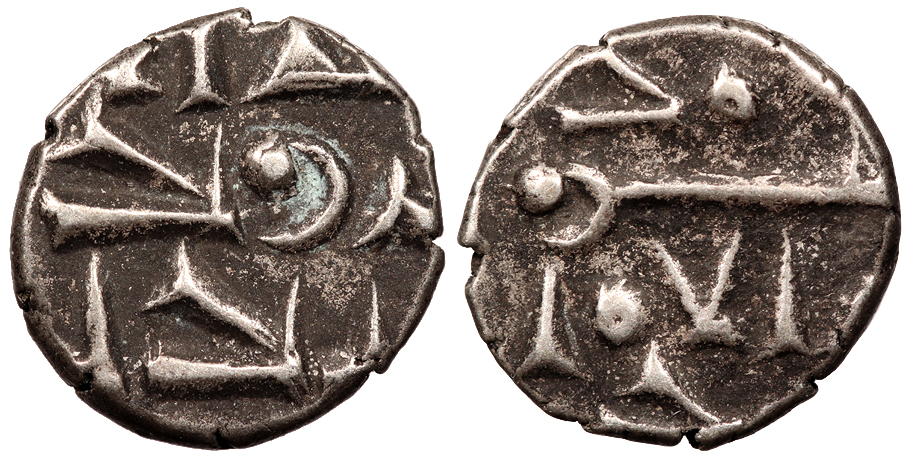
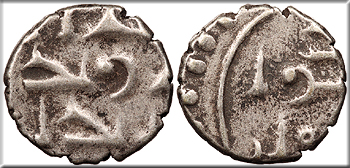
Islamic Sultanates Habbarids of Sindh temp. Abd Allah III to Ibrahim ca. early 11th Century A.D. Damma VF -- #AC88658
AR Damma 9mm. 0.50g. Arabic legend.
Arabic legend; caliph's name or title off flan.
cf. Album 1502A ff. VF. Scarce. Some lustre. This type was struck with dies far larger than the flan. There are hints of a name or title present at the bottom of the reverse, but it is too far off the flan to determine who struck this example.
|
|
$ 45.00
|
|
|
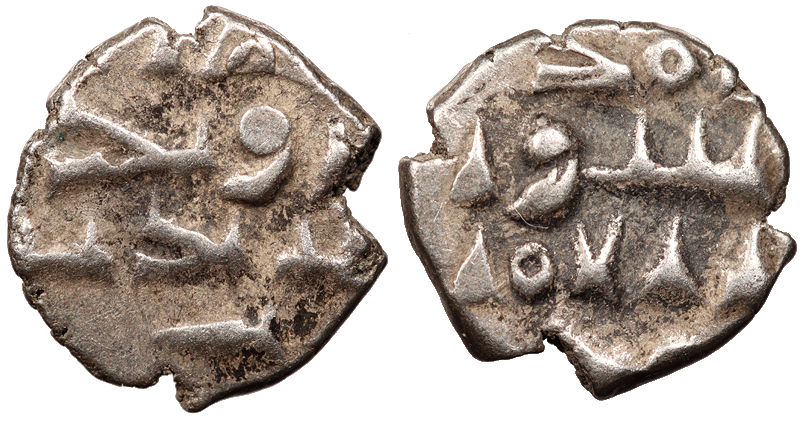
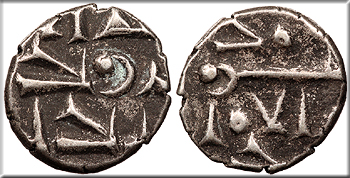
Islamic Sultanates Habbarids of Sindh temp. Abd Allah III to Ibrahim ca. early 11th Century A.D. Damma VF -- #AC88657
AR Damma 9mm. 0.40g. Arabic legend.
Arabic legend; caliph's name or title off flan.
cf. Album 1502A ff. VF. Scarce. Toned with nice contrast. This type was struck with dies far larger than the flan. There are hints of a name or title present at the bottom of the reverse, but it is too far off the flan to determine who struck this example.
|
|
$ 45.00
|
|
|
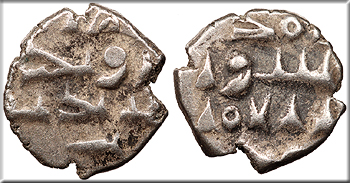
Islamic Sultanates Habbarids of Sindh temp. Abd Allah III to Ibrahim c. early 11th Century A.D. Damma VF -- #AC87924
AR Damma 8mm. 0.30g. Arabic legend.
Arabic legend; caliph's name or title off flan.
cf. Album 1502A ff. VF. Scarce. Toned with some remaining lustre. Typical small flan splits. Minor porosity. This type was struck with dies far larger than the flan. There are hints of a name or title present at the bottom of the reverse, but it is too far off the flan to determine who struck this example.
|
|
$ 45.00
|
|
|
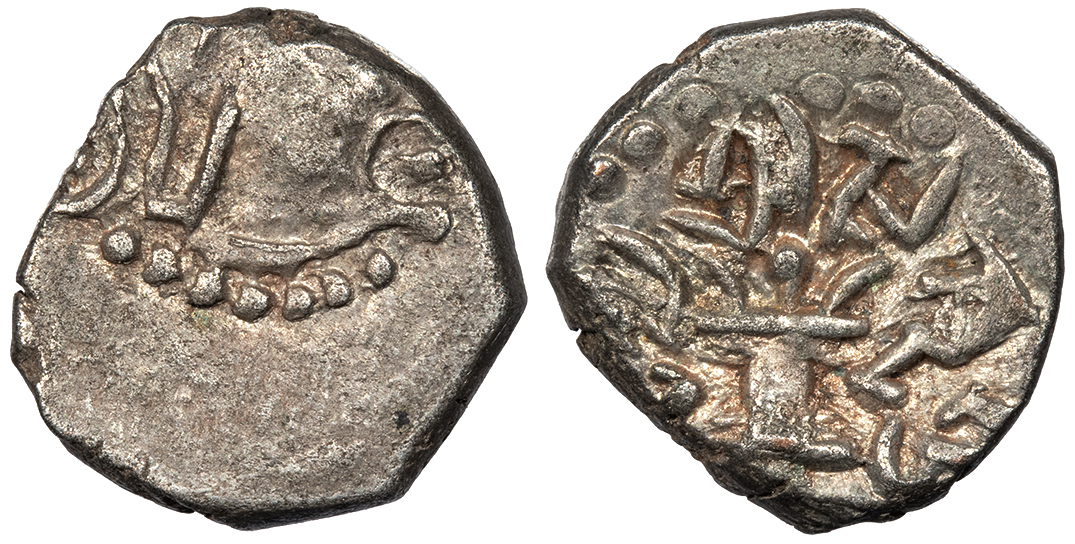
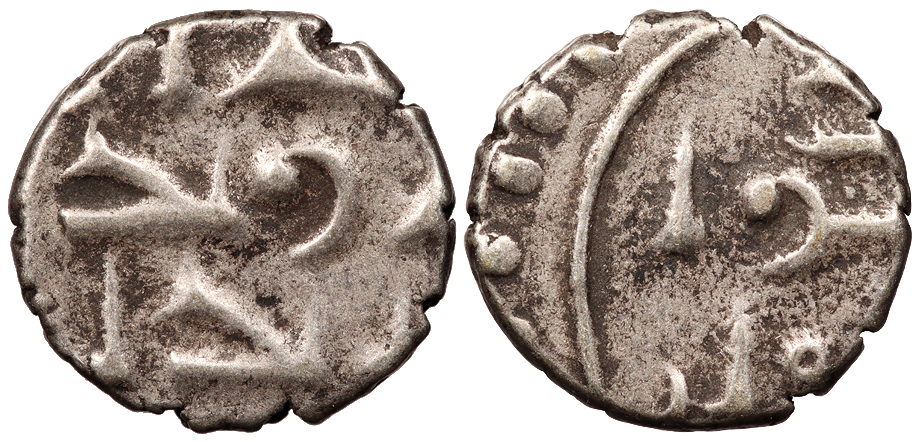
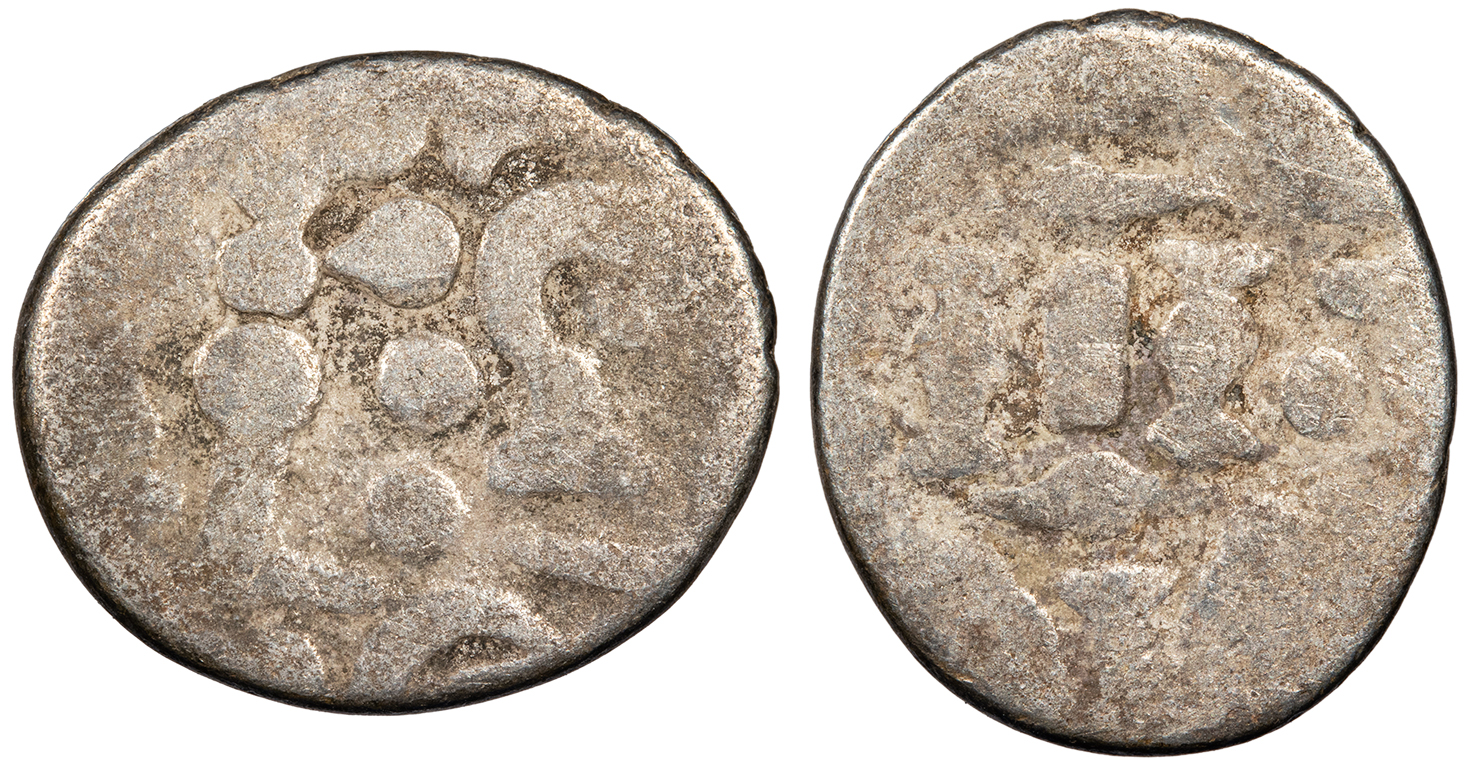
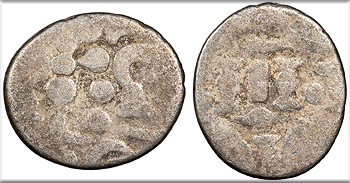
Later Indo-Sasanian Palas of Bengal Vigrahapala I (and his successors) ca. 850-853 A.D. Dramma (Drachm) Fine -- #AC94134
AR Dramma (Drachm) 19mm. 3.40g. ca. 850-988 A.D. Highly stylized bust (?)
Highly stylized Sasanian fire altar.
cf. Mitchiner 398; Numista?59290 Fine. Lightly toned. Light porosity. A crude Northern Indian issue seldom offered.
|
|
$ 21.00
|
|
|
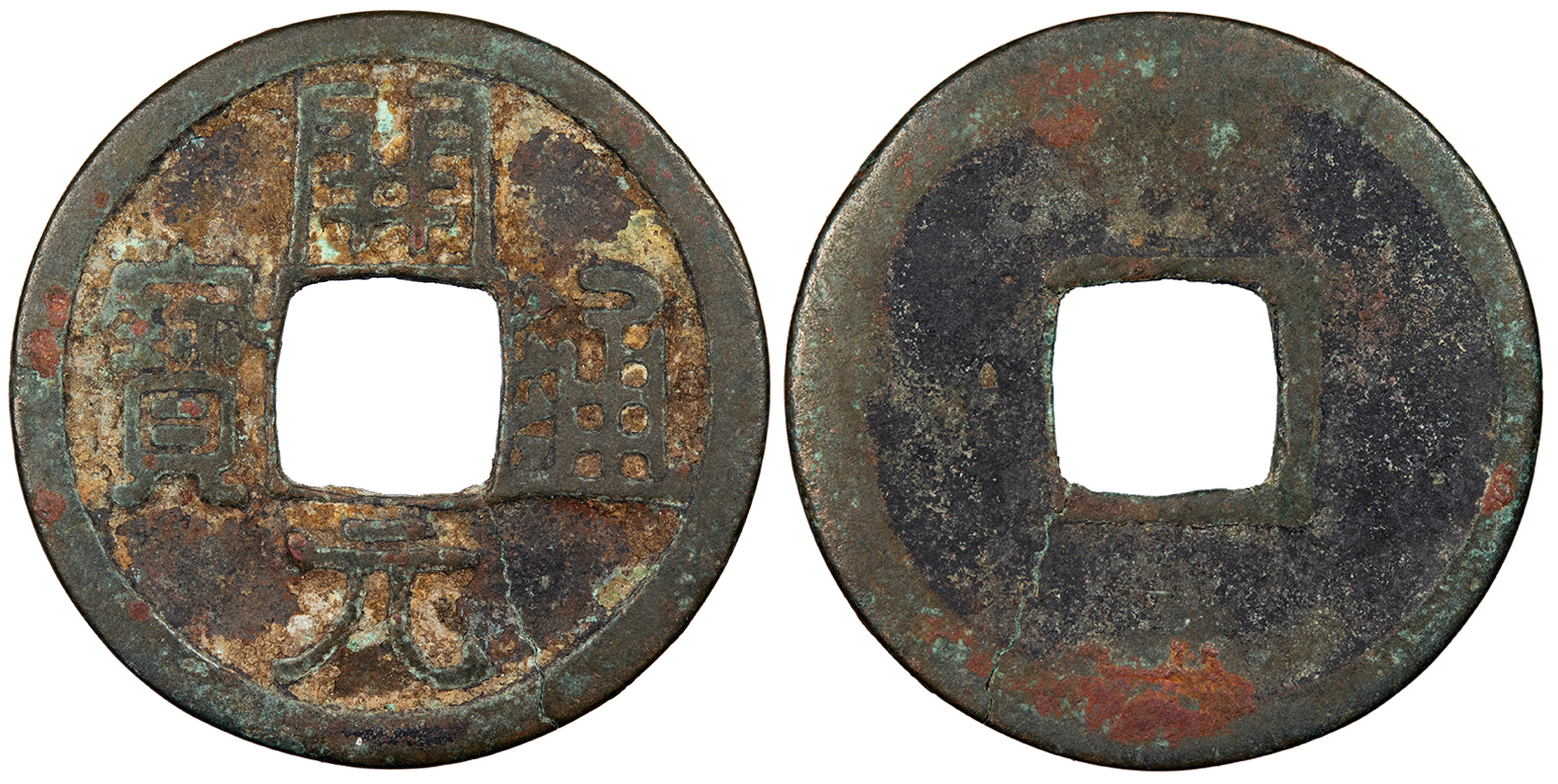
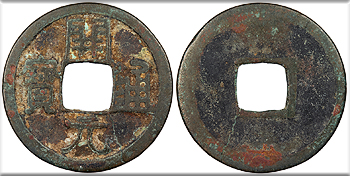
China Tang Dynasty 618 - 907 A.D. Wu De Kai Yuan Fine -- #AC93129
AE Wu De Kai Yuan 25mm. 3.22g. 621 - 718 A.D. Four Chinese characters
Kai Yuan Tong Bao Blank.
Hartill 14.1 Fine. Gray-brown patina. Flan crack. Some encrustations.
|
|
$ 15.00
|
|
|
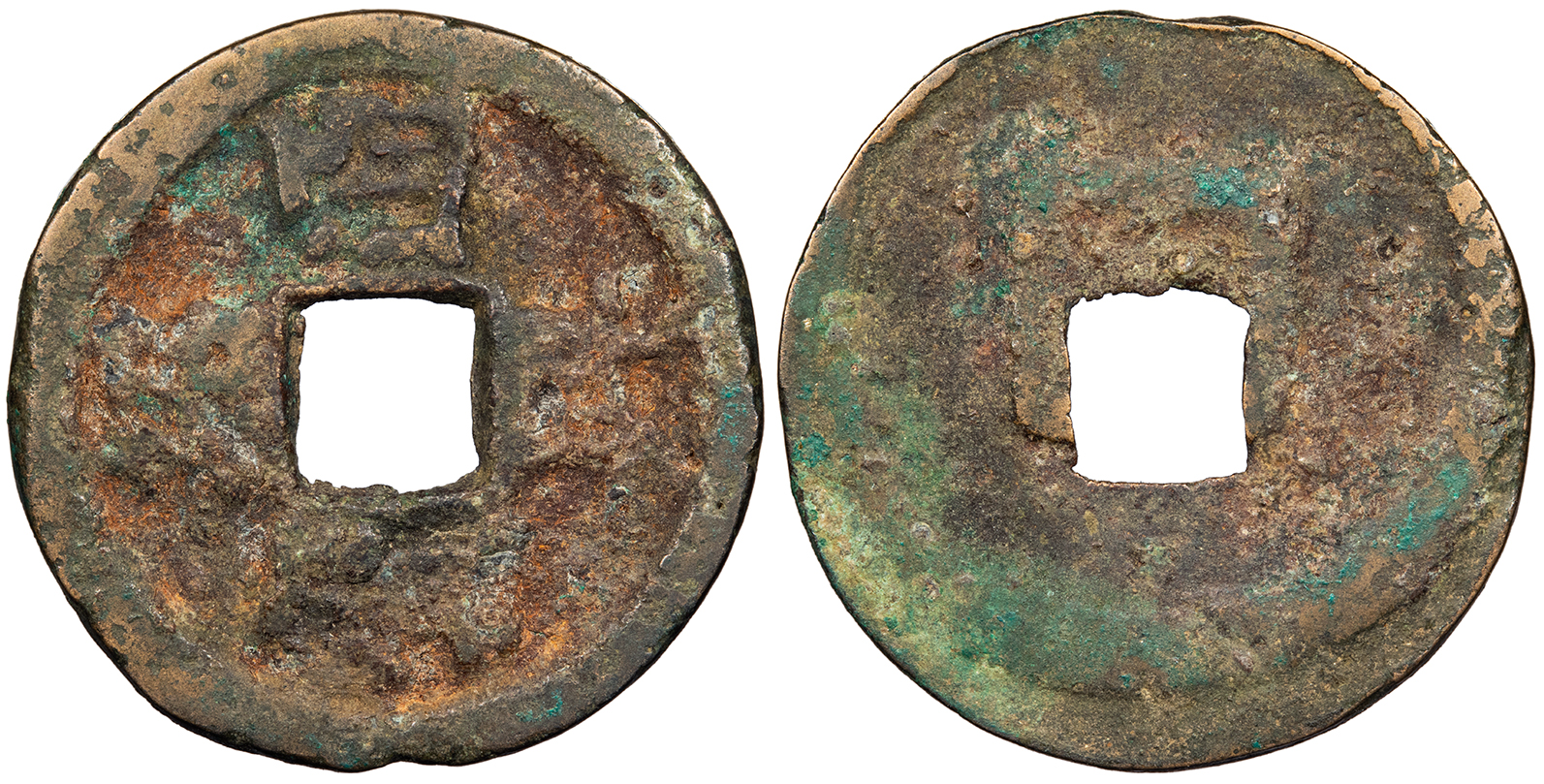
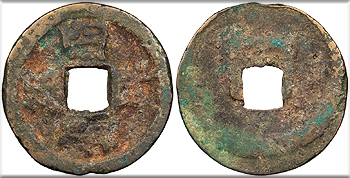
China Southern Sung (Song) Dynasty Gao Zong 1127-1279 2 Cash Fine -- #AC93115
AE 2 Cash 30mm. 7.10g. 1131-1162 Four Chinese characters
Shao Xing Tong Bao Blank.
Hartill 17.58 Fine. Mottled patina. Moderate corrosion and roughness.
|
|
$ 10.00
|
|
|
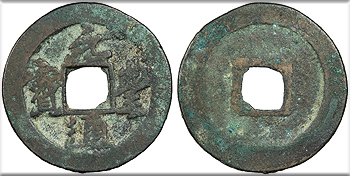
China Northern Sung (Song) Dynasty Shen Zong 960 - 1127 A.D. Cash VF -- #AC93136
AE Cash 24mm. 4.22g. 1078-1085 A.D. Four Chinese characters
Yuan Feng Tong Bao Blank.
Hartill 16.237 VF. Brown patina. Running script.
|
|
$ 12.00
|